Heart Disease In Your 20s? What the CARDIA Trial Taught Us
Jan 21, 2026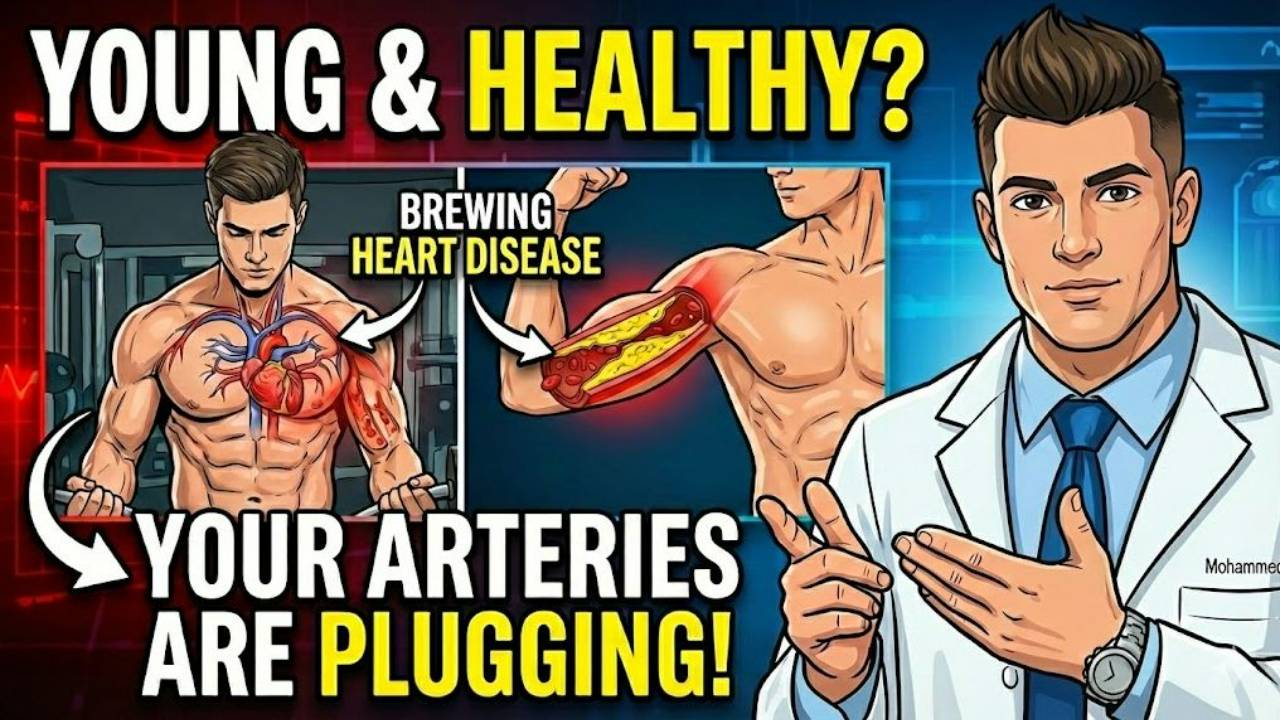
Heart Disease Start At Age 20: What the CARDIA Study Reveals About Early Heart Disease
Most people believe heart disease is something to worry about later in life, after decades of poor health or once symptoms appear. If you’re in your 20s or 30s, feel fine, and haven’t been diagnosed with high cholesterol or high blood pressure, heart disease probably isn’t on your radar. They think if you are a lean, non-smoker, without insulin resistance, then having high cholesterol is ok. Turns out that's not true at all.
A landmark, decades-long research project tells a very different story. It began following 5001 young adults in 1983 and is still on-going.
The CARDIA (Coronary Artery Risk Development in Young Adults) Study followed more than 5,000 adults from their late teens into middle age. Its findings fundamentally change how we should think about heart disease risk in young adults.
CARDIA Trial Infographic Summary:
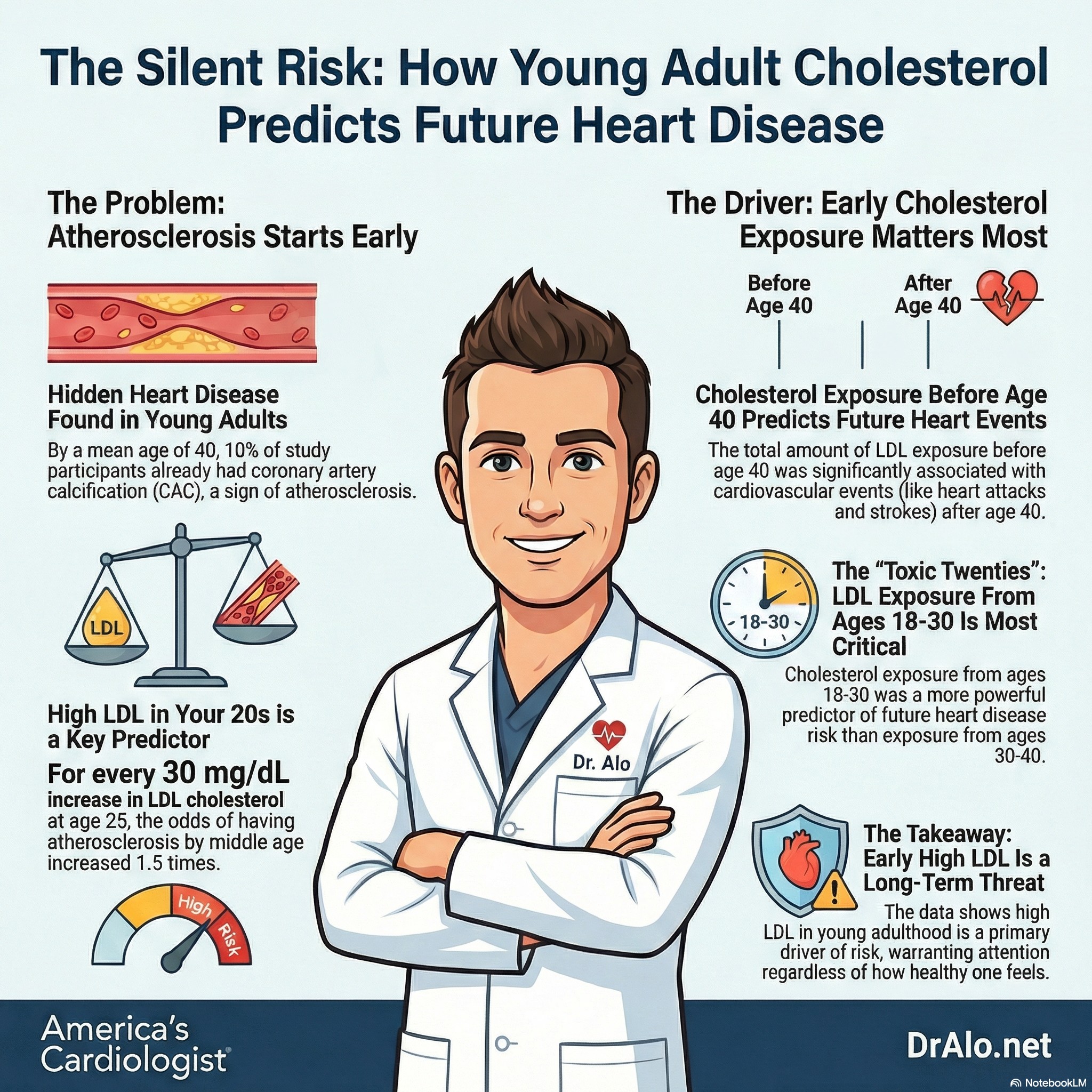
Heart disease often begins silently in young adulthood, long before symptoms, diagnoses, or “abnormal” test results.
Young And Healthy Can Still Develop Heart Disease
It doesn't matter if you are thin, insulin sensitive, non-smoker, and no no risk factors for heart disease. People think that if you are lean, healthy, eat right, avoid smoking, and have no risk factors, then you are safe from heart disease. They think that having high cholesterol is ok, if you are otherwise healthy. Unfortunately, that's not true.
The CARDIA study delivers a message every prevention-focused clinician should take seriously: heart disease does not suddenly begin in middle age. It begins much earlier, as blood pressure, cholesterol, weight, blood sugar, smoking exposure, diet, and fitness patterns accumulate across young adulthood.
CARDIA followed more than 5,000 Black and White men and women who were just 18 to 30 years old at enrollment and tracked them for decades, giving researchers a rare look at how “normal” early-adult health habits gradually evolve into subclinical plaque, structural heart changes, and eventually real cardiovascular events. The big takeaway is that cardiovascular risk is built over time, which means prevention has to start earlier than most people think. It did not matter how healthy they were. Most 18 year olds are pretty healthy.
One of the most important findings is that maintaining high cardiovascular health in young adulthood is extraordinarily protective. People who entered adulthood with healthier lifestyles and risk-factor profiles had very low rates of premature cardiovascular disease later on.
LDL Exposure Mattered Most
CARDIA also showed that early exposures matter: higher LDL cholesterol before age 40, rising blood pressure trajectories, weight gain, and worsening metabolic health all predicted later trouble, even before many people would traditionally be labeled “high risk.” In other words, by the time someone develops overt heart disease in midlife, the biology has often been moving in that direction for years.
Those with the highest LDL cholesterol had the shortest time to "first event". Meaning, they had their first heart attack and or stroke much earlier.
Those who had the lowest LDL cholesterol had the longest time before their first event. Their first events were delayed by years, and even decades.
LDL Control Before The Age Of 40 Mattered More
Another interesting finding in CARDIA:
LDL cholesterol influences not just whether an event happens, but when it happens
LDL exposure before age 40 was associated with cardiovascular events after age 40. In fact, cumulative LDL exposure before age 40 carried a hazard ratio of 1.05 per 100 mg/dL·years, and the pattern of exposure mattered too: earlier LDL exposure was more harmful than later exposure. That is one of the most important messages in the paper, atherosclerosis is a time-dependent process, so the clock starts running long before the first clinical event.
The Young Were Not Spared
CARDIA also showed that even in relatively young adults, LDL was already leaving a measurable footprint on arteries. At baseline, each 30 mg/dL higher LDL cholesterol was associated with about a 1.5-fold higher odds of having coronary calcium by ages 33 to 45. And once coronary calcium was present, future coronary heart disease and cardiovascular event risk rose sharply. So from a prevention standpoint, LDL is not just a lab number; it is part of the biologic process that determines how soon silent plaque becomes a clinical event.
LDL Predicted Time To Cardiovascular Events
The broader timing story in CARDIA is that major events began appearing as the cohort entered midlife. The study reports that through 35 years of follow-up, clinical events increased as participants aged, and in one analysis of premature heart failure, the mean age at onset was just 39 ± 6 years. That makes the LDL finding even more important: by the time the first event shows up, the disease process has often been developing for years or decades.
CARDIA showed that when it comes to LDL, earlier exposure means earlier disease. Lower LDL in young adulthood does not just reduce lifetime risk in the abstract, it may delay the time to a first cardiovascular event by slowing plaque formation before midlife.
Social Determinants Of Health Mattered
The study also adds an essential layer that is often missing from simple “eat better and exercise more” messaging: cardiovascular risk is shaped not only by personal choices, but also by social conditions. CARDIA found that racial disparities in cardiovascular outcomes were closely tied to social determinants of health, including education, income volatility, neighborhood environment, discrimination, and segregation.
At the same time, the study documented how steadily rising obesity, declining cardiovascular health, and cumulative exposure to risk factors drive earlier plaque, heart failure, stroke, and cognitive decline. The message is clear: the best way to prevent heart disease is not to wait for symptoms or a crisis, but to protect cardiovascular health early, maintain it consistently, and recognize that lasting prevention requires both individual action and healthier environments.
Heart Disease Starts Earlier Than Most People Realize (In Your 20s)
CARDIA enrolled adults aged 18 to 30 and followed them for over 35 years. What researchers observed was striking:
- Cardiovascular health steadily declined from young adulthood into midlife
- Risk factors accumulated quietly, even in people who initially appeared healthy
- By their 40s, many participants already had subclinical heart disease
This means artery disease doesn’t suddenly appear in middle age, it builds gradually over decades.
Why “Normal” Cholesterol in Your 20s Still Matters
One of CARDIA’s most important insights is that cholesterol exposure over time matters more than a single number.
Researchers found that:
- Higher cumulative LDL cholesterol before age 40 strongly predicted heart disease later in life
- Early exposure to LDL cholesterol was more harmful than the same levels later on
- Even LDL levels considered “normal” contributed to long-term risk when present for years
Translation:
Waiting until midlife to “optimize” cholesterol may be too late to fully erase earlier damage.
Blood Pressure in Young Adulthood Is Not Benign
CARDIA also showed that blood pressure trends over time are critical.
People with:
- Mildly elevated blood pressure
- Gradually rising blood pressure
- “Borderline” readings that persisted for years
Were far more likely to develop coronary artery calcium and heart disease later, even if they were never diagnosed with hypertension early on.
This challenges the idea that young adults can safely “watch and wait.”
Silent Heart Disease Is Already Present by Midlife
By their early 40s:
- 10–20% of participants already had detectable coronary artery calcium
- Presence of calcium strongly predicted future heart attacks and cardiovascular events
Importantly, early-life risk factors predicted calcium better than midlife measurements, reinforcing that heart disease is a life-course process.
Weight Gain, Not Just Obesity, Drives Risk
CARDIA revealed that:
- Progressive weight gain from young adulthood to midlife drove diabetes, metabolic syndrome, and heart disease
- Maintaining a stable weight, even if not “ideal,” dramatically reduced risk
The real danger wasn’t where people started, it was how much risk accumulated over time.
Cardiovascular Health in Youth Predicts Survival
Participants with high cardiovascular health scores (healthy diet, activity, weight, cholesterol, blood pressure, glucose, and no smoking) in young adulthood had:
- Very low rates of premature heart disease
- Up to 60–80% lower risk of early cardiovascular events and death
This makes early prevention one of the most powerful interventions in medicine.
Heart Health and Brain Health Are Linked
CARDIA also uncovered a critical connection between the heart and the brain.
Poor cardiovascular health from young adulthood was associated with:
- Worse cognitive function in midlife
- Lower brain volume
- More white matter disease
- Reduced cerebral blood flow
Conversely, healthier diets and fitness early in life predicted better brain function decades later.
What the CARDIA Study Teaches Us
The CARDIA study confirms that:
- Heart disease begins long before symptoms
- Early lifestyle and risk-factor exposure shapes lifelong outcomes
- “Normal” values may still be harmful when exposure lasts decades
- Prevention must start earlier than most guidelines emphasize
The most important takeaway:
Heart disease is not a midlife problem, it is a lifelong process that starts young and progresses silently.
Final Thoughts
If we wait for symptoms, abnormal stress tests, or obvious disease, we’ve missed years of opportunity. CARDIA makes one thing clear: early awareness, early optimization, and long-term cardiovascular health matter profoundly, for both the heart and the brain.
CARDIA Trial:
https://www.jacc.org/doi/10.1016/j.jacc.2021.05.022
https://www.nhlbi.nih.gov/science/coronary-artery-risk-development-young-adults-study-cardia
Still Have Questions? Stop Googling and Ask Dr. Alo.
You’ve read the science, but applying it to your own life can be confusing. I created the Dr. Alo VIP Private Community to be a sanctuary away from social media noise.
Inside, you get:
-
Direct Access: I answer member questions personally 24/7/365.
-
Weekly Live Streams: Deep dives into your specific health challenges.
-
Vetted Science: No fads, just evidence-based cardiology and weight loss.
Don't leave your heart health to chance. Get the guidance you deserve. All this for less than 0.01% the cost of health insurance! You can cancel at anytime!
[👉 Join the Dr. Alo VIP Community Today]
Cardiology & Obesity Medicine