
Best Foods to Lower Blood Pressure: What to Eat (and What to Cut Back On)
Feb 18, 2026
Foods That Lower Blood Pressure: Cardiologist's Evidence-Based Guide
If you want to lower blood pressure, you don't need a "superfood." What you actually need is a pattern.
The most evidence-supported eating approach for blood pressure is a heart-healthy pattern often called DASH (Dietary Approaches to Stop Hypertension): more plants, more fiber and minerals, less sodium, and less ultra-processed food.
I'm going to make this practical: what to eat, what to limit, and how to build meals you can actually sustain long-term.
Important note on individualization: Nutrition advice should be tailored for kidney disease, heart failure, pregnancy, and certain medications. If you have chronic kidney disease or take medications that raise potassium, talk with your clinician before increasing potassium or using salt substitutes.
Key Takeaways
The #1 "food strategy" for BP is less sodium from processed and restaurant foods, plus more whole foods.
A DASH-style pattern emphasizes fruits, vegetables, whole grains, beans, nuts, and lean proteins.
Potassium from natural foods can help blunt sodium's effect (unless contraindicated by your kidney function or medications).
The Big Picture: The DASH Pattern in One Sentence
Half your plate plants, choose whole grains, add lean protein, include low-fat dairy if tolerated, and cut ultra-processed foods.
DASH isn't a fad. It's a structure you can stick with.
Infographic Summary:
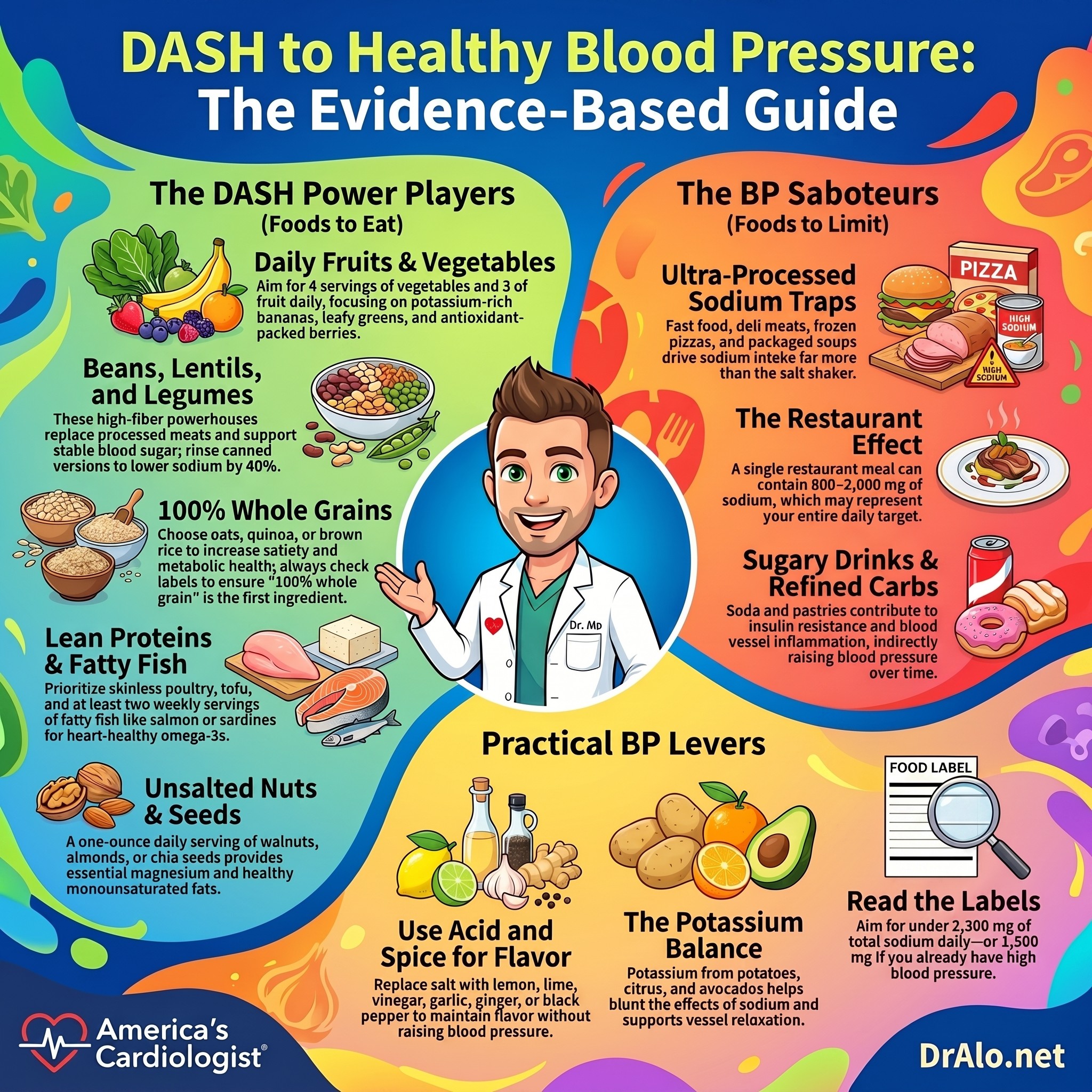
The Best Foods to Lower Blood Pressure (The Short List)
1. Fruits and Vegetables (Daily, Generous Amounts)
Why they help:
Potassium, magnesium, and fiber support vessel health
Antioxidants reduce inflammation
Better endothelial (blood vessel) function
Easy wins to start with:
Bananas and oranges (potassium-rich)
Berries (antioxidants)
Leafy greens: spinach, kale, arugula
Tomatoes (lycopene)
Sweet potatoes (minerals and fiber)
Beans and lentils (also counted as vegetables in many plans)
The goal: aim for at least 4 servings of vegetables and 3 of fruit per day.
2. Beans, Lentils, and Legumes
Why they help:
High in fiber and minerals
Replace processed meats and refined carbs
Support healthy weight and stable blood sugar
Easy ideas:
Lentil soup (warm, filling)
Black bean tacos with lime and cilantro
Chickpeas in salads
Canned beans are fine if you rinse them to lower sodium
3. Whole Grains
Why they help:
Fiber supports metabolic health and weight control
Better satiety means less snacking on salty foods later
More stable blood sugar
Options:
Oats (steel-cut or old-fashioned)
Brown rice or wild rice
Quinoa
Whole-grain bread (watch the sodium label—some whole-grain breads are surprisingly salty)
Tip: Look for "100% whole grain" on the label. If wheat flour is listed first, it's likely mostly white flour.
4. Nuts and Seeds (Small Amounts, Regularly)
Why they help:
Healthy monounsaturated and polyunsaturated fats
Magnesium
Protein and satiety
Best options:
Unsalted almonds or walnuts (handful, about 1 ounce)
Chia or flax seeds (add to oatmeal)
Sunflower seeds
Pro tip: Buy unsalted. One ounce daily is ideal—not a bagful.
5. Low-Fat Dairy (If You Tolerate It)
Why it helps:
Calcium supports vessel health
Protein aids satiety
Best choices:
Plain Greek yogurt (skip sweetened versions)
Low-fat milk
Kefir
Hard cheeses in small amounts (high in sodium though)
Note: If you're lactose intolerant, fortified non-dairy alternatives (soy, almond) work too.
6. Fish and Lean Proteins
Why they help:
Protein supports satiety and healthy weight
Fatty fish (salmon, sardines) contain omega-3 fats that support heart health overall
Lower in saturated fat than red meat
Best options:
Salmon, sardines, trout (aim for 2 servings weekly)
Skinless chicken or turkey breast
Tofu and tempeh (plant-based protein)
Eggs (whole eggs are fine despite old concerns)
The Foods That Most Often Sabotage Blood Pressure
These aren't "bad." They're simply the biggest BP obstacles for many people.
Ultra-Processed and Restaurant Foods
These drive sodium intake way more than the salt shaker ever could:
Fast food (400-900 mg sodium per meal)
Deli meats and cured meats (bacon, sausage, ham)
Packaged soups and broths
Frozen pizza and frozen meals
Chips, crackers, and pretzels
Sauces: soy sauce, barbecue sauce, teriyaki
"Healthy" wraps and breads that are surprisingly salty
Processed cheese and cheese sauces
The sodium in one restaurant meal can be half your entire daily target.
Sugary Drinks and Excess Refined Carbs
They don't directly "raise BP" the way sodium can, but they contribute to:
Weight gain (which raises BP)
Insulin resistance
Inflammation in blood vessels
Higher triglycerides
Cut back on: Regular soda, energy drinks, sweetened tea, sugary coffee drinks, white bread, pastries, candy.
Alcohol
Alcohol can raise BP, especially at higher intakes. One to two drinks per day may be neutral, but more than that is linked to higher BP.
If you choose to drink, keep it very, very low. Consider abstaining entirely if you're struggling to control your BP.
Sodium: The Most Practical Lever You Can Pull
If your BP is high, sodium reduction is one of the most reliable nutrition strategies—period.
Where sodium hides (you'd be shocked):
Restaurant meals (especially Asian, Mexican, and fast food)
Bread and tortillas (4-6% of daily sodium)
Cheese and dairy products
Canned foods (unless labeled "no salt added")
Sauces and condiments (ketchup, mustard, salsa)
"Seasoning blends" that include salt
Dressings and marinades
A Simple Sodium Strategy (That Actually Works)
Cook at home more often. You control the salt. Restaurant meals average 800-2,000 mg per meal. Home meals? Usually 300-600 mg.
Use acid and spice for flavor instead of salt: lemon, lime, vinegar, garlic, ginger, black pepper, cumin, paprika, cilantro, basil.
Choose "no salt added" canned beans and vegetables when shopping.
Rinse canned beans in a colander to lower sodium by about 40%.
Read labels: Aim for under 2,300 mg total sodium per day (ideally 1,500 mg if you have high BP).
Potassium: The "Sodium Balance" Mineral
Potassium can help counter sodium's effect and support healthy blood vessel function and relaxation.
Critical caution: If you have chronic kidney disease or take medications that can raise potassium (like ACE inhibitors, ARBs, or potassium-sparing diuretics), ask your clinician before aggressively increasing potassium or using potassium-based salt substitutes. Too much potassium can be dangerous in kidney disease.
Potassium-Rich Food List
Citrus fruit: bananas, oranges, kiwis, limes, lemons
Root vegetables: potatoes and sweet potatoes
Leafy greens: spinach, kale, Swiss chard
Beans and lentils
Yogurt (also provides calcium)
Avocado (small amount)
Cantaloupe
Practical tip: One medium banana has about 400 mg potassium, and one medium sweet potato has about 600 mg. You don't need much to make a difference.
A 1-Day Sample Menu (DASH-Style, Real-Life)
Breakfast
Oatmeal topped with berries and chia seeds
Plain Greek yogurt (optional, on the side)
Coffee or tea (no added sugar; coffee itself is fine)
Lunch
Big salad: mixed greens, chickpeas, tomatoes, cucumber, olive oil, and vinegar dressing
Whole grain bread (check sodium label)
Sparkling water with lime
Snack
Unsalted nuts (about 1 ounce) plus a piece of fruit (apple, orange, or berries)
Dinner
Salmon (or tofu for plant-based) seasoned with garlic, lemon, and herbs
Roasted vegetables: broccoli, bell peppers, zucchini
Quinoa or brown rice
Sparkling water with a lime wedge
Estimated sodium for this day: around 1,500 mg. Potassium: around 3,500+ mg. Perfect balance.
Grocery List (Copy and Use)
Produce
Leafy greens (spinach, kale, arugula)
Broccoli, peppers, tomatoes
Bananas, oranges, berries
Sweet potatoes
Garlic
Protein
Salmon or other fish (wild or farmed both fine)
Chicken breast or turkey
Tofu or tempeh
Eggs
Pantry
Oats (steel-cut or old-fashioned)
Brown rice or quinoa
No-salt-added canned beans (black, chickpea, lentil)
Olive oil
Vinegar (balsamic, apple cider, red wine)
Herbs and spices (salt-free seasoning blends)
Dairy (Optional)
Plain Greek yogurt (no added sugar)
Low-fat milk or fortified plant-based alternatives
FAQs About Food and Blood Pressure
Do beets really lower blood pressure?
Beets contain nitrates that can support blood vessel relaxation in some people. Research shows a modest benefit. They can be a helpful add-on to the overall pattern, but they don't replace the DASH approach. Think of beets as a bonus, not a substitute.
Are salt substitutes safe?
Some are potassium-based (like Nu Salt). They can be helpful for some people, but they're risky in kidney disease or if you take medications that raise potassium. Always get guidance from your clinician before using them regularly.
How fast can diet lower blood pressure?
Some changes can improve your numbers within weeks. The best results come from consistent habits over months, especially sodium reduction (can drop BP 5-11 points), weight loss when needed (5-8 points per 10 lbs lost), and regular exercise (4-9 points). Combine all three and you can see significant improvements.
What if I don't like vegetables?
Start small. Roasted vegetables taste completely different from raw or steamed. Season them with garlic, lemon, and olive oil. Or blend vegetables into soups. Small steps beat perfection.
Can I ever eat restaurant food again?
Yes, but be strategic. Ask for no salt added. Request dressings and sauces on the side. Choose grilled over fried. Go for fish or chicken, not processed meats. One high-sodium meal won't derail you, but making it the exception rather than the rule makes all the difference.
The Bottom Line
Food is medicine, but it's not magic. You don't need a single superfood. You need a pattern: more plants, more whole grains, less sodium, less ultra-processed food. DASH works because it's simple and sustainable. Pick three changes this week. Add three more next month. Build from there. You'll feel better, your BP numbers will drop, and you won't feel like you're on a restrictive diet.
Ready to take your heart health to the next level? Join the Heart 2 Heart VIP Community where you can text me questions about nutrition any time, join live video calls to discuss meal planning, and connect with others committed to evidence-based cardiovascular health. No supplement nonsense. Just real cardiology.
💪🏻🩺🫀 Dr. Alo
References:
American Heart Association. The DASH Eating Plan. 2023.
Related Blood Pressure Management Posts
Complete blood pressure library:
- What Does 130/80 Mean? Stage 1 Hypertension
- How to Take Blood Pressure at Home Correctly
- Why Is My Blood Pressure High in the Morning?
- White Coat vs Masked Hypertension
- Blood Pressure Spikes After Coffee, Stress, or Exercise
- When Is High Blood Pressure an Emergency?
- Low Blood Pressure Symptoms
- Blood Pressure Medications Explained
- How To Lower Blood Pressure Naturally Without Meds
- Is Salt Burning Your Heart?
Prevention & Guidelines
- Dr. Alo's Dietary Guidelines – Complete prevention framework
- Statins And Dementia – Medication options
Still Have Questions? Stop Googling and Ask Dr. Alo.
You’ve read the science, but applying it to your own life can be confusing. I created the Dr. Alo VIP Private Community to be a sanctuary away from social media noise.
Inside, you get:
-
Direct Access: I answer member questions personally 24/7/365.
-
Weekly Live Streams: Deep dives into your specific health challenges.
-
Vetted Science: No fads, just evidence-based cardiology and weight loss.
Don't leave your heart health to chance. Get the guidance you deserve. All this for less than 0.01% the cost of health insurance! You can cancel at anytime!
[👉 Join the Dr. Alo VIP Community Today]
Cardiology & Obesity Medicine