Young But Full OF Disease! What the PESA Trial Taught Us!
Jan 24, 2026
Silent Atherosclerosis in Healthy Adults: Why Feeling Healthy Isn’t Enough for Your Heart
Most people believe heart disease only affects those who are older, overweight, or visibly unhealthy. If you’re in your 40s or early 50s, feel well, exercise regularly, have a normal cholesterol panel, and even a coronary calcium score of zero, you’re often told you’re “in the clear.”
But growing evidence shows this reassurance may be dangerously incomplete.
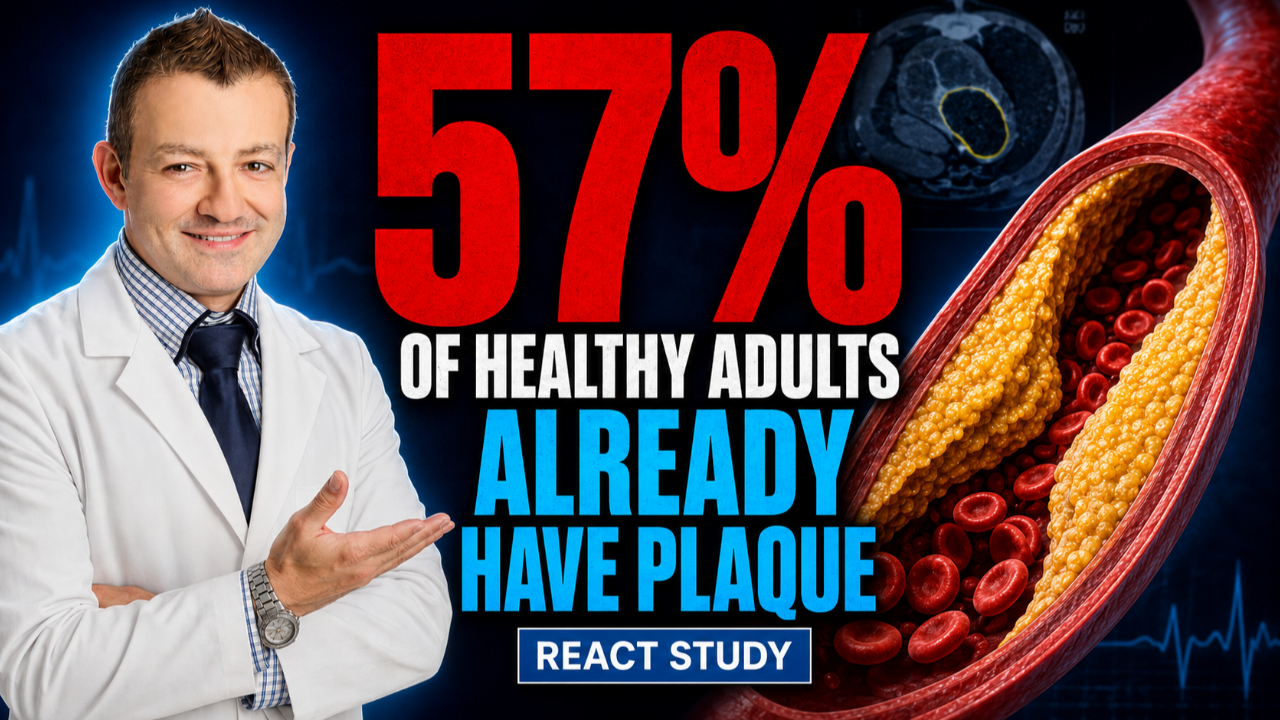
A landmark research initiative, the PESA (Progression of Early Subclinical Atherosclerosis) Study, reveals that silent atherosclerosis is common in healthy adults, often developing decades before symptoms appear. In many cases, artery plaque is already present long before standard heart tests turn abnormal.
Below is what the PESA study uncovered—and why early detection matters more than ever.
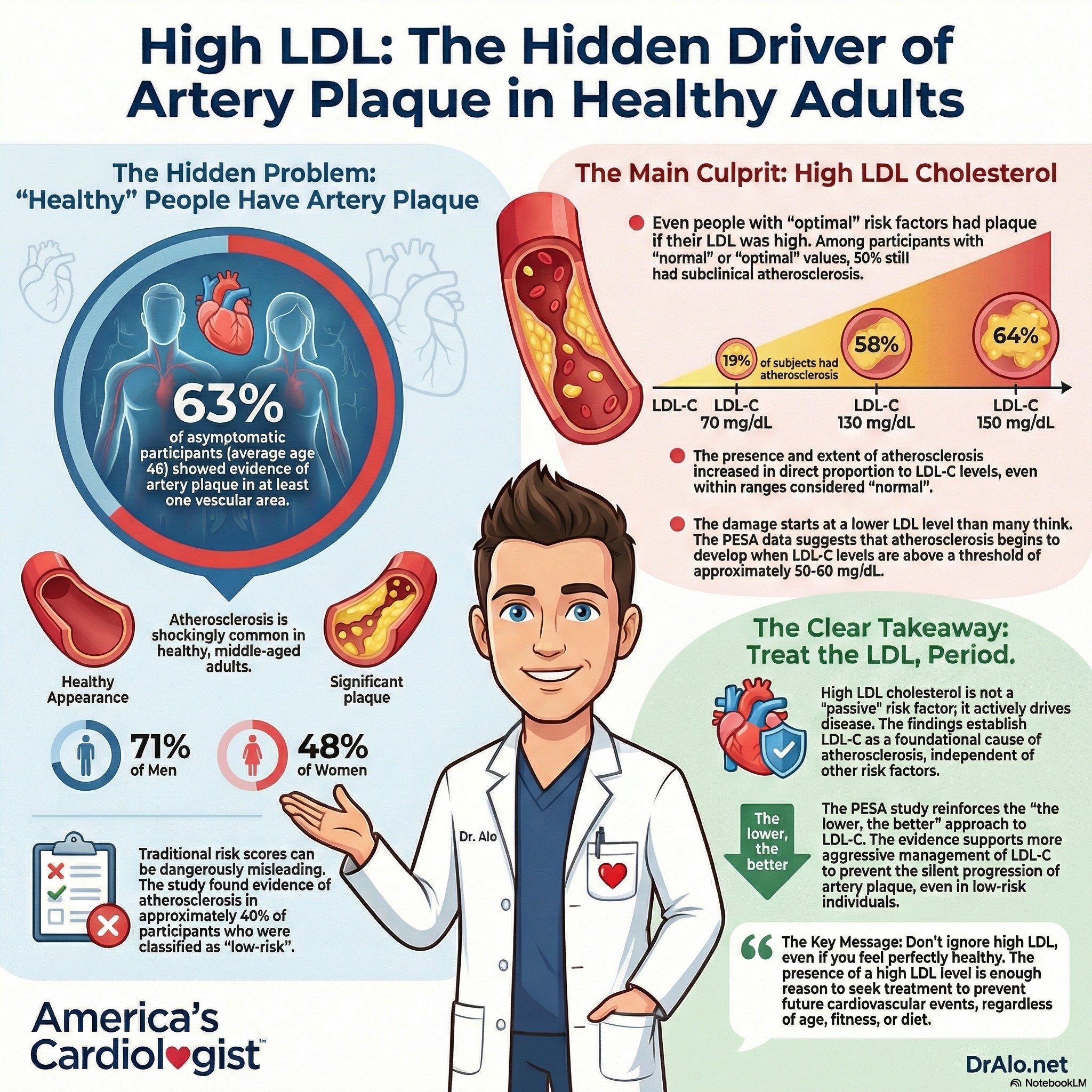
PESA Trial Infographic Summary:
1. Silent Atherosclerosis Is Common in Healthy Adults
The PESA study followed 4,184 apparently healthy men and women aged 40–54 with no known cardiovascular disease. These were working professionals, not cardiac patients.
Using advanced vascular imaging, researchers found that 63% already had atherosclerosis somewhere in their arterial system.
- 71% of men had plaque
- 48% of women had plaque
The key insight: you can feel healthy and still have progressing artery disease. Atherosclerosis often develops silently for years, without chest pain, shortness of breath, or abnormal stress tests.
2. Zero Calcium Score Does Not Mean Zero Heart Disease
A coronary artery calcium (CAC) score is widely used to assess heart disease risk. A score of zero is often interpreted as “no plaque.”
The PESA study challenges that assumption.
Among participants with a calcium score of zero, 60% still had atherosclerotic plaque elsewhere in the body.
Why? Because calcium appears late in the disease process.
Early atherosclerosis often begins in: - Femoral arteries (legs) - Carotid arteries (neck)
These areas can develop non-calcified plaque years before calcium appears in the coronary arteries.
Takeaway: A zero calcium score does not guarantee you are free of artery disease. Imaging beyond the heart—especially femoral or carotid ultrasound—can detect disease much earlier.
3. Normal LDL Cholesterol May Not Be Optimal
One of the most important findings from the PESA study involves LDL cholesterol.
Traditionally, LDL levels under 115–130 mg/dL are considered “normal” for people without known heart disease.
However, PESA researchers found:
- Atherosclerosis was present even in people with optimal traditional risk factors
- Plaque development began at LDL levels as low as 50–60 mg/dL
- There was a direct linear relationship between LDL levels and plaque burden
In other words: as LDL rises, plaque increases—even within so-called normal ranges.
The authors concluded that for primary prevention, the principle should be:
“The lower the LDL, the better.”
This challenges how “normal cholesterol” is currently defined and highlights why earlier LDL optimization may be critical.
4. Lifestyle Habits That Accelerate Silent Atherosclerosis
The PESA study also identified specific daily behaviors associated with higher plaque burden.
Skipping Breakfast and Heart Disease
Participants who routinely skipped breakfast had a 2.6-fold higher risk of generalized atherosclerosis, even after adjusting for other risk factors.
Sleep Duration and Artery Plaque
Individuals who slept less than 6 hours per night, or had fragmented sleep, showed significantly higher levels of arterial plaque compared to those sleeping 7–8 hours.
Diet and Social-Business Eating Patterns
Frequent eating out, processed meats, alcohol, and irregular meal timing—common in “social-business” lifestyles—were associated with more widespread disease compared to a Mediterranean-style diet.
These findings reinforce that atherosclerosis is influenced by daily routines, not just genetics or lab values.
5. Early Atherosclerosis Affects the Brain, Not Just the Heart
One of the most sobering discoveries from the PESA study involved the brain.
Using PET scans, researchers found that individuals with higher cardiovascular risk and subclinical atherosclerosis showed brain hypometabolism—a reduction in the brain’s energy use.
Critically, these changes occurred in the same brain regions affected early in Alzheimer’s disease.
This suggests that:
- Midlife artery disease may impair brain health long before memory symptoms appear
- Protecting arteries in your 40s and 50s may be one of the most effective strategies to preserve cognitive function later in life
Heart health and brain health are inseparable.
What the PESA Study Teaches Us About Early Heart Disease
The PESA study confirms that atherosclerosis is a systemic, silent disease that often begins decades before diagnosis.
Relying solely on symptoms, age, or basic risk calculators may leave many people falsely reassured.
What You Can Do Now
- Look beyond the heart: Ask about carotid or femoral artery imaging—not just calcium scoring
- Aim for optimal LDL, not average: Lower LDL levels are associated with less plaque
- Protect daily rhythms: Eat breakfast regularly and prioritize 7–8 hours of quality sleep
Early detection creates opportunity. Once plaque is identified early, progression can often be slowed—or even stabilized—through targeted prevention.
Still Have Questions? Stop Googling and Ask Dr. Alo.
You’ve read the science, but applying it to your own life can be confusing. I created the Dr. Alo VIP Private Community to be a sanctuary away from social media noise.
Inside, you get:
-
Direct Access: I answer member questions personally 24/7/365.
-
Weekly Live Streams: Deep dives into your specific health challenges.
-
Vetted Science: No fads, just evidence-based cardiology and weight loss.
Don't leave your heart health to chance. Get the guidance you deserve. All this for less than 0.01% the cost of health insurance! You can cancel at anytime!
[👉 Join the Dr. Alo VIP Community Today]
Cardiology & Obesity Medicine