Your Morning Coffee and Your Heart: What the American Heart Association Actually Found
Jul 22, 2026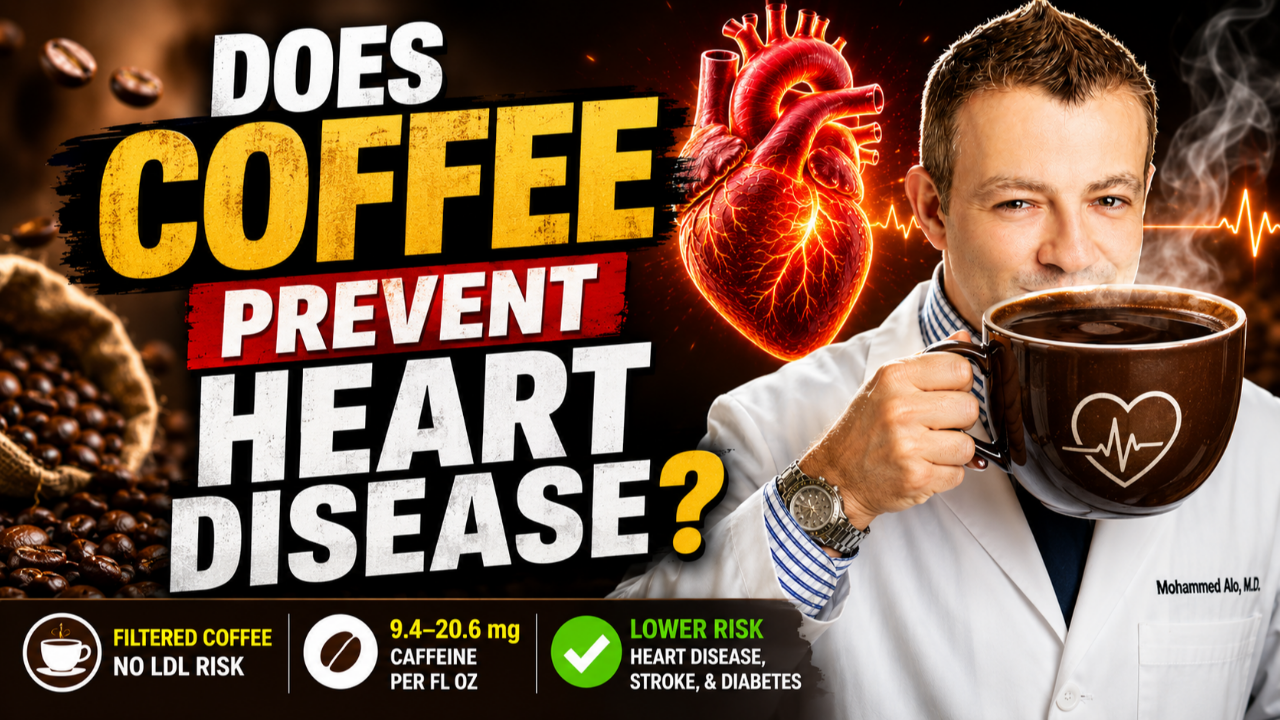
Your Morning Coffee and Your Heart: What the American Heart Association Actually Found
Caffeine is the most widely consumed drug on the planet, and most people drinking it have no idea what it does to their cardiovascular system. The American Heart Association just released a landmark scientific statement in Circulation that cuts through decades of conflicting headlines. The findings are more nuanced than any single headline can capture, and some of them will surprise you.
You'll notice that the majority of this statement matches what I published in 2023 in the Cholesterol TRUTHS book. In fact, that entire Coffee chapter is on this blog. I am glad the AHA has caught up to the evidence and published a statement on coffee and caffeine safety.
What the Research Shows
The AHA scientific statement, authored by a nine-member panel led by Dr. Gregory Marcus from the University of California, San Francisco, synthesizes the full body of evidence on caffeine and cardiovascular disease. The panel draws a critical distinction from the start: most research on caffeine is actually research on coffee, and coffee is not just caffeine. Coffee contains chlorogenic acids, diterpenes, trigonelline, and melanoidins. These bioactive compounds have their own cardiovascular effects, which means you cannot always separate the caffeine from the cup it comes in.
That distinction matters enormously for how you interpret the data.
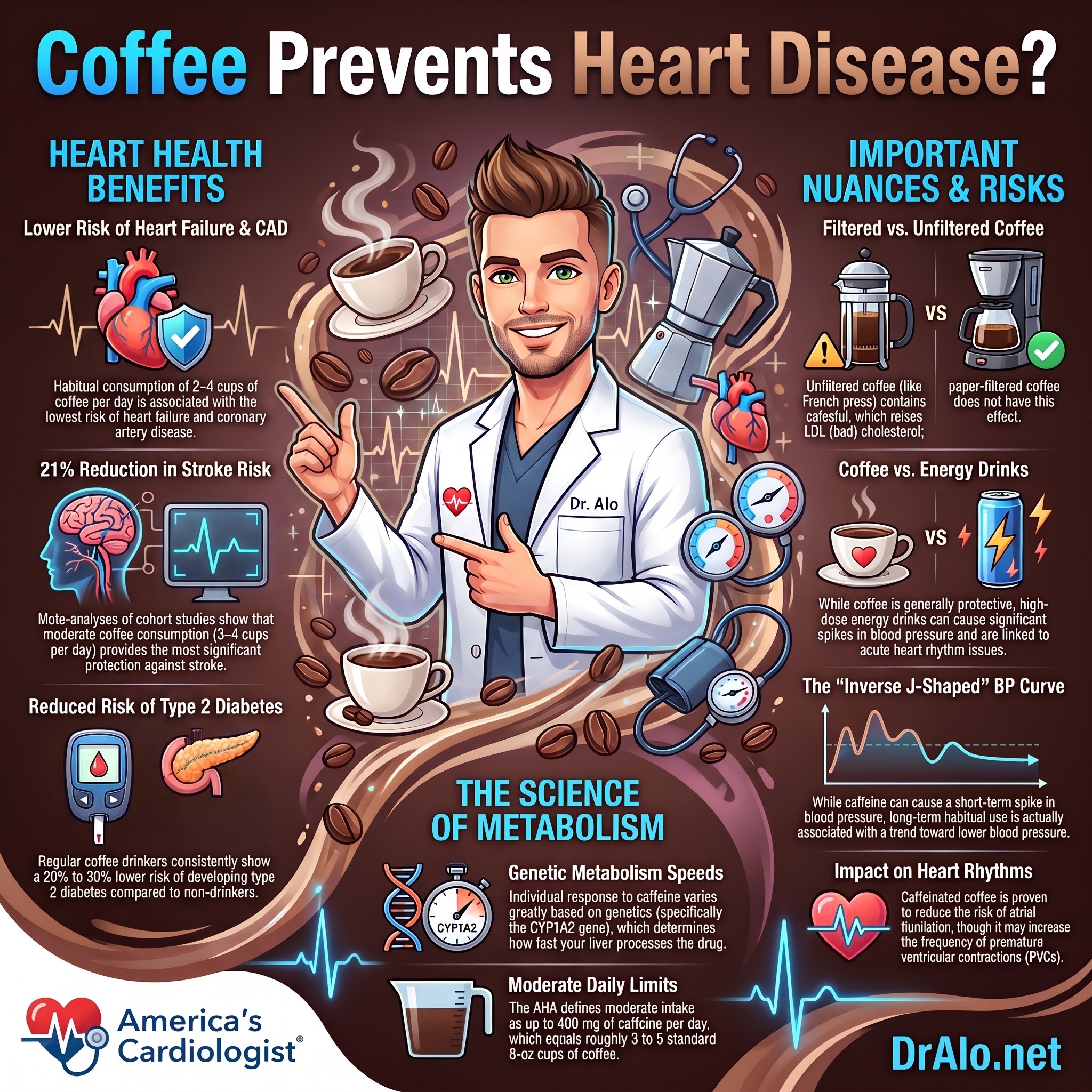
The relationship between caffeine and blood pressure follows what researchers call an inverse J-shaped curve. Low to moderate intake is associated with no increase in blood pressure, or even a slight decrease. High intake pushes blood pressure up. This is not a linear dose-response relationship, and treating it like one leads to bad clinical advice.
On the lipid side, the news is mixed. Unfiltered coffee, the kind you get from a French press, Arabic (or Turkish boiled coffee), or a traditional espresso without paper filtration, raises LDL cholesterol. The culprit is diterpenes, specifically cafestol and kahweol, which bypass filtration. Filtered drip coffee does not carry the same LDL burden. If you care about your LDL and ApoB particle load, and you should, the method of preparation is not a trivial detail.
Infographic Summary:
Why This Matters for Your Heart
I see patients every week who ask me whether they should quit coffee to protect their hearts. Most of the time, the answer is no. The data simply do not support that advice for moderate consumers of filtered coffee.
What the AHA statement shows is that habitual coffee consumption is associated with a lower risk of type 2 diabetes, coronary artery disease, heart failure, and stroke. These are not trivial endpoints. These are the major cardiovascular killers in America. The association holds even for decaffeinated coffee in some analyses, which tells us that caffeine alone is not the only protective agent at work.
The arrhythmia data are particularly interesting. Randomized controlled trial evidence, which is the highest quality evidence we have, shows that caffeinated coffee decreases the risk of atrial fibrillation occurrence in regular drinkers. At the same time, it increases the frequency of premature ventricular contractions, or PVCs. For most people, PVCs are a nuisance, not a danger. Atrial fibrillation is a different story entirely. AF is the most common sustained cardiac arrhythmia in the world and a leading cause of stroke. Reducing its occurrence is clinically meaningful.
Energy drinks are where the story turns dark. The AHA statement is direct: high doses of caffeine from energy drinks are generally associated with cardiovascular harm. Energy drink shots contain 40 to 69 mg of caffeine per fluid ounce. That is a fundamentally different exposure than a cup of filtered coffee, which delivers roughly 9 to 21 mg per fluid ounce. Taurine and other additives in energy drinks also increase the absorption speed and intensity of caffeine. The cardiovascular risk profile of energy drinks is not the same as the risk profile of coffee, and conflating them is a clinical error.
The Evidence
Here are the hard data points from the AHA scientific statement:
- Caffeine reaches peak blood concentration within 1 hour of ingestion and has 99 to 100 percent oral bioavailability
- The half-life of caffeine in healthy adults is 4 to 5 hours, with a range of 2 to 12 hours depending on individual metabolism
- Over 60 plant species naturally contain caffeine, including cacao beans and tea leaves
- Caffeine is metabolized primarily by the liver enzyme CYP1A2, producing paraxanthine (80% of metabolites), theobromine (11%), and theophylline (4%)
- Regular brewed coffee contains 9.4 to 20.6 mg of caffeine per fluid ounce
- Energy drink shots contain 40 to 69 mg of caffeine per fluid ounce
- Decaffeinated coffee contains only 0.25 mg of caffeine per fluid ounce
- Inverse associations between coffee and type 2 diabetes risk are observed even with decaffeinated coffee, implicating non-caffeine compounds
- Unfiltered coffee raises LDL cholesterol, while filtered coffee does not carry the same lipid burden
- Cigarette smoking induces CYP1A2 and increases caffeine metabolism, shortening its half-life
- Pregnancy reduces CYP1A2 activity, slowing caffeine metabolism and extending its half-life
What You Can Do
Drink filtered coffee. The paper filter removes the diterpenes that raise LDL. This one change eliminates the lipid risk while preserving the cardiovascular benefits associated with habitual coffee consumption.
Stay at moderate consumption. The protective associations in the data cluster around moderate intake. The J-shaped blood pressure curve means excessive intake starts working against you.
Avoid energy drinks. The caffeine dose, the additives, and the absorption dynamics are in an entirely different risk category than coffee. The AHA data on this is clear.
Know your genetics. Some people metabolize caffeine slowly due to variants in CYP1A2. Slow metabolizers may experience stronger and longer-lasting cardiovascular responses to the same dose. If caffeine gives you palpitations, elevated heart rate, or disrupted sleep at doses that do not bother others, your metabolism is likely slower than average.
If you have a history of atrial fibrillation, talk to your cardiologist before changing your caffeine habits. The RCT data suggests that regular drinkers have lower AF occurrence, but individual cases require individual assessment.
Do not count medications as neutral. Over-the-counter products like Excedrin Migraine contain 130 mg of caffeine per two tablets. NoDoz delivers 200 mg per capsule. Hydroxycut Hardcore delivers 265 mg per two capsules. These are not negligible doses, and they add to whatever you consume in food and beverage.
Data Review
9.4 to 20.6 mg per fluid ounce: Caffeine concentration in regular brewed coffee, the most commonly consumed caffeine source in the United States
40 to 69 mg per fluid ounce: Caffeine concentration in energy drink shots, representing a fundamentally higher and more dangerous dose profile than traditional coffee
4 to 5 hours: Average half-life of caffeine in a healthy adult, meaning a mid-afternoon coffee is still active in your system at bedtime
80%: The percentage of caffeine metabolized into paraxanthine by the liver, a biologically active compound with its own cardiovascular effects
99 to 100 percent: Oral bioavailability of caffeine, meaning nearly all of what you consume reaches your bloodstream
0.25 mg per fluid ounce: Caffeine content in decaffeinated coffee, which still shows inverse associations with type 2 diabetes risk, confirming that non-caffeine compounds in coffee carry independent protective effects
Bottom Line
The popular myth that coffee is bad for your heart does not hold up against the evidence. The AHA scientific statement, drawing on the full body of observational and randomized controlled trial data, shows that moderate consumption of filtered coffee is associated with lower risk of coronary artery disease, heart failure, stroke, and atrial fibrillation. The lipid concern, specifically LDL and ApoB elevation, is real but specific to unfiltered preparations. Energy drinks are a separate category of risk entirely and should not be grouped with coffee in any cardiovascular conversation. The science here is maturing, and the nuance matters. So here is my challenge to you: the next time someone tells you to quit coffee for your heart, ask them which preparation method, which dose, and which cardiovascular outcome they are referring to. If they cannot answer all three, they are not giving you medical advice. They are giving you a headline.
References
- Marcus GM, Hu FB, van Dam RM, Cornelis MC, Dewland TA, Kang J, Larsson SC, Page RL II, Parekh N; on behalf of the American Heart Association Council on Lifestyle and Cardiometabolic Health; Council on Clinical Cardiology; and Stroke Council. Caffeine and Cardiovascular Disease: A Scientific Statement From the American Heart Association. Circulation. 2026;154:e00–e00. https://doi.org/10.1161/CIR.0000000000001454
Still Have Questions? Stop Googling and Ask Dr. Alo.
You’ve read the science, but applying it to your own life can be confusing. I created the Dr. Alo VIP Private Community to be a sanctuary away from social media noise.
Inside, you get:
-
Direct Access: I answer member questions personally 24/7/365.
-
Weekly Live Streams: Deep dives into your specific health challenges.
-
Vetted Science: No fads, just evidence-based cardiology and weight loss.
Don't leave your heart health to chance. Get the guidance you deserve. All this for less than 0.01% the cost of health insurance! You can cancel at anytime!
[👉 Join the Dr. Alo VIP Community Today]
Cardiology & Obesity Medicine