
5 Exercises That Lower Blood Sugar (and the Truth About the 58% Number)
Oct 13, 2026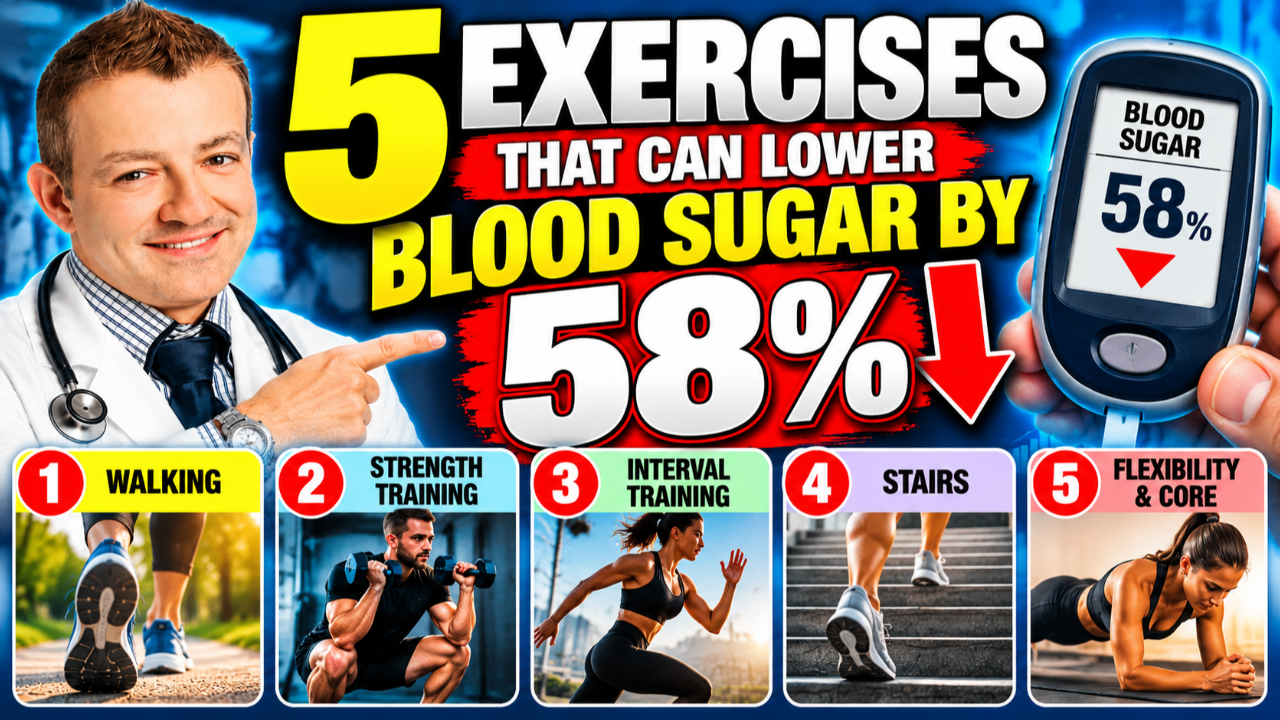
5 Exercises That Lower Blood Sugar By 58%
Blood sugar control is not complicated. It is not about finding one perfect workout or one magic supplement. It is about moving your body consistently, and the science behind it is remarkably strong. I am going to show you five specific exercises backed by real data, and I am going to correct a number that keeps getting misused online.
But first it's important to clarify that while exercise has some effect on blood sugar, nothing beats caloric restriction. Usually if you are prediabetic or diabetic, the one thing that moves the needle the most on blood sugar is reducing caloric intake. I talk about this in other blog posts.
With that being said we do recommend certain forms of exercise because they can help improve insulin resistance and insulin sensitivity and may help people improve their glucose control.
When coupled with a calorie deficit this can improve glycemic control.
If you are a very thin diabetic and don't have weight to lose, then weight loss is not as important as building muscle and exercises that help build muscle will be crucial.
As a certified personal trainer and a board-certified internist and board-certified cardiologist, I feel uniquely qualified to talk about this topic.
The 58% Number, Explained Correctly
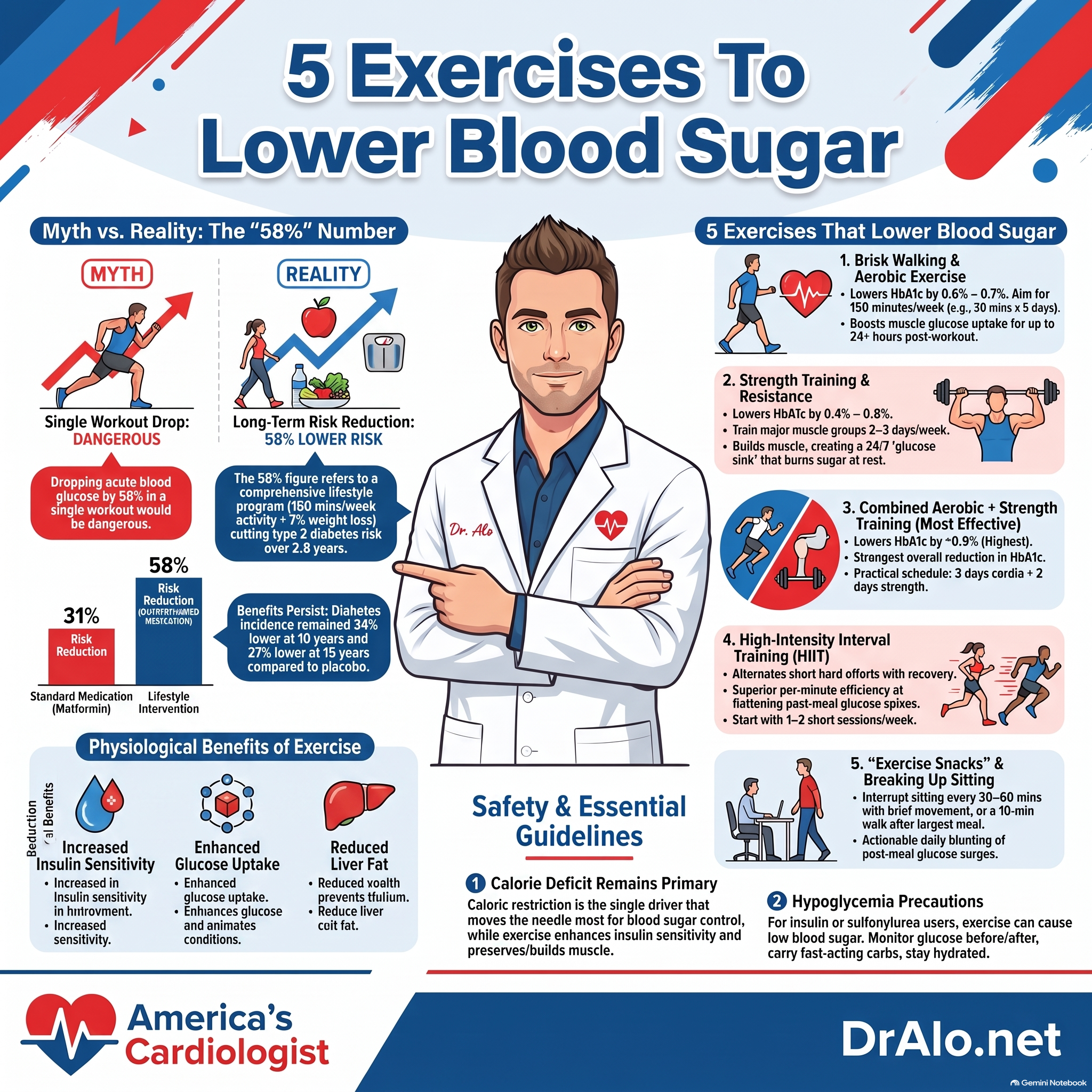
You have probably seen the claim that exercise lowers blood sugar by 58%. That is wrong, and I want to fix it before we go further. The 58% figure comes from the Diabetes Prevention Program, a landmark trial in people at high risk for type 2 diabetes. Participants who followed a full lifestyle program, at least 150 minutes of activity per week combined with a 7% weight loss, cut their risk of developing type 2 diabetes by 58% over an average of 2.8 years. That is a reduction in the chance of developing diabetes over years, not a 58% drop in a blood glucose reading after a workout. No single exercise session drops your blood sugar by 58%. What exercise actually does is lower your long term blood sugar marker, HbA1c, by a meaningful and measurable amount, and it improves how well your body responds to insulin. The habit of regular movement, sustained over time, is what produced that 58% risk reduction.
Dropping blood sugar by 58% can actually be dangerous and this is not generally something that we would aim for.
Infographic Summary:
What the Diabetes Prevention Program Actually Found
The Diabetes Prevention Program enrolled 3,234 adults who did not have diabetes but were at high risk for it, and randomly assigned them to one of three groups: a placebo pill, the diabetes drug metformin, or an intensive lifestyle program built around at least 7% weight loss and at least 150 minutes of physical activity a week.
Compared with placebo, the lifestyle program cut the number of people who developed type 2 diabetes by 58%. Metformin cut it by 31%. Lifestyle change beat the drug outright: the lifestyle group developed diabetes 39% less often than the metformin group. Metformin is a good drug, and I still find that result remarkable. Moving more and losing a modest amount of weight outperformed a medication.
Does It Last? The DPP Outcomes Study
Most of the participants were followed for years afterward in the Diabetes Prevention Program Outcomes Study (DPPOS). Ten years after the trial began, diabetes was still 34% less common in the lifestyle group and 18% less common in the metformin group than in the placebo group. At 15 years, the reductions were 27% for lifestyle and 18% for metformin.
The gap narrows over time, which is what you would expect as people age and as the placebo group was also offered lifestyle support. But the benefit never disappeared. A few years of real change still showed up as less diabetes a decade and a half later. Now let's get into the exercises that make it happen.
1. Brisk Walking and Other Aerobic Exercise
Aerobic exercise, meaning brisk walking, cycling, swimming, jogging, dancing, or stair climbing, is the most studied form of exercise for blood sugar control. Done consistently, it lowers HbA1c by roughly 0.6 to 0.7% and improves insulin sensitivity, according to the 2022 consensus report from the American Diabetes Association and the European Association for the Study of Diabetes.
How to do it: Aim for at least 150 minutes per week of moderate activity. That breaks down to about 30 minutes, five days a week. Moderate means you can hold a conversation but you cannot sing.
Pro tip: A single session of aerobic exercise boosts your muscles' ability to pull glucose out of your blood for up to two hours afterward, and that benefit can linger for a day or more, as the European Society of Cardiology's sports cardiology guidelines describe.
2. Strength Training
Lifting weights, using resistance bands, or doing body weight movements like squats and push ups builds muscle. Muscle is where your body stores and burns glucose, which makes it a direct lever on blood sugar control. Resistance training lowers HbA1c by about 0.4 to 0.6% and improves insulin sensitivity, according to the American College of Sports Medicine's updated consensus statement.
How to do it: Train two to three sessions per week on non-consecutive days. Work the major muscle groups: legs, back, chest, arms, and core.
Pro tip: More muscle mass means a bigger glucose sink, even when you are sitting still. This is why strength training pays off around the clock, not just during the workout.
You download the Dr. Alo app at https://dralo.net/app. There are three free exercise programs you can follow for different levels, from beginners to intermediate to advanced lifters. I recommend that most people start here.
3. Combined Aerobic Plus Strength Training
When researchers compared exercise types head to head, combining aerobic and resistance training produced the biggest drop in HbA1c, around 0.9%, beating either type done alone, according to that same ACSM statement and a 2020 review in Diabetologia. In the largest trial of its kind, only the combined exercise group showed a significant improvement compared to a no exercise control group.
How to do it: Blend both formats into your week. A practical split is three days of walking or cycling plus two days of strength work. This is the single most effective exercise strategy in the data we have.
4. High Intensity Interval Training (HIIT)
HIIT alternates short bursts of hard effort with periods of easy recovery, for example one minute fast followed by two minutes slow, repeated for the length of the session. It is time efficient and particularly good at flattening the blood sugar spikes that happen after meals, delivering a larger blood sugar benefit per minute of exercise than steady state cardio, as a 2025 randomized trial published in PLoS One found.
How to do it: Start with one to two short sessions per week and build gradually from there. Because the intensity is high, check with your clinician first if you have heart disease or other complications. Be aware that HIIT carries a somewhat higher risk of muscle and joint injury compared to moderate exercise.
5. Breaking Up Sitting With Exercise Snacks
You do not need a gym membership to move the needle on blood sugar. Simply interrupting long periods of sitting, standing up and walking for a few minutes every half hour, or taking a short stroll after meals, measurably improves blood sugar control, according to the American Diabetes Association and European consensus report. Walking after a meal is particularly effective because it blunts the post-meal glucose rise.
How to do it: Take a 10 minute walk after your largest meal of the day. Get up and move for a couple of minutes every 30 to 60 minutes while you are at your desk or on the couch. Small increases in daily step count add up more than people expect.
Putting It All Together
The strongest results in the data come from combining aerobic and strength training, moving on most days of the week, and avoiding long stretches of uninterrupted sitting. Remember, the 58% figure came from a complete lifestyle program, regular activity paired with modest weight loss, not exercise alone. Pairing movement with healthy eating multiplies the benefit.
A Few Safety Notes
If you take insulin or certain diabetes medications, like sulfonylureas, exercise can cause low blood sugar, or hypoglycemia. Ask your care team about checking your glucose before and after activity and whether your medication doses need adjusting. Carry a fast acting carbohydrate, like glucose tablets or juice, when you exercise. Start gradually, stay hydrated, and wear supportive footwear, especially important if you have any nerve damage in your feet. Talk with your doctor before starting a new exercise program, particularly if you have heart disease, uncontrolled blood sugar, or other complications.
Data Review
58%: Reduction in new type 2 diabetes over an average of 2.8 years with a full lifestyle program of 150 minutes of weekly activity plus 7% weight loss, not a single blood sugar drop
31%: Reduction with metformin in the same trial; lifestyle change beat the drug
27%: Reduction with the lifestyle program still seen 15 years later in the DPP Outcomes Study
0.6 to 0.7%: Average HbA1c reduction from consistent aerobic exercise alone
0.4 to 0.6%: Average HbA1c reduction from resistance training alone
0.9%: Average HbA1c reduction from combined aerobic plus resistance training, the largest effect of any single approach tested
2 hours: How long a single aerobic exercise session boosts your muscles' glucose uptake, with effects lingering a day or more
150 minutes: Minimum weekly moderate activity recommended by current diabetes guidelines
Bottom Line
There is no single exercise that drops your blood sugar by 58% in one session. That number describes a lifestyle program lowering the risk of diabetes over years. What the real evidence shows is just as powerful: walking, lifting, combining the two, intervals, and simply breaking up sitting time all move HbA1c in the right direction, with combined training producing the biggest measured effect at 0.9%. You do not need a perfect plan. You need a plan you will actually do, five days a week, for years. What is stopping you from taking a 10 minute walk after dinner tonight?
Go deeper inside the community
Articles like this one cover the general case. The questions that actually decide what you should do next are usually about your own numbers, and those are the ones worth asking somewhere you can get an answer. Dr. Alo's private community is where the lab patterns, the case examples, and the follow-up questions live, alongside people working through the same things.
References
- Tucker WJ, Fegers-Wustrow I, Halle M, et al. Exercise for Primary and Secondary Prevention of Cardiovascular Disease: JACC Focus Seminar 1/4. Journal of the American College of Cardiology. 2022.
- Mi MY, Perry AS, Krishnan V, Nayor M. Epidemiology and Cardiovascular Benefits of Physical Activity and Exercise. Circulation Research. 2025.
- Crossman EL. Physical Activity in Patients With Type 2 Diabetes Mellitus: Updated Consensus Statement From the ACSM. American Family Physician. 2023.
- Davies MJ, Aroda VR, Collins BS, et al. Management of hyperglycaemia in type 2 diabetes, 2022. A consensus report by the ADA and the EASD. Diabetologia. 2022.
- Amaravadi SK, Ferreira AS, Vigario PDS. Comparative effects of combined aerobic and resistance training versus high-intensity interval training on insulin resistance, glycaemic control, body composition and quality of life in type 2 diabetes: a 12-week randomised controlled trial. PLoS One. 2025.
- Savikj M, Zierath JR. Train like an athlete: applying exercise interventions to manage type 2 diabetes. Diabetologia. 2020.
- Pelliccia A, Sharma S, Gati S, et al. 2020 ESC Guidelines on Sports Cardiology and Exercise in Patients With Cardiovascular Disease. European Heart Journal. 2021.
- Diabetes Prevention Program Research Group. Reduction in the incidence of type 2 diabetes with lifestyle intervention or metformin. New England Journal of Medicine. 2002.
- Diabetes Prevention Program Research Group. 10-year follow-up of diabetes incidence and weight loss in the Diabetes Prevention Program Outcomes Study. The Lancet. 2009.
- Diabetes Prevention Program Research Group. Long-term effects of lifestyle intervention or metformin on diabetes development and microvascular complications over 15-year follow-up: the Diabetes Prevention Program Outcomes Study. The Lancet Diabetes & Endocrinology. 2015.
This article is for informational purposes only and does not constitute medical advice. Always consult your physician or a qualified healthcare provider before starting a new exercise program or making changes to your diabetes management plan.
Still Have Questions? Stop Googling and Ask Dr. Alo.
You’ve read the science, but applying it to your own life can be confusing. I created the Dr. Alo VIP Private Community to be a sanctuary away from social media noise.
Inside, you get:
-
Direct Access: I answer member questions personally 24/7/365.
-
Weekly Live Streams: Deep dives into your specific health challenges.
-
Vetted Science: No fads, just evidence-based cardiology and weight loss.
Don't leave your heart health to chance. Get the guidance you deserve. All this for less than 0.01% the cost of health insurance! You can cancel at anytime!
[👉 Join the Dr. Alo VIP Community Today]
Cardiology & Obesity Medicine