
Rosuvastatin vs Atorvastatin (Crestor vs Lipitor): Which Is Better?
Oct 09, 2026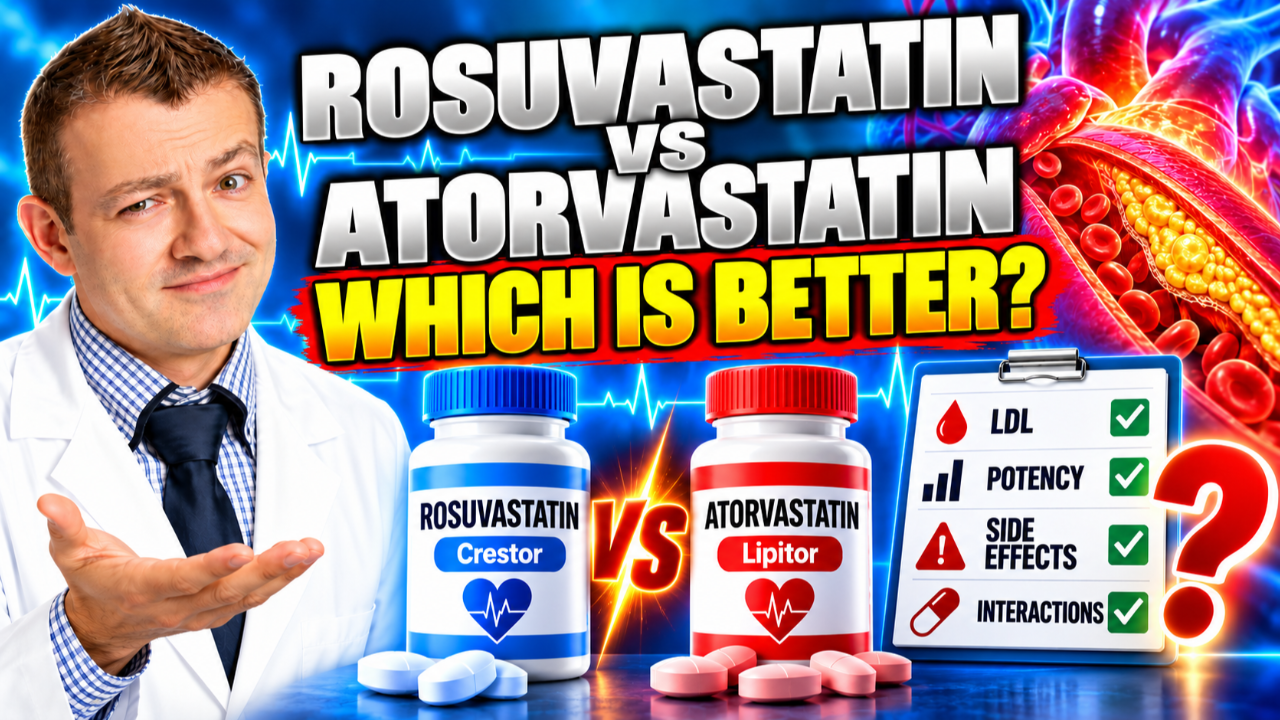
Rosuvastatin vs Atorvastatin (Crestor vs Lipitor): Which Is Better?
Rosuvastatin (Crestor) and atorvastatin (Lipitor) are the two statins I use more than any others. They are both excellent. But they are not identical, and people ask me all the time which one is better. So let me walk you through the head to head evidence, in plain English, including the parts that do not favor my first choice.
The Short Answer
- Potency: rosuvastatin lowers LDL more per milligram.
- Heart outcomes: in the best head to head trial, they prevented the same number of heart events.
- Side effects: in a large Veterans hospital study, atorvastatin had more liver test changes and muscle symptoms. But rosuvastatin had more new diabetes and cataract surgery in a randomized trial. It's important to note that there was no new-onset diabetes. This was only in people who already had prediabetes or were already on the brink of diabetes.
- Interactions: rosuvastatin has fewer, because it is barely processed by the same liver enzyme that handles many other drugs.
- What I do: I start with rosuvastatin, and sometimes I'll use atorvastatin instead If they can't tolerate the rosuvastatin .
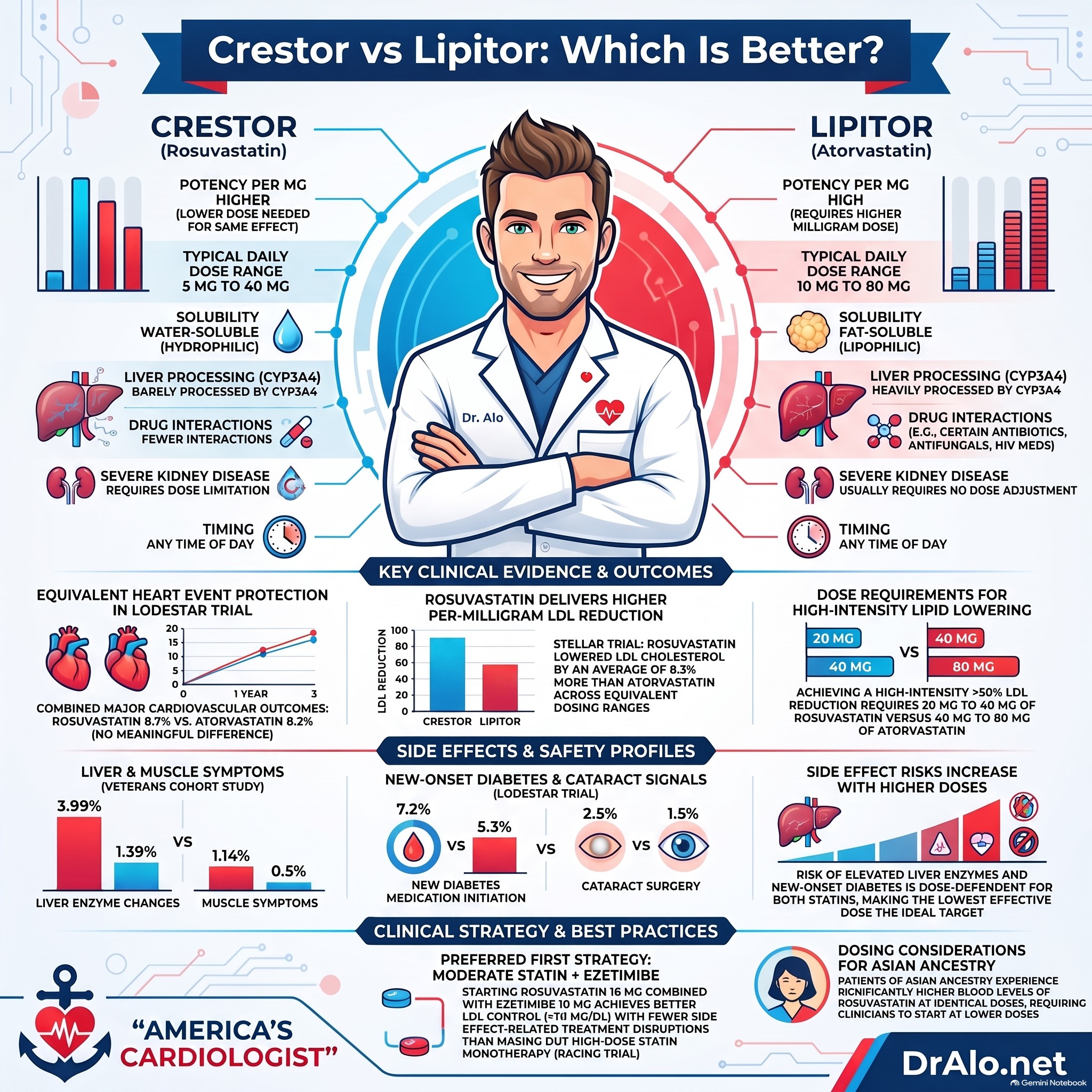
Infographic Summary:
How Statins Work
Your liver makes cholesterol using an enzyme called HMG-CoA reductase. Both rosuvastatin and atorvastatin block this enzyme. When the liver makes less cholesterol, it senses the drop and builds more LDL receptors, which pull LDL out of your bloodstream. That is how statins lower your LDL, and over time less LDL means less plaque in your arteries.
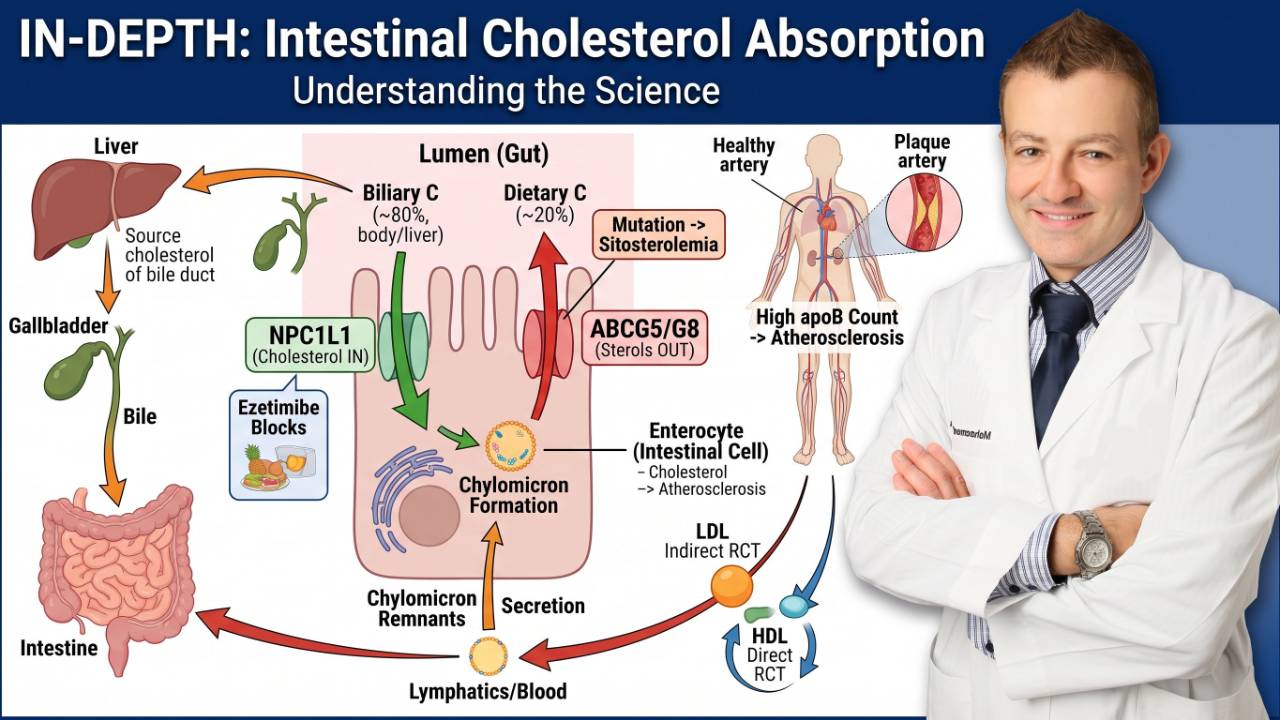
This picture shows where each of the cholesterol medicines I use does its work. Statins block the cholesterol factory in the liver. Ezetimibe blocks absorption in the intestine. PCSK9 antibodies stop PCSK9 from destroying LDL receptors. Bempedoic acid works on an earlier step in the liver.

Crestor vs Lipitor: The Statin Intensity Chart
Crestor is the brand name for rosuvastatin, and Lipitor is the brand name for atorvastatin. Doctors group statins by how much they lower LDL cholesterol: high intensity lowers LDL by 50% or more, moderate intensity by 30% to 49%, and low intensity by less than 30%. The 2026 ACC/AHA dyslipidemia guideline lists atorvastatin and rosuvastatin as the preferred statins.

This chart answers two questions I hear all the time. Is a 40 mg statin a high dose? It depends on the drug. Atorvastatin 40 to 80 mg is high intensity, but simvastatin 40 mg or pravastatin 40 mg is only moderate. And is a 10 mg statin a low dose? Rosuvastatin 10 mg and atorvastatin 10 mg are both moderate intensity, while simvastatin 10 mg is low.
Notice that rosuvastatin gets there with fewer milligrams. Rosuvastatin 20 to 40 mg is high intensity, the same group as atorvastatin 40 to 80 mg.
The Two Drugs Side by Side
| Rosuvastatin (Crestor) | Atorvastatin (Lipitor) | |
|---|---|---|
| Strength per milligram | Stronger, so a lower dose gives the same effect | Strong, but needs a higher dose |
| Typical dose range | 5 to 40 mg once a day | 10 to 80 mg once a day |
| How the body processes it | Barely processed by the CYP3A4 liver enzyme | Heavily processed by the CYP3A4 liver enzyme |
| Drug interactions | Fewer | More, for example with some antibiotics, antifungals and HIV medicines |
| Time of day | Any time | Any time |
| Kidney disease | Dose is limited if the kidneys are severely impaired | Usually no dose change |
| Water or fat soluble | Water-loving (hydrophilic) | Fat-loving (lipophilic) |
Which Is More Potent?
Rosuvastatin. The STELLAR trial compared them head to head across their full dose ranges in 2,431 adults. Across doses, rosuvastatin lowered LDL cholesterol by 8.2% more than atorvastatin. It also raised HDL more.
A Cochrane review looked at 108 trials of rosuvastatin. Rosuvastatin 10 to 40 mg lowered LDL by 46% to 55%, and in an informal comparison with atorvastatin it came out about three times more potent, milligram for milligram. That is why rosuvastatin reaches the same intensity group with about half the dose.
Do They Prevent the Same Number of Heart Attacks?
Yes. The LODESTAR trial randomly assigned 4,400 people with coronary artery disease to rosuvastatin or atorvastatin and followed them for 3 years. The combined outcome of death, heart attack, stroke, or a procedure to open an artery was 8.7% with rosuvastatin and 8.2% with atorvastatin, which was not a meaningful difference. Rosuvastatin did lower the average LDL slightly more, 1.8 compared with 1.9 mmol/L, even though the average daily dose was only 17 mg of rosuvastatin compared with 36 mg of atorvastatin.
Each drug also has its own big track record. For atorvastatin:
- TNT: in 10,001 people with stable coronary disease, atorvastatin 80 mg brought the average LDL to 77 mg/dL, compared with 101 mg/dL on atorvastatin 10 mg, and fewer people had a major cardiovascular event, 8.7% compared with 10.9% over a median of 4.9 years.
- PROVE-IT TIMI 22: after a heart attack or unstable angina, atorvastatin 80 mg (average LDL 62 mg/dL) reduced the main combined endpoint by 16 percent compared with pravastatin 40 mg (average LDL 95 mg/dL).
- SPARCL: in 4,731 people who had a stroke or mini-stroke, atorvastatin 80 mg lowered the risk of another stroke, 11.2% compared with 13.1% on placebo.
- ASCOT-LLA: in 10,305 people with high blood pressure and average cholesterol, just 10 mg of atorvastatin lowered the risk of a nonfatal heart attack or fatal coronary disease by 36 percent. The trial was stopped early, after about 3 years, because the benefit was so clear.
- CARDS: in 2,838 people with type 2 diabetes, 10 mg of atorvastatin led to 83 major cardiovascular events compared with 127 on placebo, and the trial was stopped 2 years early for benefit.
For rosuvastatin, the JUPITER trial showed that 20 mg reduced cardiovascular events in people with high inflammation, and the SPORT trial showed that just 5 mg dramatically lowered LDL compared with placebo, while common supplements did nothing significant.
Which Has Fewer Side Effects?
This is where it gets interesting, because the evidence points both ways.
The Veterans hospital study. Researchers compared more than 10,000 veterans on high intensity statins: 5,852 on atorvastatin 40 to 80 mg and 4,165 on rosuvastatin 20 to 40 mg. Overall adverse drug reactions were 4.59% with atorvastatin and 2.91% with rosuvastatin. Liver enzyme changes were 3.99% compared with 1.39%, and muscle symptoms were 1.14% compared with 0.5%. This chart breaks the results down by dose. Panels C and D are the direct comparisons.

An honest caution, and the authors say it themselves: this was one hospital, the study looked back at records rather than randomizing anyone, and the two groups were treated in different years, rosuvastatin from 2009 to 2011 and atorvastatin from 2012 to 2016. The researchers also relied on diagnostic codes, could not measure whether people actually took their pills, and the groups differed in some ways at the start. One thing works in rosuvastatin's favor. The rosuvastatin groups were actually taking more interacting medicines, which the authors say could make the true gap in side effects even wider. They also noticed that atorvastatin's problems did not clearly rise with the dose, so other factors such as drug interactions may play a role. It fits what I see in practice, that rosuvastatin tends to be gentler on the liver and the muscles.
The signals that go the other way. In LODESTAR, more people on rosuvastatin started diabetes medicine, 7.2% compared with 5.3%, and had cataract surgery, 2.5% compared with 1.5%. A large study of two databases, one from China and one from the UK, found slightly lower death, heart event, and liver problem rates with rosuvastatin, but a higher rate of new type 2 diabetes in the UK data. The differences were small, and the authors noted that other explanations could not be ruled out. It is important to note that in this study there was no diagnosis of new diabetes. The only people that developed diabetes were people who were already prediabetic or on the brink of being diabetic. There were no incidents of new diabetes in people that were nowhere near being diabetic.
Diabetes risk with statins also rises with the dose. A 2011 meta-analysis in JAMA of 32,752 people found about 2 extra cases of diabetes per 1,000 patient-years with intensive-dose statins compared with moderate-dose statins. The same is true for the liver. In TNT, persistent liver enzyme elevations were seen in 0.2% of people on atorvastatin 10 mg and 1.2% on 80 mg. So with either drug, dose matters. Again this is only in people who are on the brink of being diabetic or were already prediabetic or diabetic.
Drug Interactions, Kidneys, and Special Situations
Statins handle other medicines differently. Rosuvastatin is a modern, fully synthetic statin that is barely processed by the liver enzymes that handle most other drugs. Atorvastatin relies more on the CYP3A4 enzyme, so certain other medicines can raise its levels and its side effects, including some antibiotics such as clarithromycin, some antifungals, and certain HIV medicines. A 2016 American Heart Association statement and a 2012 review in Expert Opinion on Drug Safety both stress that the differences between statins should be considered whenever a person takes other medicines. Always give your doctor and pharmacist a full list of your medicines and supplements.
Kidneys. Rosuvastatin is partly cleared by the kidneys, so its dose is limited in severe kidney disease. Atorvastatin is barely cleared by the kidneys and usually needs no dose change.
Ancestry. A 2005 study found that people of Asian ancestry have meaningfully higher blood levels of rosuvastatin than white people taking the same dose. So we start low in this group.
Timing. Both can be taken any time of day, with or without food due to the long half-life .
How I Choose Between Them
I start with rosuvastatin, usually a moderate dose of 5 to 10 mg, and I add ezetimibe rather than pushing the statin dose up. The RACING trial tested exactly that idea in 3,780 people with heart disease. Rosuvastatin 10 mg plus ezetimibe 10 mg was just as good at preventing heart events as rosuvastatin 20 mg alone, 9.1% compared with 9.9%. More people reached an LDL under 70 mg/dL, 73% compared with 55% at one year, and fewer had to stop or cut back the medicine because of side effects, 4.8% compared with 8.2%.
Because most of my patients are cardiac patients and have already had a cardiovascular event like a heart attack or stroke, many times we will start at more intense doses, like 20 mg or 40 mg. In some cases we start at the higher doses regardless because they have already had multiple events or have lipoprotein(a).
If someone has side effects or other problems on rosuvastatin, sometimes I'll use atorvastatin instead. Before I switch, I check whether the problem is really the statin, whether the dose is too high, and whether there is a drug interaction. I do not recommend that you stop your statin on your own unless it is causing severe symptoms. Please call your doctor or call your cardiologist to help guide you.
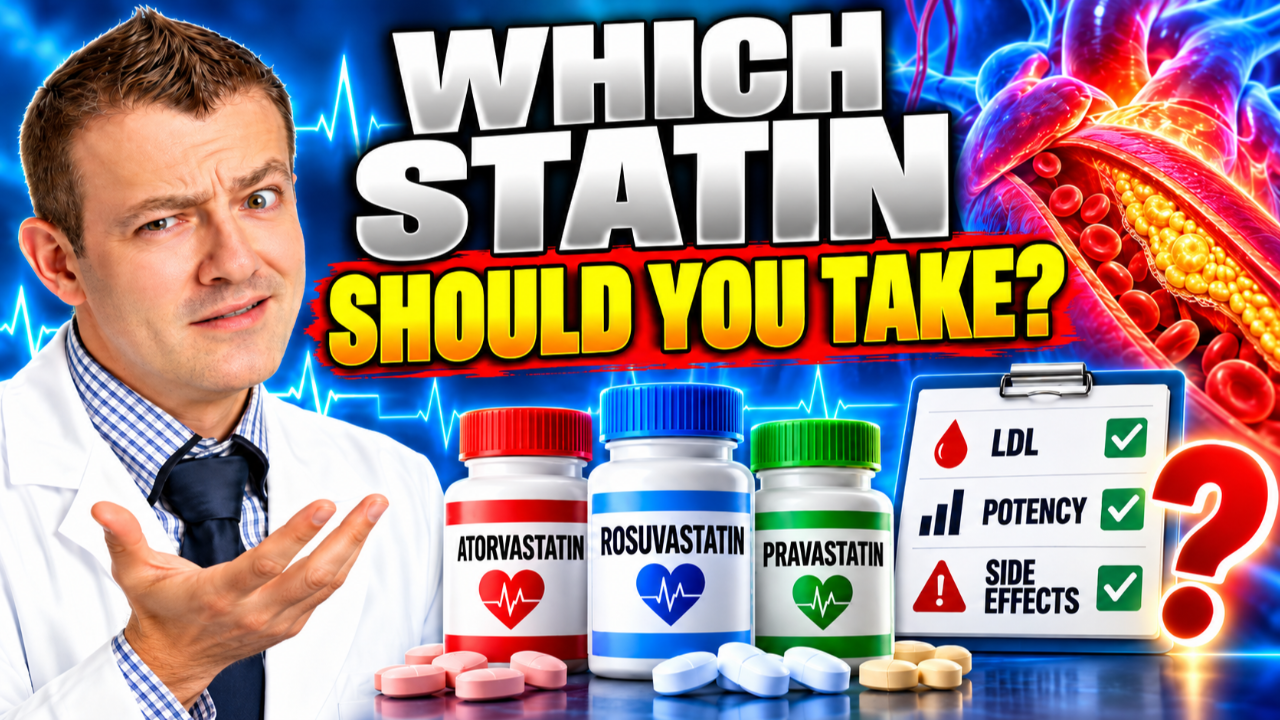
You can read the full approach in my article on which statin you should take, and my article on statin side effects.
Monitoring on Treatment
A cholesterol blood test is usually checked a few weeks after you start or change a statin, then periodically to confirm that it is working and that you are taking it. I like to see your LDL, and ideally your apoB, before and after any change. Tell your doctor promptly about unexplained muscle pain or weakness, dark urine, or yellowing of the skin or eyes.
Questions worth asking your doctor: What is my LDL goal, and which dose will get me there? Do any of my other medicines interact with this statin? How will we check that it is working? If I have muscle aches, what are my options before stopping?
Frequently Asked Questions
Is Crestor stronger than Lipitor? Yes, milligram for milligram. Rosuvastatin lowers LDL more, so a lower dose reaches the same intensity group.
Do they prevent the same number of heart attacks? In the LODESTAR trial of 4,400 people with coronary disease, the heart outcomes were the same over 3 years.
Which has more side effects? In a Veterans hospital cohort, atorvastatin had more liver and muscle problems. In a randomized trial, rosuvastatin had more new diabetes and cataract surgery. The differences are small, and the dose matters for both.
Should I switch from one to the other? Please talk to your doctor first. If you are having problems, there are often fixes, like a lower dose or adding ezetimibe, that do not require changing the statin.
The Bottom Line
Both rosuvastatin and atorvastatin are excellent statins with strong evidence. Rosuvastatin is more potent per milligram and has fewer interactions. Atorvastatin has the longer outcomes track record. I start with rosuvastatin, add ezetimibe for extra lowering at a lower dose, and sometimes I'll use atorvastatin instead. This is general education, not a prescription, so please work out your own drug and dose with your doctor.
Still have questions? Stop Googling and ask Dr. Alo.
You've read the science, but applying it to your own life can be confusing. That's exactly what the Heart 2 Heart VIP Community is for. You can ask me questions directly, join live video calls where we talk through scenarios like this one, and get physician-level guidance based on your actual situation.
Join here: https://dralo.net/community 💪🏻🩺🫀
Dr. Alo
References
- Blumenthal RS, Morris PB, Gaudino M, et al. 2026 ACC/AHA/AACVPR/ABC/ACPM/ADA/AGS/APhA/ASPC/NLA/PCNA guideline on the management of dyslipidemia. J Am Coll Cardiol. 2026;87(19):2624-2757. doi:10.1016/j.jacc.2025.11.016
- Jones PH, Davidson MH, Stein EA, et al. Comparison of the efficacy and safety of rosuvastatin versus atorvastatin, simvastatin, and pravastatin across doses (STELLAR trial). Am J Cardiol. 2003;92(2):152-160. doi:10.1016/S0002-9149(03)00530-7
- Adams SP, Sekhon SS, Wright JM. Lipid-lowering efficacy of rosuvastatin. Cochrane Database Syst Rev. 2014. doi:10.1002/14651858.CD010254.pub2
- Lee YJ, Hong SJ, Kang WC, et al. Rosuvastatin versus atorvastatin treatment in adults with coronary artery disease: secondary analysis of the randomised LODESTAR trial. BMJ. 2023;383:e075837. doi:10.1136/bmj-2023-075837
- LaRosa JC, Grundy SM, Waters DD, et al. Intensive lipid lowering with atorvastatin in patients with stable coronary disease (TNT). N Engl J Med. 2005;352(14):1425-1435. doi:10.1056/NEJMoa050461
- Cannon CP, Braunwald E, McCabe CH, et al. Intensive versus moderate lipid lowering with statins after acute coronary syndromes (PROVE IT-TIMI 22). N Engl J Med. 2004;350(15):1495-1504. doi:10.1056/NEJMoa040583
- Amarenco P, Bogousslavsky J, Callahan A, et al. High-dose atorvastatin after stroke or transient ischemic attack (SPARCL). N Engl J Med. 2006;355(6):549-559. doi:10.1056/NEJMoa061894
- Sever PS, Dahlof B, Poulter NR, et al. Prevention of coronary and stroke events with atorvastatin in hypertensive patients who have average or lower-than-average cholesterol concentrations (ASCOT-LLA). Lancet. 2003;361(9364):1149-1158. doi:10.1016/S0140-6736(03)12948-0
- Colhoun HM, Betteridge DJ, Durrington PN, et al. Primary prevention of cardiovascular disease with atorvastatin in type 2 diabetes in the Collaborative Atorvastatin Diabetes Study (CARDS). Lancet. 2004;364(9435):685-696. doi:10.1016/S0140-6736(04)16895-5
- Ridker PM, Danielson E, Fonseca FAH, et al. Rosuvastatin to prevent vascular events in men and women with elevated C-reactive protein (JUPITER). N Engl J Med. 2008;359:2195-2207. doi:10.1056/NEJMoa0807646
- Laffin LJ, Bruemmer D, Garcia M, et al. Comparative effects of low-dose rosuvastatin, placebo, and dietary supplements on lipids and inflammatory biomarkers (SPORT). J Am Coll Cardiol. 2023;81(1):1-12. doi:10.1016/j.jacc.2022.10.013
- Stein B, Ward T, Hale G, Lyver E. Safety of high-intensity statins in the veteran population: atorvastatin 40 to 80 mg compared with rosuvastatin 20 to 40 mg. Ann Pharmacother. 2020;54(5):405-413. doi:10.1177/1060028019888487
- Zhou S, Chen R, Liu J, et al. Comparative effectiveness and safety of atorvastatin versus rosuvastatin: a multi-database cohort study. Ann Intern Med. 2024;177(12):1641-1651. doi:10.7326/M24-0178
- Preiss D, Seshasai SRK, Welsh P, et al. Risk of incident diabetes with intensive-dose compared with moderate-dose statin therapy: a meta-analysis. JAMA. 2011;305(24):2556-2564. doi:10.1001/jama.2011.860
- Bellosta S, Corsini A. Statin drug interactions and related adverse reactions. Expert Opin Drug Saf. 2012;11(6):933-946. doi:10.1517/14740338.2012.712959
- Wiggins BS, Saseen JJ, Page RL, et al. Recommendations for management of clinically significant drug-drug interactions with statins and select agents used in patients with cardiovascular disease. Circulation. 2016;134(21):e468-e495. doi:10.1161/CIR.0000000000000456
- Lee E, Ryan S, Birmingham B, et al. Rosuvastatin pharmacokinetics and pharmacogenetics in white and Asian subjects residing in the same environment. Clin Pharmacol Ther. 2005;78(4):330-341. doi:10.1016/j.clpt.2005.06.013
- Kim BK, Hong SJ, Lee YJ, et al. Long-term efficacy and safety of moderate-intensity statin with ezetimibe combination therapy versus high-intensity statin monotherapy in patients with atherosclerotic cardiovascular disease (RACING). Lancet. 2022;400(10349):380-390. doi:10.1016/S0140-6736(22)00916-3
Still Have Questions? Stop Googling and Ask Dr. Alo.
You’ve read the science, but applying it to your own life can be confusing. I created the Dr. Alo VIP Private Community to be a sanctuary away from social media noise.
Inside, you get:
-
Direct Access: I answer member questions personally 24/7/365.
-
Weekly Live Streams: Deep dives into your specific health challenges.
-
Vetted Science: No fads, just evidence-based cardiology and weight loss.
Don't leave your heart health to chance. Get the guidance you deserve. All this for less than 0.01% the cost of health insurance! You can cancel at anytime!
[👉 Join the Dr. Alo VIP Community Today]
Cardiology & Obesity Medicine