
Your Brain Doesn't Need Cholesterol
Aug 02, 2026
Statins, Cholesterol, And Your Brain
Your brain does not need circulating cholesterol. In fact, cholesterol circulating in your blood stream inside of lipoproteins can not get into your brain. Lipid lowering medications affect circulating cholesterol, not brain cholesterol. It's important to understand this distinction and understand how brain cholesterol synthesis and metabolism work.
Before diving into dementia and medication effects on the brain, it’s important to understand a bit about the brain. The brain is composed of arteries that allow for blood flow to the brain, as well as the parenchyma or brain tissue (the white and grey matter).
LDL particles cannot cross the blood brain barrier (BBB). Crossing the blood brain barrier would mean they would cross from the arteries into the brain tissue. Very few things can cross the blood brain barrier. This is to protect the brain. Many small molecules (glucose, electrolytes, etc) can pass through the BBB, but larger macromolecules or proteins cannot.
Lipoproteins in circulation do not cross into the brain. Small apolipoproteins, or apolipoproteins like the C family, or apoA-1, or even tiny HDL particles can cross the BBB, but not apoE or apoB particles. The tiny HDL particles that can cross are usually cholesterol free and minimally phospholipidated particles.
This does not mean that lipoproteins do not circulate in the arteries that supply the brain. They do, and they can lead to atherosclerosis of the arteries in the brain. This can lead to many small strokes, lacunar infarcts, and other types of ischemic strokes. This causes vascular dementia. Reducing overall LDL-C and apoB will reduce the incidence of vascular dementia as well as many other forms of cognitive decline.
Infographic Summary:
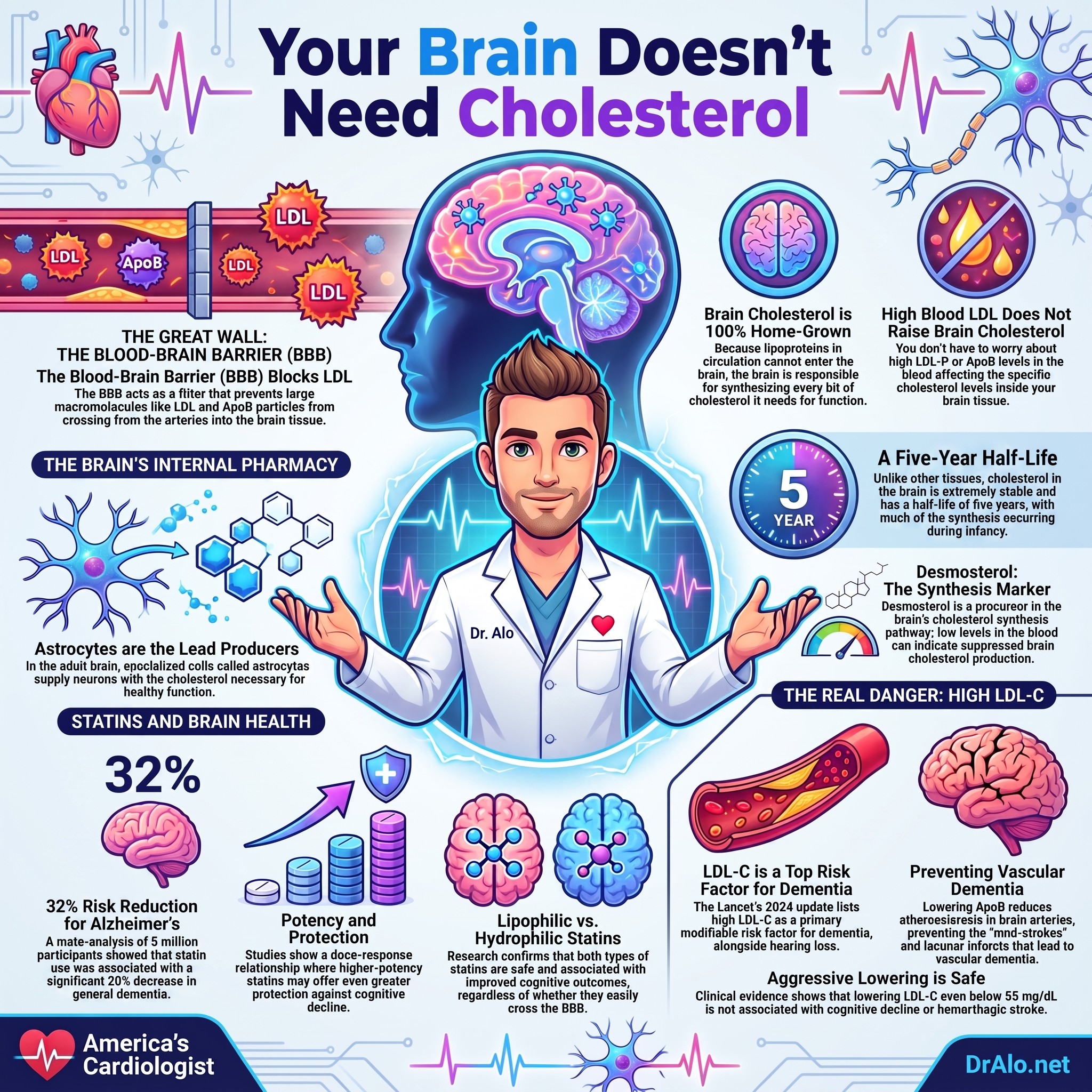
The blood brain barrier also keeps plasma apoB containing lipoproteins out of the brain parenchyma (brain tissue). You don’t have to worry about high LDL-C, LDL-P, or apoB levels in circulation having a major effect on brain cholesterol levels, The brain synthesizes 100% of its own cholesterol.
The brain makes a lot of cholesterol, more than any other organ.
A unique trait to the brain is that cholesterol in the brain has a very long half-life. Cholesterol in the brain has a half-life of 5 years and much of the cholesterol synthesis occurs in utero, infancy, and childhood as myelination occurs.
Because the half-life of cholesterol is so long, the rate for continued synthesis slows. Initially, the cholesterol production is done by oligodendrocytes (specialized brain cells that make myelin), astrocytes, and neurons. Later in life, astrocytes supply the neurons with cholesterol. Myelin is a type of cell that surrounds neurons.
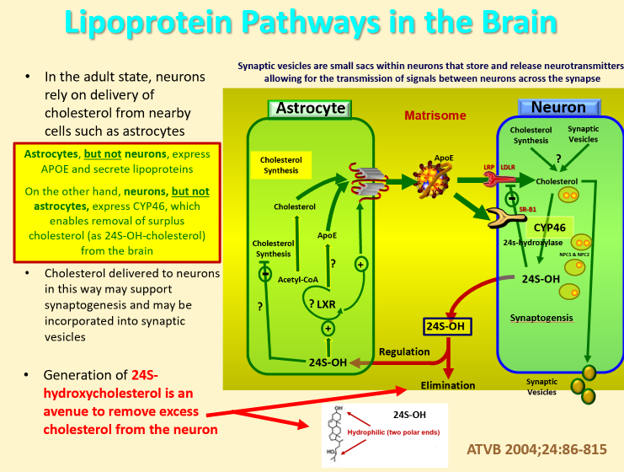
Below is a graphic that depicts cholesterol synthesis and metabolism in brain cells.
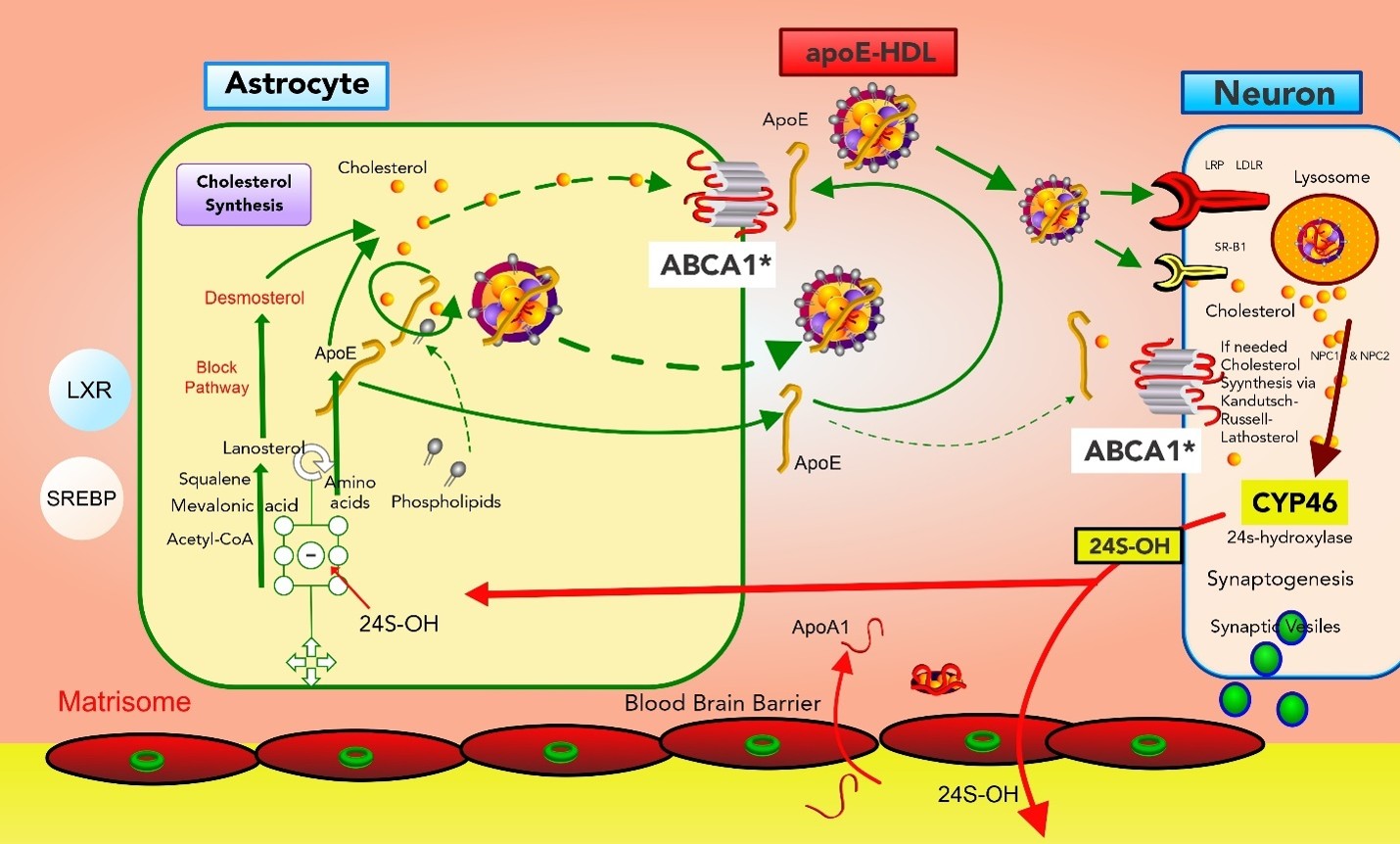
Neurons, not astrocytes have the enzyme CYP46 (24S-hydroxylase) which can convert unneeded cholesterol to oxysterols (basically bile acids), primarily 24S-hydroxychoelsterol, which due to its hydrophilic structure, can more easily, compared to hydrophobic lipids, pass through the BBB and bind to plasma lipoproteins and are then returned to the liver. The expression level of cholesterol 24S-hydroxylase is much higher in neurons than in glia and therefore, most 24-HC in plasma has a brain origin.
Once 24S-OH-cholesterol crosses the BBB and goes from brain matrisome to blood via the BBB. It jumps on apoB particles which are cleared by the liver. Oxysterol then acts as a bile acid precursor.
Astrocytes, the major cell that produces cholesterol in adult brains, uses the Bloch synthesis path that goes through desmosterol. See below Bloch pathway. The final step before cholesterol is desmosterol.
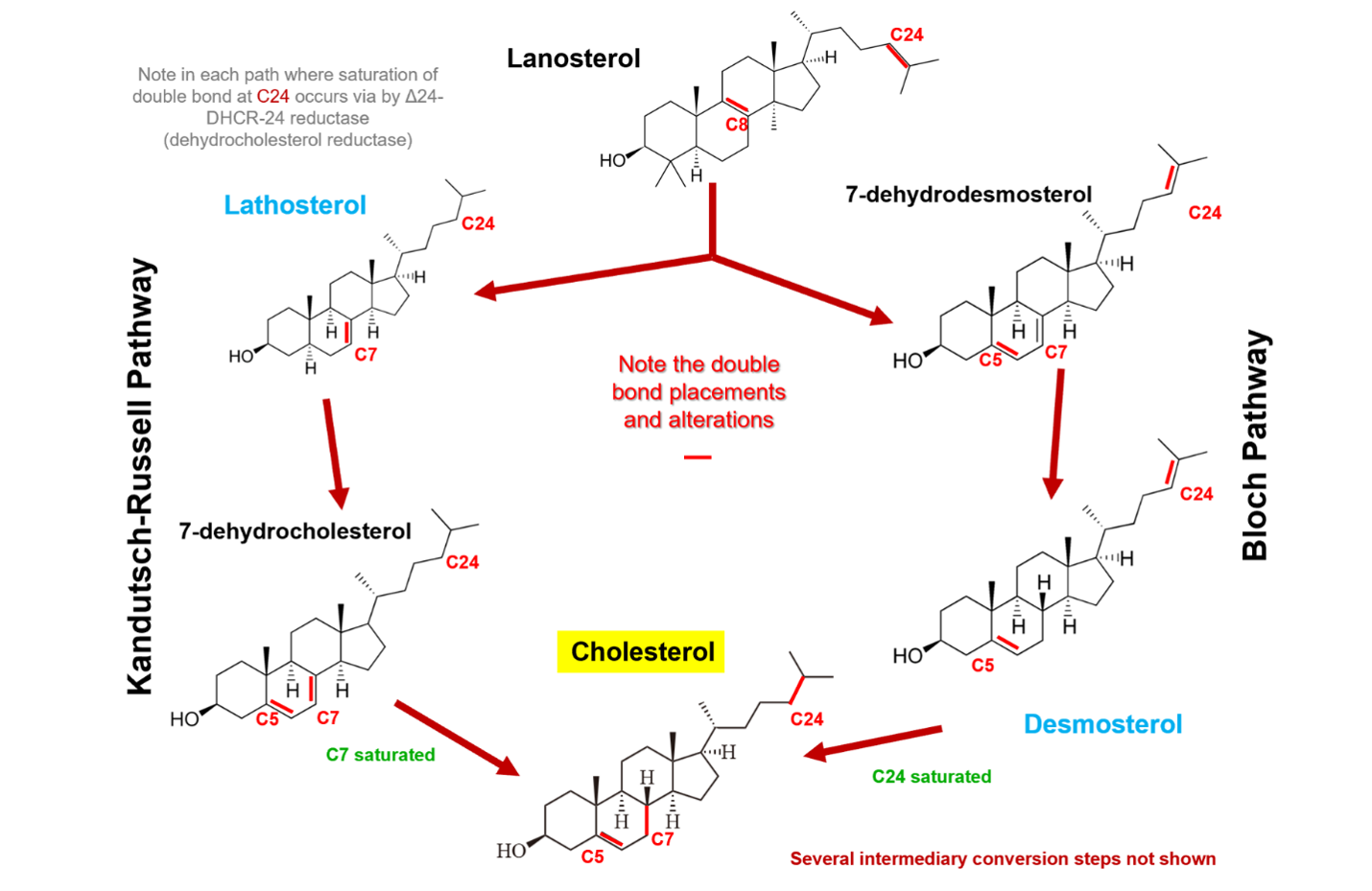
Brain tissue in Alzheimer’s Dementia patients is depleted in desmosterol. Because of this, desmosterol levels are also low in cerebrospinal fluid, this is reflected by low desmosterol in plasma (serum). We can measure serum desmosterol. Serum levels of desmosterol correlate highly with cerebrospinal fluid levels. Low desmosterol, reflective of low brain cholesterol synthesis, is associated with both mild cognitive impairment and Alzheimer’s Disease. This is quite plausible, as the brain’s only source of cholesterol, which is needed for neuronal function, is cholesterol synthesis.
By far the most common cause of reduced desmosterol is statin therapy.
Should we monitor desmosterol, a biomarker indicative of cholesterol synthesis, in patients using statins? If so, when it is over-suppressed should we reduce the statin dose and use other medications? This may be the future of treatment. Brain lipidology is the last frontier that needs to be investigated and until it is, guidelines will not be issuing recommendations on treating brain cellular lipid health. Of course, current guidelines do recommend LDL-C control to reduce strokes.
Statins can cross the blood brain barrier and reduce overall cholesterol synthesis in the brain.
The brain must synthesize its own cholesterol. There is no other way for the brain to acquire cholesterol. It cannot be trafficked into the brain via plasma lipoproteins. The only cells that get triglycerides are muscles and adipocytes.
Other than steroidogenic tissue (for use) and adipocytes (for storage), no cell (other than intestine and liver) gets a delivery of cholesterol. Steroidogenic tissue get cholesterol from HDL particles, not apoB particles. The liver and intestines get cholesterol from both apoB and HDL particles. The brain does not have any triglycerides as they are much too big and hydrophobic to cross BBB. The brain uses glucose for fuel.
One way to avoid statin medications’ effects on brain cholesterol synthesis is to use medications that do not reduce cholesterol synthesis in the brain. Bempedoic acid does not reduce cholesterol synthesis in any other tissue other than the liver. It’s very liver specific.
PCSK9 inhibitors also don’t reduce cholesterol synthesis but work by increasing the lifespan of LDL receptors in the liver to increase apoB particle clearance. They reduce the rate at which LDL receptors are catabolized by the liver.
PCSK9 inhibitors have no effect on cholesterol synthesis in any organ.
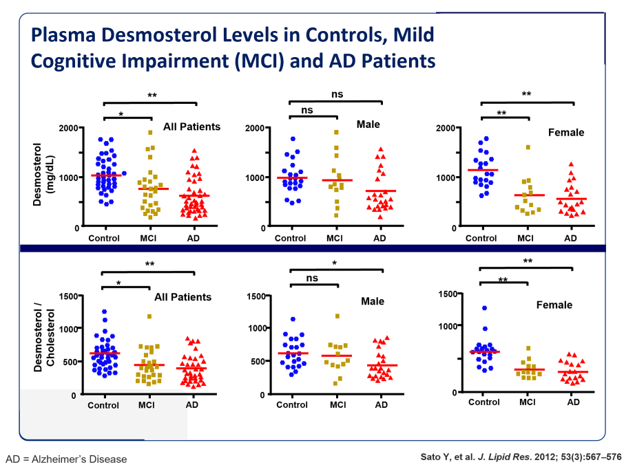
As you can see from the above graphic, patients with mild cognitive impairment and Alzheimer’s Dementia have lower desmosterol levels.
Statins and Dementia
The most common form of dementia is Alzheimer’s Dementia. The second most common form is vascular dementia. Both forms of dementia can exist in the same person.
In general, statins have been associated with less dementia. However, a minority of individuals do develop mild neurological symptoms (cognitive impairment) when they use statins. It is listed as a potential side effect on all package inserts. Until such issues are investigated in a clinical trial, which may not ever happen, it may be prudent to not over-suppress cholesterol synthesis as we attempt to reduce apoB or LDL-P. Monitoring desmosterol or perhaps lathosterol can serve that purpose. But this must be weighed against the risk of further ASCVD.
Studies have shown that statins do not worsen dementia nor cognitive function. Two recent large meta-analysis have demonstrated this.
The first study was a meta-analysis looking at over 1.4 million participants. Some of the included studies were randomized control trials. In most of the studies there was no increase in all forms of dementia. Some studies showed no difference in dementia between statin users and non-statin users. No studies showed increased dementia of any type.
The second study also contained observational studies as well as randomized control trials and also showed that statins appear to have a protective effect on dementia and cognitive decline, but the data did not support a causative effect of statins preventing the decline.
Read the studies:
https://pubmed.ncbi.nlm.nih.gov/33189626/
https://pubmed.ncbi.nlm.nih.gov/25799928/
There are no apoB containing lipoproteins in the brain. Which means that if you lower LDL-C or apoB in circulation, it has no effect on lipoproteins and cholesterol in the brain.
The brain has its own lipoproteins which have no relationship to lipoproteins in the peripheral circulation. Bain lipoproteins have the centrifugal density of plasma HDL particles but brain HDL particles contain apolipoprotein E as their main structural apoprotein, with some apoA-I which can cross the BBB.
The apoE genotype produces different types of apoE and in the brain the apoE4 particles are dysfunctional and associate with risk for Alzheimer’s Dementia. In the diagram below, G-lymph refers to the CNS lymphatics.
A July 2024 update to the dementia, prevention, intervention, and care was published in The Lancet and now lists high LDL-C as the top risk factor for dementia (tied with hearing loss). This was added in 2024 based on the overwhelming body of evidence showing that lower LDL-C and apoB, reduce risk and incidence of dementia.
Study:
https://www.thelancet.com/journals/lancet/article/PIIS0140-6736(24)01296-0/abstract
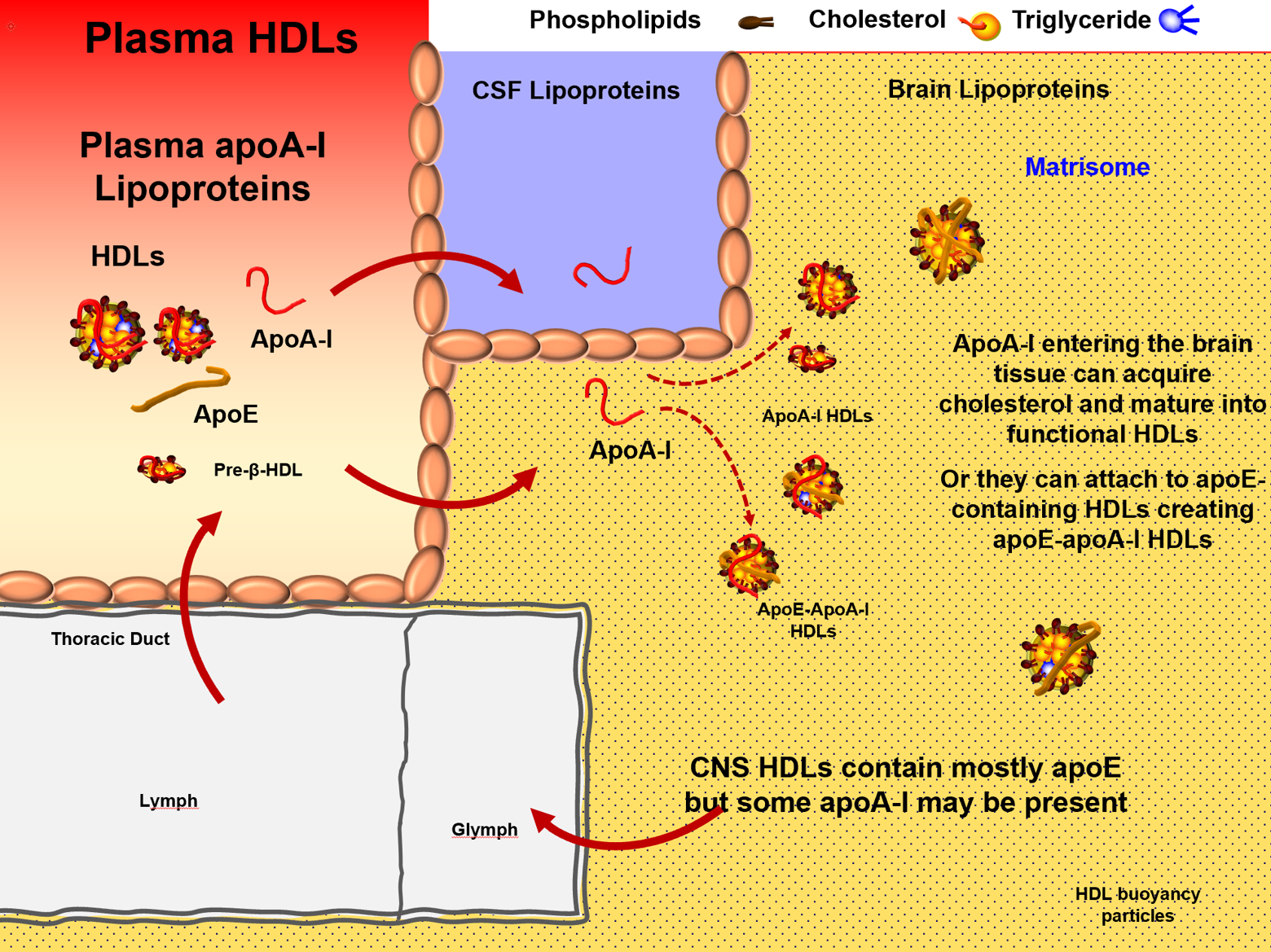
Brain lipoproteins never enter plasma and plasma lipoproteins never enter the brain.
Although it is advisable to reduce plasma apoB to reduce brain arterial cerebrovascular disease, currently changing plasma lipoproteins or lipids will not influence brain lipids and lipoproteins.
However, it is hypothesized that significantly increasing apoA-I concentrations, as is currently done with the investigational CETPi obicetrapib, will allow apoA-I to enter the brain matrisome via the BBB and make dysfunctional apoE4 HDL particles more functional with a hope to reduce Alzheimer's Dementia.
A study from 2021 was published in the Journal of the American College of Cardiology looking at all types of dementia while on statin therapy. They looked at dementia, Alzheimer’s, and even low level mild cognitive impairment. They evaluated nearly 20,000 patients and found that statin use versus nonuse was not associated with any type of cognitive decline or disturbance.
There were also no differences in lipophilicity of the statin. Both hydrophilic and lipophilic statins had the same outcomes. Some people argue that lipophilic statins are more likely to cross the blood brain barrier and hence affect mental outcomes. This was not the case.
All statins can enter the brain and inhibit brain cholesterol synthesis. Hypothetically, that can be a problem for some, as over-suppression of brain cholesterol synthesis may be associated with Alzheimer’s Dementia. But the studies have not demonstrated this and show the opposite.
Read the study:
https://pubmed.ncbi.nlm.nih.gov/34167639/
Another very large meta-analysis published in Nature in March of 2022 looked at 5 million participants and showed that statins were associated with a 20% decrease in dementia and 32% risk reduction in Alzheimer’s Dementia.
It did not matter which type of statin they were taking with regards to lipophilicity or hydrophilicity. There was also a dose response. Higher potency statins reduced Alzheimer’s dementia 20%, while less potent statins demonstrated a 16% reduction. There was a dose response; more is better.
Download the supplemental guide and look at the charts of the forest plot of the odds ratios from the study. The first graphic shows the reduction in dementia and the second shows the reduction in Alzheimer’s. The data and evidence are very clear.
Most of the studies demonstrate a reduction in all forms of dementia.
Study:
https://academic.oup.com/eurjpc/article/29/5/804/6454065?login=false
There are extremely few LDL particles in the brain and those that do exist have no apoB, but rather have apoE. In the brain, 99% of the lipoproteins are HDL particles. But instead of having apoA-1, they primarily have apoE. Some apoA-1, because of its very small size, can pass the blood brain barrier and thus, the apoA-1 structural molecule is on some of the brain’s HDL particles along with the apoE molecule.
The lipophilic statins are atorvastatin, simvastatin, lovastatin, fluvastatin, and pitavastatin. Lipophilicity, or lack thereof, has not been shown to affect dementia. There are no studies to support this.
Studies have shown a reduction in dementia regardless of lipophilicity of the statin:
https://pubmed.ncbi.nlm.nih.gov/30149450/
Mendelian randomization studies have shown that high apoB shortens healthspan and increases the risk for Alzheimer’s disease. The authors suggest that if the relationship between apoB and Alzheimer's disease ends up being a causal relationship, then strategies to improve healthspan (by reducing the burden of Alzheimer’s disease) would be warranted. They note that this would help the 44 million or more that currently have Alzheimer’s dementia.
Study:
https://www.nature.com/articles/s42003-024-05887-2
The hypothesized danger is when statins over-suppress brain cholesterol synthesis (diagnosed by low desmosterol) you are likely to cause cognitive issues. More data will be needed on this emerging topic.
Another study from April 2024 examined the risk and incidence of Alzheimer’s disease (AD) in those who are genetically susceptible to the disease due to an apoE ε4 allele. They wanted to determine if presence of the apoE ε4 allele affected Alzheimer's incidence or risk. They examined 4807 individuals and found that statins may be associated with a lower risk of incident Alzheimer’s among individuals with the apoE ε4 allele.
They found a 19% reduction in AD among statin users versus nonusers. They also found that those with the apoE ε4 allele had greater risk reduction, approximately 40% versus those without the apoE ε4 allele. They also found that initiation of statin therapy slowed cognitive decline.
They concluded that, “This study provides Class II evidence that among those aged 65 years or older, statin initiation was associated with a reduced risk of Alzheimer disease, especially in the presence of an apoE ε4 allele”.
Study:
https://www.neurology.org/doi/10.1212/WNL.0000000000209168
Another meta-analysis published in the Journal of Clinical Lipidology looked at over 1 million participants and found, “no significant association between statin use and adverse cognitive effects”. They also noted that 10 of the studies showed reduced incidence of dementia.
Study:
https://www.lipidjournal.com/article/S1933-2874(20)30326-3/abstract
A soon to be published study shows that Zetia lowers the risk of Alzheimer’s related dementia by 7-fold. While this is not a human trial, it provides hypothesis generation for future studies. Reducing this molecule in plasma may be beneficial, but this mouse study. It showed that ezetimibe reduces a molecule implicated in Alzheimer’s Dementia. Currently, there’s no data that ezetimibe can even cross BBB and there are no plans to do a randomized controlled trial on this.
Study:
https://agingcelljournal.org/Current_Volume/ezetimibe_paper/
A study published in May 2024 on the American College of Cardiology website titled, “LDL Cholesterol Lowering: Is There a Risk for Dementia and Hemorrhagic Stroke?” found that aggressive lipid lowering to an LDL-C below 55 mg/dL was not associated with hemorrhagic stroke, cognitive decline, dementia, nor Alzheimer’s. They also state the elevated LDL-C is considered a risk factor for Alzheimer’s Disease.
Study:
https://www.acc.org/latest-in-cardiology/articles/2024/05/22/16/20/ldl-cholesterol-lowering
There are many other studies on this topic and it’s probably beyond the scope of this book.
Still Have Questions? Stop Googling and Ask Dr. Alo.
You’ve read the science, but applying it to your own life can be confusing. I created the Dr. Alo VIP Private Community to be a sanctuary away from social media noise.
Inside, you get:
-
Direct Access: I answer member questions personally 24/7/365.
-
Weekly Live Streams: Deep dives into your specific health challenges.
-
Vetted Science: No fads, just evidence-based cardiology and weight loss.
Don't leave your heart health to chance. Get the guidance you deserve. All this for less than 0.01% the cost of health insurance! You can cancel at anytime!
[👉 Join the Dr. Alo VIP Community Today]
Cardiology & Obesity Medicine