
Finland Goes From Highest Cardiovascular Mortality To Lowest
Aug 01, 2026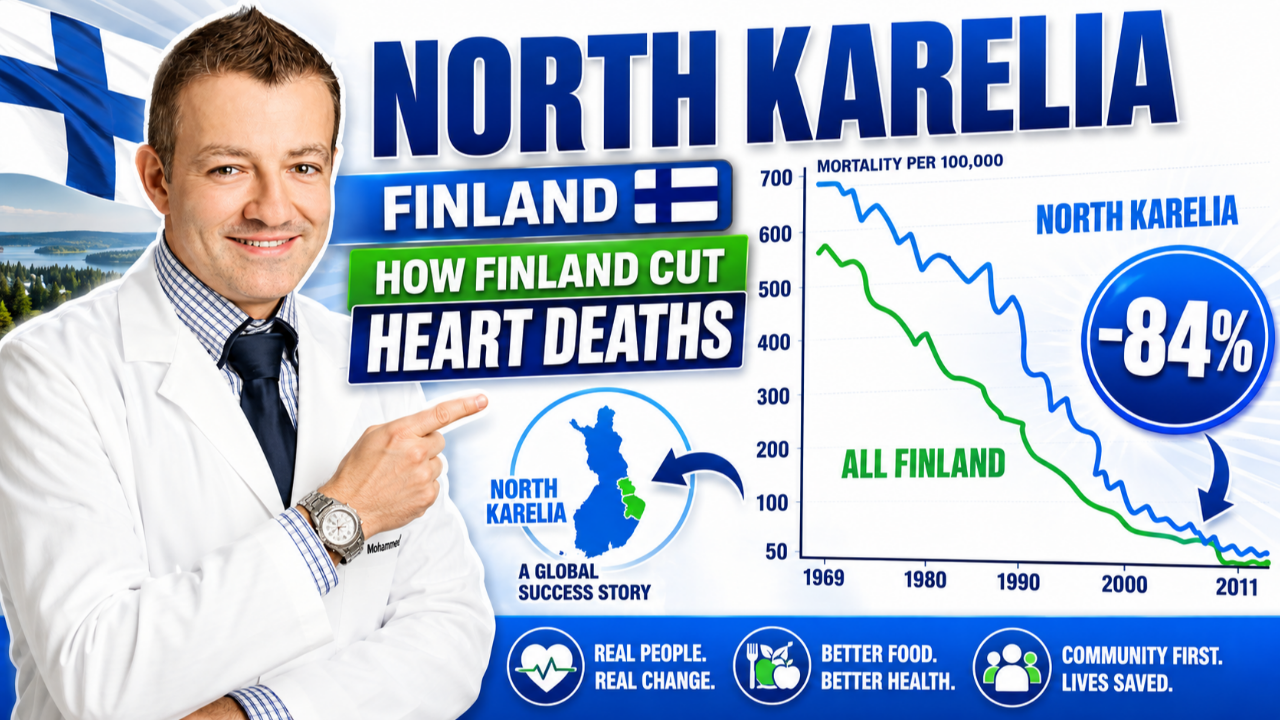
North Karelia Finland 84% Reduction In Death Rates
In a beautiful example of how dietary and lifestyle interventions work, the country of Finland was able to reduce cardiovascular mortality by 84% in North Karelia by making a few simple dietary and lifestyle changes.
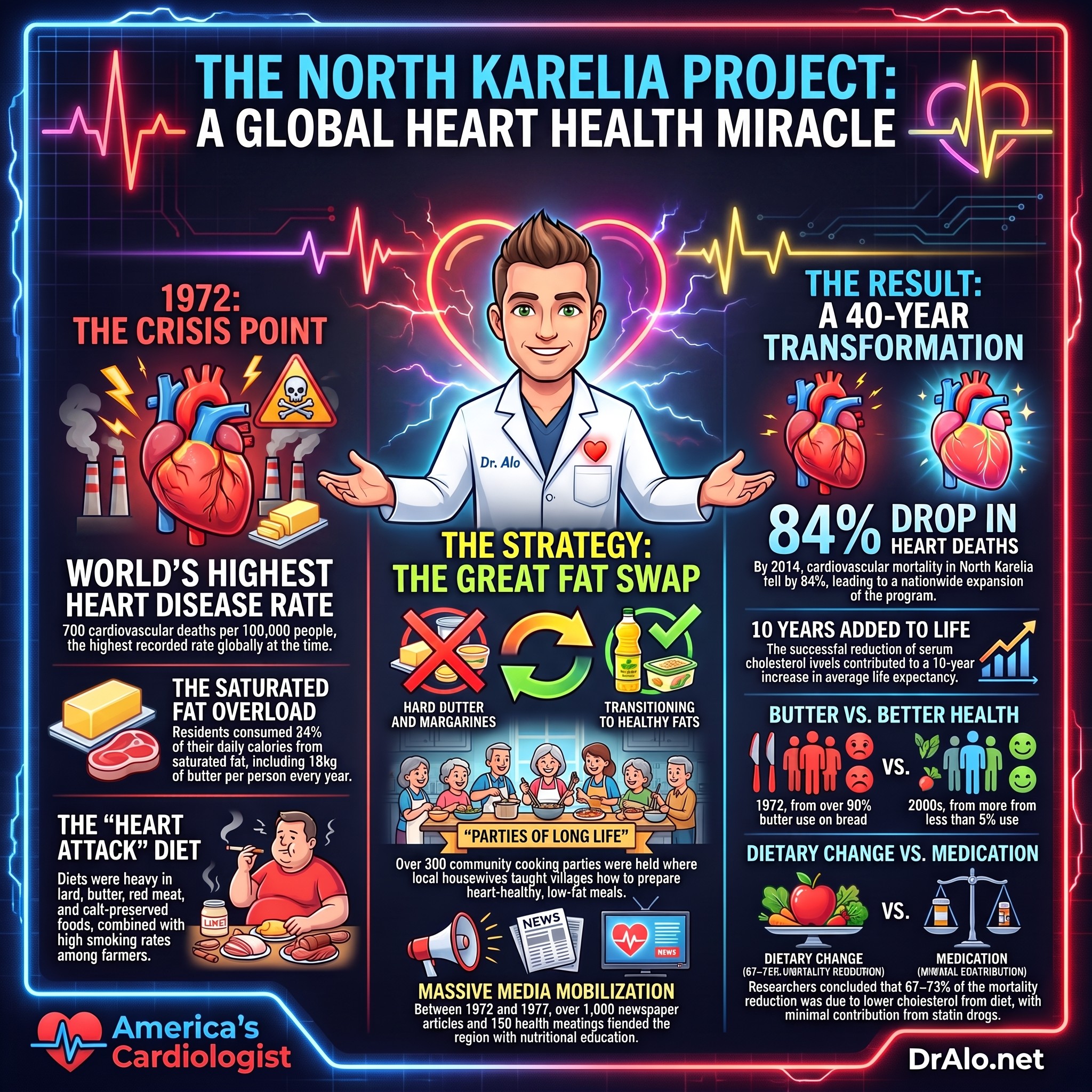
The year was 1972. North Karelia is a small rural town in northern Finland. They had the highest cardiovascular mortality in the world. They had 700 deaths per 100,000 people. That was the highest in the world. The government needed to act fast and sent a task force to evaluate the situation.
The people of North Karelia were noted to have very high intakes of saturated fat and salt. They consumed 18kg of butter per person per year. Two major contributors to heart disease. They were also noted to be smokers. They were farmers and consumed a lot of lard, margarine, butter, ghee, tallow, red meat, processed meats, dairy, eggs, and cheese. They also smoked and used salt extensively to preserve their meats and food. Twenty-four percent of their daily calories came from saturated fat.
Infographic Summary:
The government put a plan into place and did some of the following, taken straight out of the publication...
"To reduce the cardiovascular risk factor of elevated serum cholesterol levels, the North Karelia project targeted dietary fat intake. The diet recommendation was to minimize the use of saturated fat products (ie, hard butters and margarines, high-fat and whole milk, and fatty meats) and transition to the use of products with low saturated fats and vegetable oils (ie, soft butters and margarines, vegetable oils, low-fat or nonfat milk, and lean fish, poultry, and meats).
These nutritional messages were spread through community channels and activities. Between 1972 and 1977, more than 1000 newspaper articles were published on nutrition and other risk factors. Furthermore, diet was discussed in more than 150 health education meetings and more than 300 local "parties of long life," where healthy food was cooked and served by local housewives associations to village members. Hundreds of special training seminars were organized for health care workers, the general public, and mass catering personnel responsible for workplaces, schools, hospitals, and restaurants.
After the initial 5-year period for the project, the government became more involved and developed policies that increased consumers' health consciousness through media campaigns and led to the food industry creating low-fat products. The mobilization of community members and local resources in addition to national health policies and initiatives led to major dietary changes. From 1972 to 2012, the use of butter on bread had dropped by approximately 80%, and the use of butter for cooking had dropped by approximately 50%. Vegetable oils, such as rapeseed oil, and soft butters and margarines became the lower-fat alternative. As a result, serum cholesterol reduced by more than 20% in both men and women in North Karelia between 1972 and 2012. The intake of saturated fats reduced from 20% to 12% in 2007 and increased from 2007 to 2012 to 14%. Most of the decline in serum cholesterol was explained by dietary changes, with minimal contribution from statin use."
What were the results? They were so good, they had to expand the program across all of Finland. A picture is worth 1000 words, right?
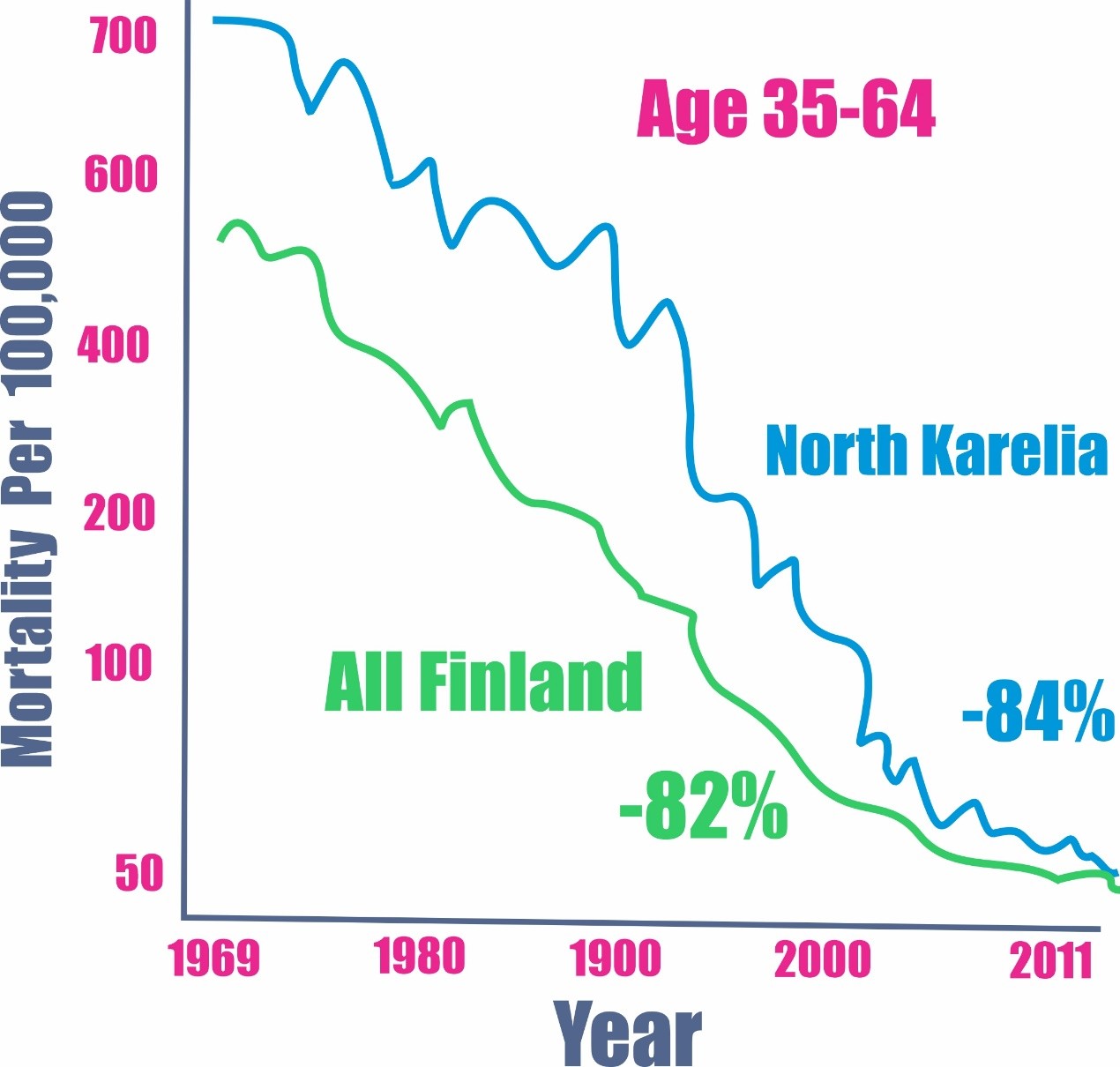
By 2012, you had an 84% reduction in mortality in North Karelia and 82% across all Finland when the program was expanded. They went from being number one in the world for cardiovascular death to being nearly last.
This is one of the most incredible turnarounds in the history of the world!
Additionally, they educated the public on reducing salt intake and blood pressure control as well as smoking cessation.
Here's the kicker...
Obesity rates increased and smoking rates were reduced initially, but then stayed the same throughout most of the study. The study is still ongoing, and we have data now out to 2018. The data will keep coming in.
Based on further statistical analysis, the researchers concluded that 67-73% of the reduction in mortality was due to reduction in serum cholesterol levels. They reduced saturated fat intake from 24% of total calories, to about 10%. Additionally, life expectancy increased by 10 years.'
Key Findings
The North Karelia Project, launched in 1972 in eastern Finland, demonstrated that population-level serum cholesterol reduction was the single greatest contributor to an 82–84% decline in coronary heart disease (CHD) mortality over 40 years among working-aged adults.[1][2][3]
-
CHD mortality in North Karelia decreased by 73% from 1969–71 to 1995 (672 → 185 per 100,000 in men), and by 84% from 1972 to 2014. Nationwide CHD mortality fell by 65–80% over the same period.[1][4][5]
-
Cholesterol reduction had the greatest impact among the three targeted risk factors (cholesterol, blood pressure, smoking). Dietary changes, primarily replacing saturated fat (butter) with unsaturated fat, drove a remarkable population-wide decline in serum cholesterol. In 1972, over 90% used butter on bread compared to under 5% by the 2000s.[3]
-
Changes in the three main risk factors explained approximately two-thirds of the observed mortality reduction, with cholesterol reduction contributing the largest share. The remaining third was attributed to improved treatments (e.g., acute coronary care, revascularization) developed since the 1980s.[1][2][6]
-
During the first 10 years (1972–1982), risk factor changes accounted for nearly all of the observed mortality decline. A population-wide 10% reduction in cholesterol was estimated to reduce CHD mortality by 20%, equivalent to treating all individuals with cholesterol >6.5 mmol/L to achieve a 25% reduction.[2][7]
-
Reductions extended beyond CVD: all-cause mortality and lung cancer mortality also declined significantly, particularly in North Karelia.[4]
This project remains one of the most compelling demonstrations that population-based primary prevention targeting LDL/total cholesterol through dietary and lifestyle changes can produce sustained, dramatic reductions in cardiovascular and all-cause mortality without relying primarily on pharmacotherapy.
References
- The North Karelia Project: Cardiovascular Disease Prevention in Finland. Vartiainen E. Global Cardiology Science & Practice. 2018;2018(2):13. doi:10.21542/gcsp.2018.13.
- Primary Prevention and Risk Factor Reduction in Coronary Heart Disease Mortality Among Working Aged Men and Women in Eastern Finland Over 40 Years: Population Based Observational Study. Jousilahti P, Laatikainen T, Peltonen M, et al. BMJ (Clinical Research Ed.). 2016;352:i721. doi:10.1136/bmj.i721.
- Fat and Heart Disease: Yes We Can Make a Change--the Case of North Karelia (Finland). Puska P. Annals of Nutrition & Metabolism. 2009;54 Suppl 1:33-8. doi:10.1159/000220825.
- Changes in Premature Deaths in Finland: Successful Long-Term Prevention of Cardiovascular Diseases. Puska P, Vartiainen E, Tuomilehto J, Salomaa V, Nissinen A. Bulletin of the World Health Organization. 1998;76(4):419-25.
- Thirty-Five-Year Trends in Cardiovascular Risk Factors in Finland. Vartiainen E, Laatikainen T, Peltonen M, et al. International Journal of Epidemiology. 2010;39(2):504-18. doi:10.1093/ije/dyp330.
- Changes in Risk Factors Explain Changes in Mortality From Ischaemic Heart Disease in Finland. Vartiainen E, Puska P, Pekkanen J, Tuomilehto J, Jousilahti P. BMJ (Clinical Research Ed.). 1994;309(6946):23-7. doi:10.1136/bmj.309.6946.23.
- Serum Cholesterol Distribution and Coronary Heart Disease Risk: Observations and Predictions Among Middle-Aged Population in Eastern Finland. Jousilahti P, Vartiainen E, Pekkanen J, et al. Circulation. 1998;97(11):1087-94. doi:10.1161/01.cir.97.11.1087.
Still Have Questions? Stop Googling and Ask Dr. Alo.
You’ve read the science, but applying it to your own life can be confusing. I created the Dr. Alo VIP Private Community to be a sanctuary away from social media noise.
Inside, you get:
-
Direct Access: I answer member questions personally 24/7/365.
-
Weekly Live Streams: Deep dives into your specific health challenges.
-
Vetted Science: No fads, just evidence-based cardiology and weight loss.
Don't leave your heart health to chance. Get the guidance you deserve. All this for less than 0.01% the cost of health insurance! You can cancel at anytime!
[👉 Join the Dr. Alo VIP Community Today]
Cardiology & Obesity Medicine