
Does Alcohol Cause Heart Disease
Feb 04, 2026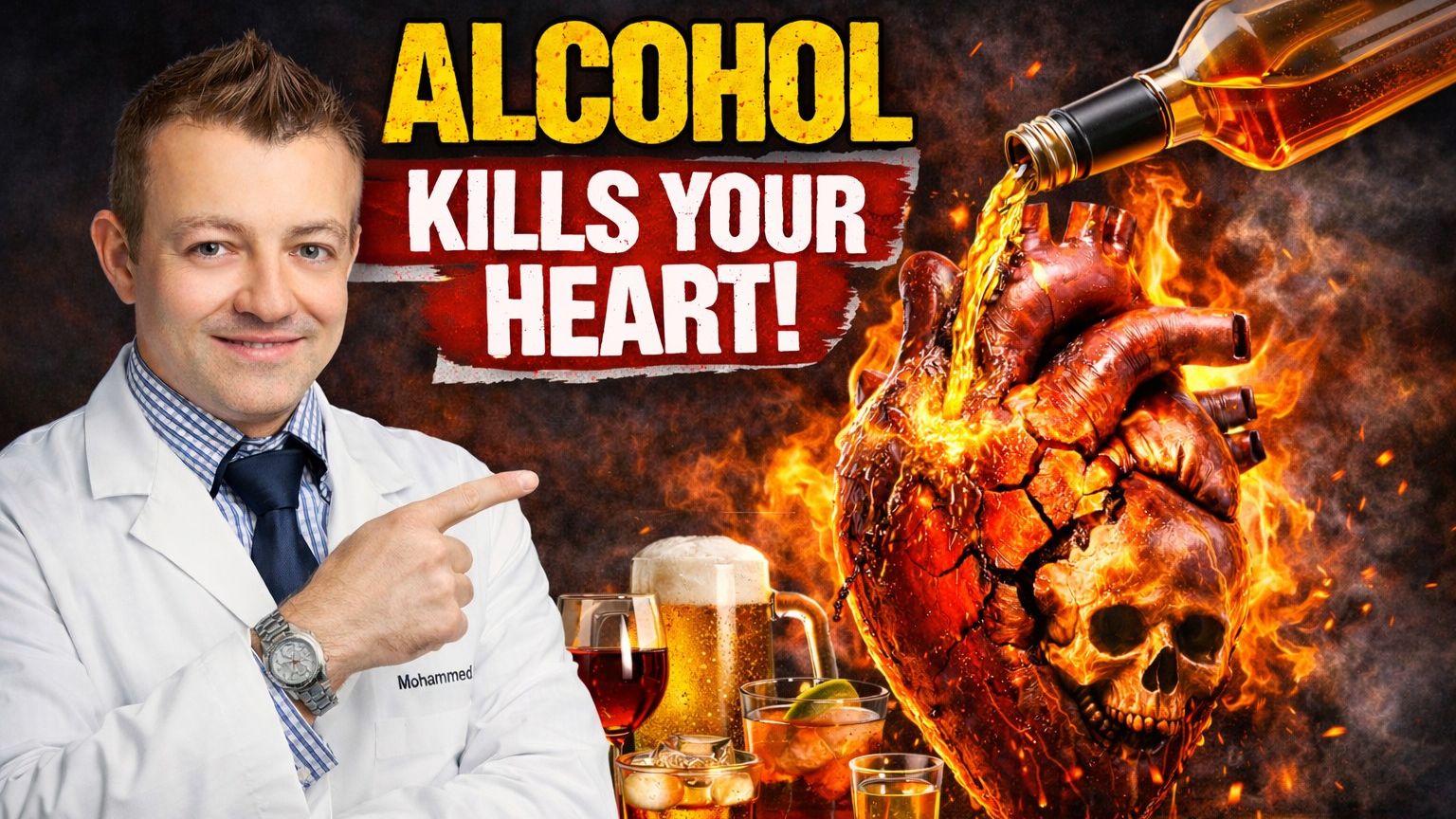
Alcohol and Heart Disease: What the Science Really Says About Drinking and Your Heart
For decades, we were told that alcohol, particularly red wine, was “good for the heart.” This belief became deeply ingrained in both popular culture and even medical conversations starting in the 1990s. Multiple theories were proposed to explain this supposed benefit. Some suggested alcohol raised HDL cholesterol, others claimed vasodilatory or antiplatelet effects, and many pointed to antioxidants such as resveratrol as the key mechanism. Unfortunately, when these claims were examined more rigorously, none of them held up in human outcome data.
The reality is that many of the earlier studies suggesting cardiovascular benefit from alcohol were plagued by selection bias and poor methodology. Moderate drinkers tended to be healthier overall, they exercised more, ate better diets, had higher socioeconomic status, better access to healthcare, and smoked less. When these confounders were properly accounted for, the apparent protective effect of alcohol disappeared. We now understand that alcohol itself was never the protective factor; healthier lifestyles were.
Alcohol Heart Disease Infographic Summary:
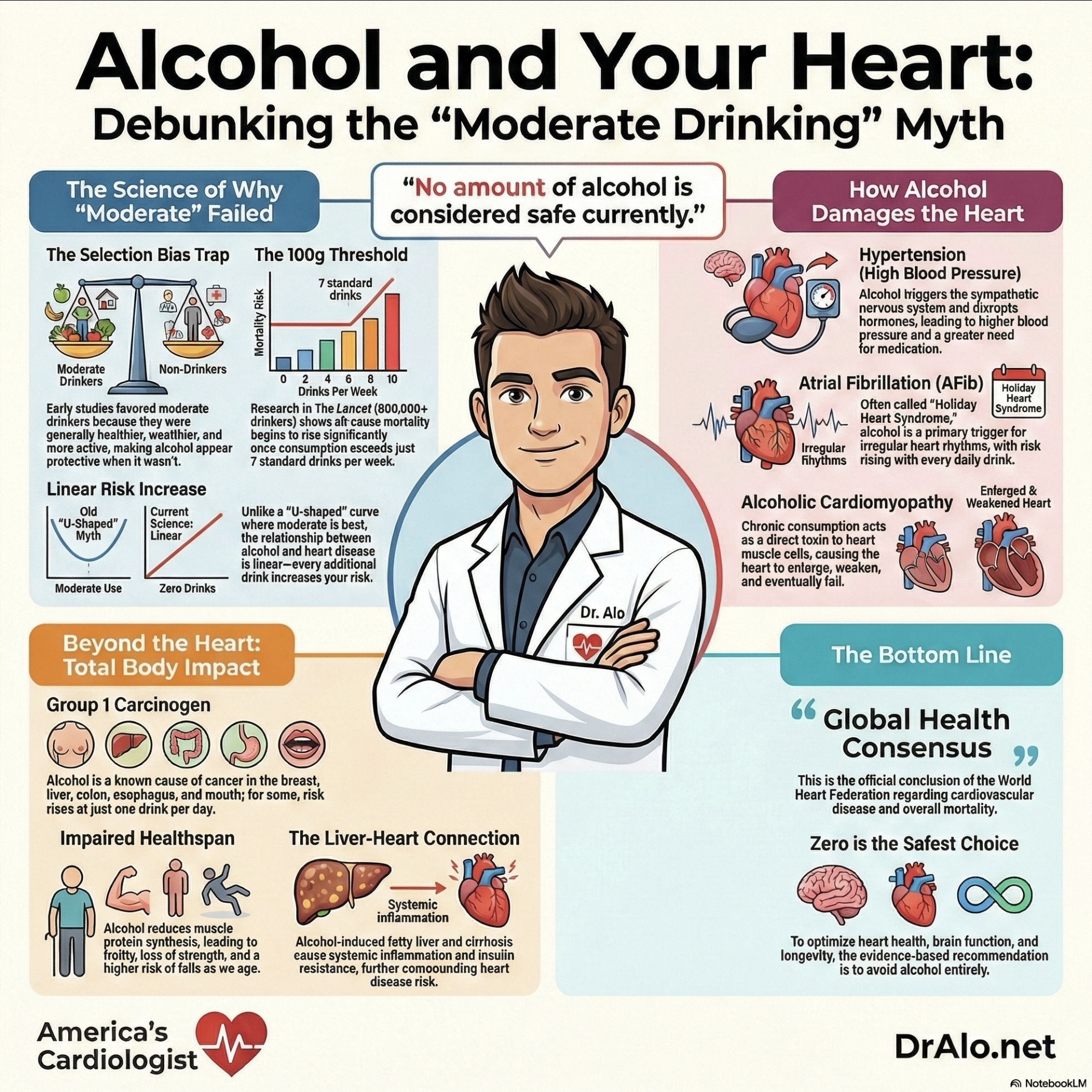
Even Small Amounts Of Alcohol Are Cardiotoxic To Your Heart
More recent and higher-quality data have fundamentally changed our understanding of alcohol and cardiovascular health. Studies now consistently show that even small amounts of alcohol increase cardiovascular risk. Alcohol intake has been associated with higher rates of coronary artery disease, heart failure, atrial fibrillation, hypertension, stroke, fatty liver disease, and aortic aneurysms. Importantly, this relationship is linear, as alcohol intake increases, so does risk. There is no clear threshold below which alcohol is harmless to the cardiovascular system.
One of the most comprehensive analyses on this topic was a large meta-analysis published in The Lancet in 2018, which included nearly 600,000 drinkers with over 5.4 million person-years of follow-up. This study demonstrated that all-cause mortality increased once alcohol consumption exceeded 100 grams per week, which is roughly equivalent to seven standard drinks per week. Alcohol intake was also associated with higher risks of stroke, coronary disease (excluding myocardial infarction), heart failure, fatal hypertensive disease, and fatal aortic aneurysm. Perhaps most striking, individuals consuming higher amounts of alcohol had a shortened life expectancy, losing months to years of life by age 40 depending on intake level.
More recent data have reinforced these findings. A 2023 study published in JAMA Network Open showed that individuals consuming 45 to 64 grams of alcohol per day or more had a statistically significant increase in all-cause mortality. While lower intake levels showed smaller risk increases, there was no evidence of benefit, and women appeared to experience greater harm compared with lifelong non-drinkers. These findings further undermine the idea that “moderate” drinking is safe or protective.
No Amount Of Alcohol Is Safe
Major global health organizations have now weighed in decisively. After reviewing the totality of evidence, the World Heart Federation concluded that no amount of alcohol is safe when it comes to cardiovascular disease, cancer risk, or overall mortality. This is a critical point. Alcohol is not a supplement, it is not medicine, and it does not confer longevity benefits. Any perceived upside is outweighed by measurable harm.
Alcohol Worsens Healthspan And Lifespan
Beyond cardiovascular disease and mortality, alcohol also negatively affects healthspan, not just lifespan. Alcohol consumption has been shown to reduce muscle protein synthesis, impairing muscle growth, strength, and recovery. This is particularly relevant as we age, since loss of muscle mass and strength is strongly associated with frailty, falls, disability, and loss of independence. If your goal is to optimize heart health, brain health, and physical function over the long term, alcohol works directly against that goal.
From a longevity and prevention standpoint, the conclusion is straightforward. If you want to optimize cardiovascular health, reduce cancer risk, preserve muscle mass, and maximize both lifespan and healthspan, the safest choice is to avoid alcohol entirely or keep intake to the absolute minimum. The idea that alcohol is beneficial for the heart is no longer supported by modern, high-quality human data. It is a myth—and like many myths in medicine, it has persisted far longer than it should have.
Alcohol Is Not Heart Healthy
Alcohol is deeply embedded in social culture, often portrayed as harmless—or even “heart healthy”—in moderation. For decades, headlines have suggested that a daily glass of wine might protect the heart. However, modern cardiovascular science tells a far more complex and concerning story.
As rates of heart disease, atrial fibrillation, hypertension, and cardiomyopathy continue to rise, researchers have taken a closer look at alcohol’s true impact on the cardiovascular system. The conclusion from major medical organizations is increasingly clear: alcohol is not a heart-protective substance, and for many people, it is a direct contributor to heart disease.
This article reviews the current scientific evidence on alcohol’s effects on the heart, while also examining its broader impact on the liver, brain, kidneys, and cancer risk—because heart health never exists in isolation.
Cardiologist’s Perspective On Alcohol And Heart Disease
Alcohol Raises Blood Pressure—A Major Heart Disease Risk
High blood pressure is one of the strongest risk factors for heart attack, stroke, heart failure, and kidney disease. Alcohol raises blood pressure through several mechanisms, including sympathetic nervous system activation, hormonal disruption, and impaired vascular function.
Even “moderate” alcohol intake has been associated with:
- Higher average systolic and diastolic blood pressure
- Reduced blood pressure control in patients already diagnosed with hypertension
- Increased need for blood pressure medications
From a cardiovascular standpoint, any substance that raises blood pressure increases heart disease risk.
Alcohol and Atrial Fibrillation (“Holiday Heart Syndrome”)
Alcohol is one of the most common reversible triggers of atrial fibrillation (AFib). AFib increases the risk of stroke, heart failure, dementia, and premature death.
Key findings:
- The risk of AFib rises with each additional daily drink
- Binge drinking can trigger AFib even in people without known heart disease
- Reducing or eliminating alcohol significantly lowers AFib recurrence
This phenomenon is often called holiday heart syndrome, but the risk is not limited to holidays, it applies year-round.
Alcohol and Heart Muscle Damage (Cardiomyopathy)
Chronic alcohol consumption can weaken the heart muscle, leading to alcoholic cardiomyopathy, a form of heart failure.
This condition results from:
- Direct toxic effects of alcohol on heart muscle cells
- Mitochondrial dysfunction and oxidative stress
- Progressive enlargement and weakening of the heart
Once cardiomyopathy develops, the damage may be partially irreversible, even after stopping alcohol.
Is Red Wine Good for the Heart?
The idea that red wine is “heart healthy” originated from observational studies that showed lower heart disease rates in moderate drinkers. However, these findings were heavily influenced by confounding factors such as:
- Higher socioeconomic status
- Healthier diets
- More physical activity
- Better access to healthcare
When these factors are controlled for, the protective effect largely disappears. Modern guidelines from major heart organizations emphasize that alcohol should not be recommended for cardiovascular prevention.
Alcohol’s Impact Beyond the Heart (Why It Still Matters)
Liver Disease and Cardiovascular Risk
Alcohol-associated liver disease ranges from fatty liver to cirrhosis. Liver dysfunction worsens systemic inflammation, lipid abnormalities, and insulin resistance—all of which increase cardiovascular risk.
Additionally, cirrhosis increases the risk of:
- Heart rhythm disturbances
- High-output heart failure
- Sudden cardiac death
- Brain Effects: Stroke, Cognition, and Dementia
- Alcohol increases the risk of:
- Ischemic and hemorrhagic stroke
- Cognitive decline
- Alcohol-related dementia and brain atrophy
- Heavy and long-term alcohol use is associated with structural brain damage and worsened outcomes after stroke, directly undermining long-term heart-brain health.
Kidney Damage and Blood Pressure
Alcohol contributes to kidney disease primarily by:
- Raising blood pressure
- Causing dehydration and electrolyte imbalance
- Worsening diabetes and metabolic syndrome
Since kidney disease and heart disease accelerate each other, alcohol’s renal effects further compound cardiovascular risk.
Alcohol and Cancer: No Safe Amount
Alcohol is classified as a Group 1 carcinogen, meaning it is known to cause cancer in humans. It is causally linked to cancers of the:
- Breast
- Liver
- Esophagus
- Mouth and throat
- Colon and rectum
Cancer risk increases with dose, and for some cancers—especially breast cancer—risk rises even at one drink per day or less.
The Bottom Line: Alcohol and Heart Disease
From a cardiovascular standpoint, the message is simple and evidence-based:
- Alcohol raises blood pressure
- Alcohol triggers atrial fibrillation
- Alcohol weakens the heart muscle
Alcohol does not protect against heart disease
Less alcohol is better, and none is safest for many people
If someone does not drink alcohol, there is no medical reason to start for heart health. For those who do drink, reducing intake or abstaining altogether can lead to measurable improvements in blood pressure, heart rhythm stability, and overall cardiovascular risk.
Heart health is built on habits that reduce inflammation, stabilize metabolism, and protect blood vessels. Alcohol does none of these.
References
American Heart Association – Alcohol and Cardiovascular Disease
American Heart Association – Holiday Heart Syndrome
Centers for Disease Control and Prevention (CDC) – Alcohol and Cancer Risk
World Health Organization (WHO) – Alcohol and Cancer Fact Sheet
National Cancer Institute – Alcohol and Cancer Risk Fact Sheet
American Association for the Study of Liver Diseases (AASLD) – Alcohol-Associated Liver Disease
National Kidney Foundation – Alcohol and Kidney Health
U.S. Department of Health and Human Services – Alcohol and Cancer Risk Advisory
Still Have Questions? Stop Googling and Ask Dr. Alo.
You’ve read the science, but applying it to your own life can be confusing. I created the Dr. Alo VIP Private Community to be a sanctuary away from social media noise.
Inside, you get:
-
Direct Access: I answer member questions personally 24/7/365.
-
Weekly Live Streams: Deep dives into your specific health challenges.
-
Vetted Science: No fads, just evidence-based cardiology and weight loss.
Don't leave your heart health to chance. Get the guidance you deserve. All this for less than 0.01% the cost of health insurance! You can cancel at anytime!
[👉 Join the Dr. Alo VIP Community Today]
Cardiology & Obesity Medicine