
What a Preventive Cardiologist Knows About Longevity (That Most People Don’t)
Feb 03, 2026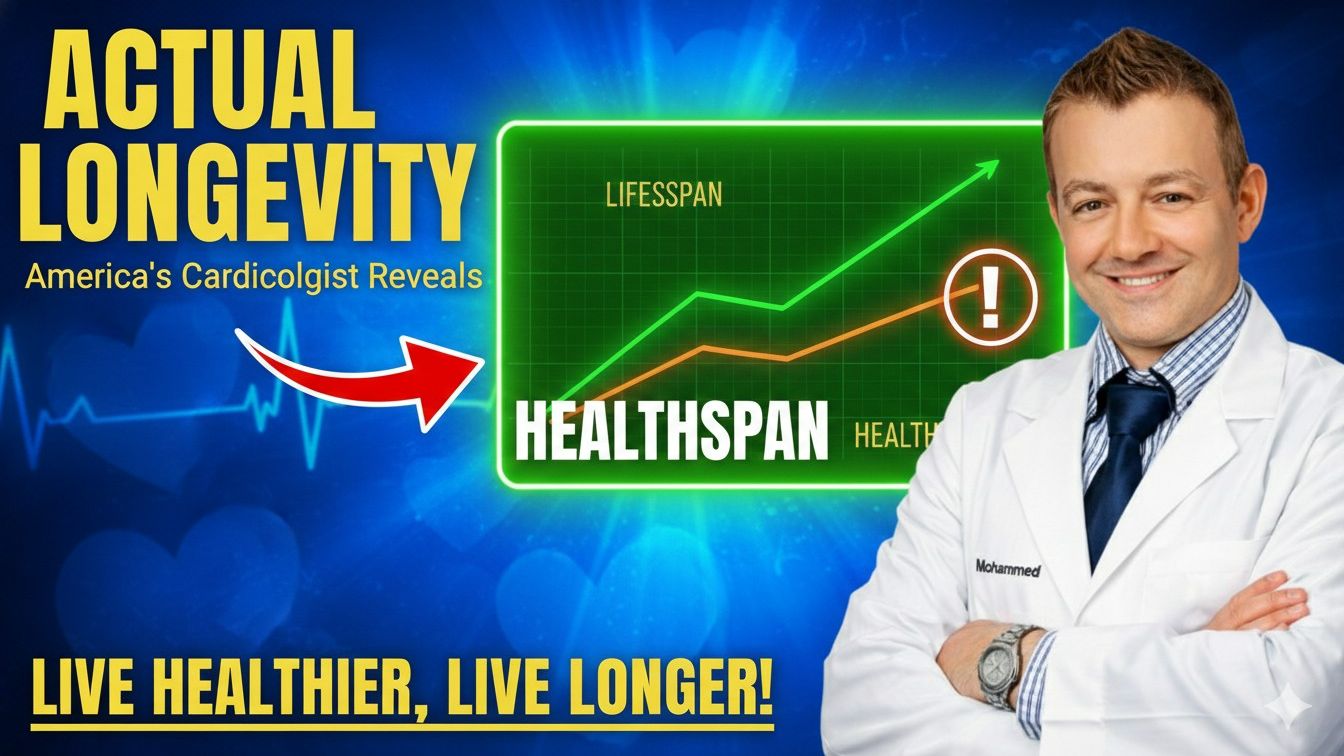
Actual Longevity: How I Think About Living Longer by Avoiding the Diseases That Kill Us
I’ve been obsessed with longevity for the better part of two decades. Every day in my cardiology practice, I see people suffering—and dying—from diseases that could have been delayed, mitigated, or in many cases prevented entirely. That reality is what led me to write Actual Longevity.
Longevity is not about magic supplements, biohacking trends, or chasing the latest molecule discovered in yeast. It is about understanding why people actually die and systematically reducing exposure to those risks over time. We do not die of “old age.” We die of heart disease, cancer, diabetes, stroke, dementia, kidney disease, and complications that accumulate silently over decades.
Actual Longevity is my attempt to pull longevity out of the realm of hype and place it squarely where it belongs: in preventive cardiology, metabolic health, and evidence-based lifestyle medicine.
Longevity Infographic Summary:
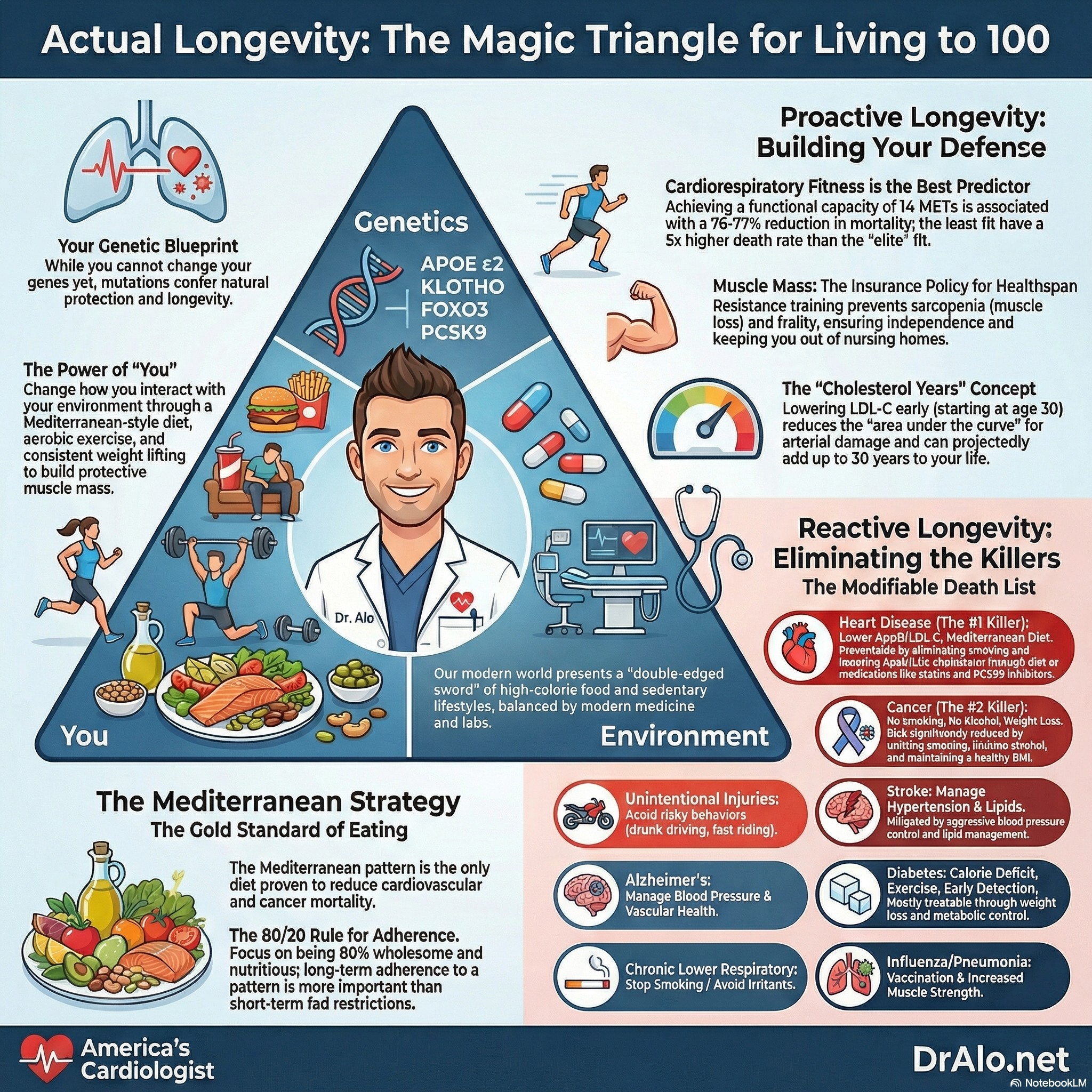
What Longevity Really Means
When I talk about longevity, I am not referring simply to lifespan—the number of years you live. I am far more concerned with healthspan, the number of years you live with functional independence, cognitive clarity, and freedom from chronic disease.
I have seen patients live into their 90s who spent the last 30 or 40 years disabled by stroke, dementia, or heart failure. That is not longevity. Longevity is living long and living well.
The Two Ways to Live Longer
There are only two ways to extend life:
- Proactively do things that have been shown to reduce mortality
- Eliminate or reduce the things that are known to shorten life
Everything in Actual Longevity fits into one of these two categories.
The Diseases That Shorten Human Life
If we want to live longer, we must directly confront the diseases that kill us most often.
- Heart Disease – The Primary Longevity Killer
Heart disease remains the leading cause of death worldwide. The tragedy is that atherosclerosis begins silently, often in childhood, and progresses for decades before the first heart attack or stroke.
In Actual Longevity, I emphasize lifelong LDL-cholesterol exposure—what I call “cholesterol years”. The lower your LDL is, and the earlier it is controlled, the longer you live. This principle is supported not only by population studies, but by genetics.
People with PCSK9 loss-of-function mutations walk around with LDL levels of 10–15 mg/dL for their entire lives and have dramatically lower cardiovascular mortality. This genetic insight directly led to the development of PCSK9-targeting therapies and reinforces the concept that low LDL for decades equals longer life .
- Cancer
Cancer is the second leading cause of death. While genetics matter, most cancers are influenced by chronic inflammation, insulin resistance, obesity, smoking, and environmental exposures.
Reducing inflammation and metabolic dysfunction is not just heart disease prevention—it is cancer prevention.
- Diabetes and Insulin Resistance
Diabetes is, at its core, a genetic disease influenced by environment. There are at least 17 alleles associated with insulin resistance, but genetics do not excuse inaction.
In Actual Longevity, I discuss how metformin, lifestyle intervention, resistance training, and weight control can dramatically reduce the progression of insulin resistance and lower long-term mortality. Preventing diabetes is one of the most powerful longevity strategies available today .
- Stroke and Vascular Dementia
Strokes and vascular dementia are diseases of the blood vessels. Elevated blood pressure, diabetes, smoking, and uncontrolled cholesterol damage cerebral arteries just as they damage coronary arteries.
I often tell patients: what’s good for the heart is good for the brain.
- Alzheimer’s Disease and APOE Genetics
Alzheimer’s disease is complex, but genetics clearly matter. The APOE gene plays a critical role in lipid transport in both the bloodstream and the brain.
- APOE ε4 increases Alzheimer’s risk 3–4× with one allele and up to 15× with two alleles
- APOE ε2 appears protective
Importantly, APOE4 is not destiny. Lipid control, inflammation reduction, and cardiovascular risk management significantly modify expression of this risk. There is also evidence that statins may reduce dementia risk in APOE4 carriers with low inflammation .
- Chronic Kidney Disease
Kidney disease is closely tied to hypertension, diabetes, and vascular health. Protect the heart, and you often protect the kidneys.
- Hypertension
High blood pressure damages every organ system. It accelerates heart disease, stroke, kidney failure, and dementia. Dietary sodium reduction, weight loss, exercise, and potassium intake are powerful tools for lowering blood pressure—often rivaling medication .
- Muscle Loss (Sarcopenia)
One of the most underappreciated killers is muscle loss. Sarcopenia predicts mortality independent of age, sex, or metabolic health.
Resistance training improves survival, reduces frailty, and increases resilience during illness. Muscle is metabolic reserve, and without it, longevity collapses .
Genetics and Longevity: What Your DNA Actually Means
People often ask me if longevity is genetic. The answer is partially—but not deterministically.
Klotho: The Longevity Gene
The Klotho gene is associated with improved vascular health, reduced inflammation, and preserved cognition. Higher Klotho expression is seen more frequently in centenarians, particularly in Blue Zone populations.
FOXO3, IGF-1, and Sirtuins
Genes like FOXO3 and IGF-1 receptor variants influence cellular repair and stress resistance. These genes interact strongly with diet, caloric intake, and physical activity.
PCSK9: Nature’s LDL Experiment
PCSK9 mutations taught us a powerful lesson: lifelong low LDL equals long life. Medication merely mimics what genetics already proved.
Blue Zones and Genetic Clustering
Populations in Blue Zones show higher prevalence of favorable alleles, including APOE ε2, KLOTHO, FOXO3, and PON1. But they also live in environments that activate these genes through diet, movement, and caloric moderation .
Epigenetics: Where Longevity Is Truly Determined
Genes load the gun. Lifestyle pulls the trigger.
Epigenetics explains why diet, exercise, sleep, and stress management matter more than DNA alone. You cannot change your genes—but you can change how they are expressed.
The Role of Diet in Longevity
In Actual Longevity, I focus on dietary patterns, not fads. The Mediterranean diet remains the most studied dietary pattern associated with reduced cardiovascular events and mortality.
It emphasizes:
- Fruits and vegetables
- Legumes and whole grains
- Olive oil
- Lean protein
- Minimal ultra-processed foods
This pattern consistently reduces inflammation, improves lipid profiles, and lowers mortality .
Final Thoughts: Longevity Is a Strategy, Not a Supplement
Longevity is not mysterious. It is not hidden in a pill, peptide, or powder. It is built by systematically avoiding the diseases that kill us, starting as early as possible.
Actual Longevity is not about perfection. It is about direction.
If we control cholesterol early, preserve muscle, manage blood pressure, prevent diabetes, reduce inflammation, and respect how our genes interact with our choices, longer life follows naturally.
That is Actual Longevity.
I've written a book by that same title! Actual Longevity!
Still Have Questions? Stop Googling and Ask Dr. Alo.
You’ve read the science, but applying it to your own life can be confusing. I created the Dr. Alo VIP Private Community to be a sanctuary away from social media noise.
Inside, you get:
-
Direct Access: I answer member questions personally 24/7/365.
-
Weekly Live Streams: Deep dives into your specific health challenges.
-
Vetted Science: No fads, just evidence-based cardiology and weight loss.
Don't leave your heart health to chance. Get the guidance you deserve. All this for less than 0.01% the cost of health insurance! You can cancel at anytime!
[👉 Join the Dr. Alo VIP Community Today]
Cardiology & Obesity Medicine