
Response To Retention Is The Root Cause Of Heart Disease
Feb 14, 2026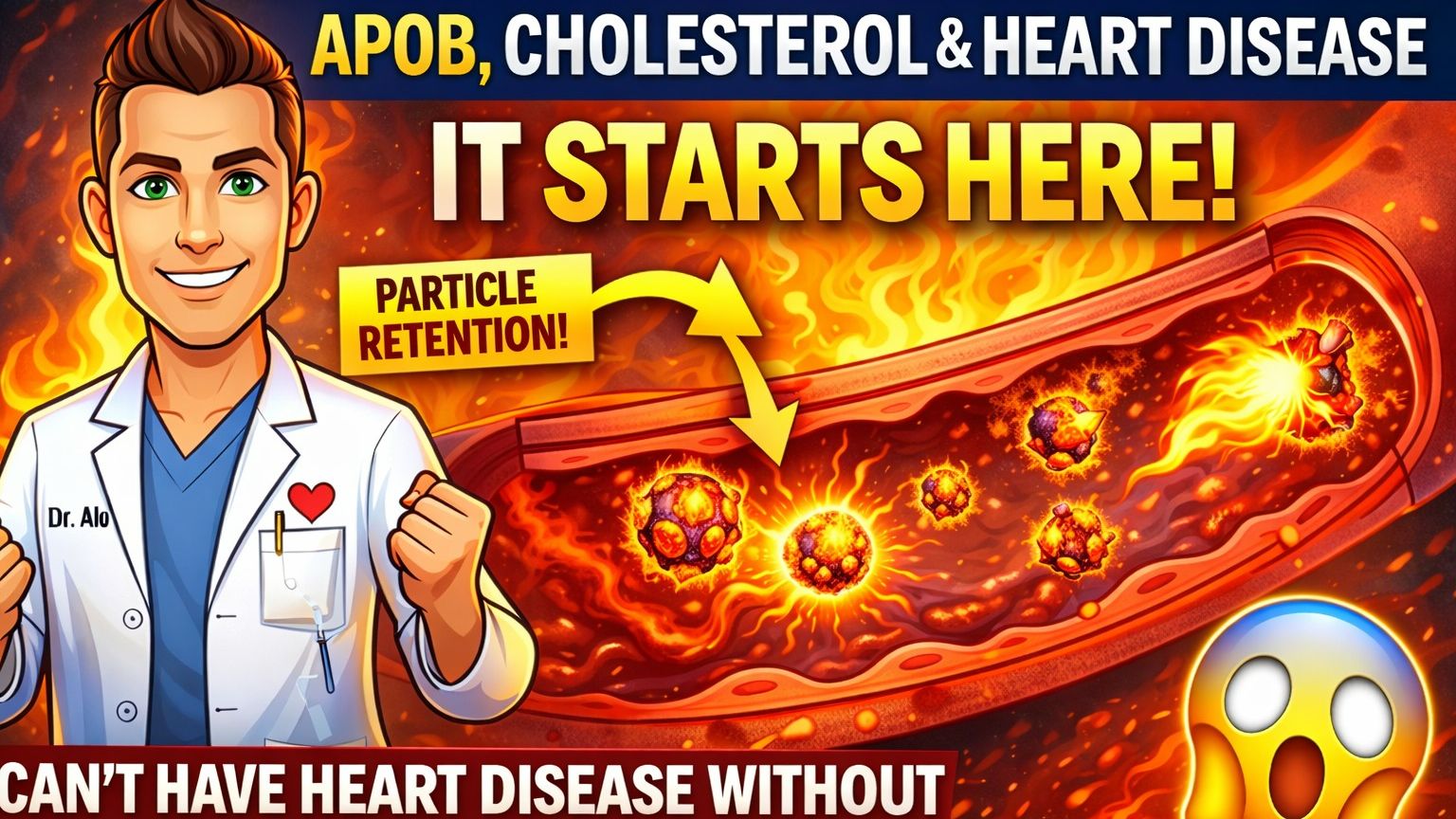
ApoB, Cholesterol, and Heart Disease: What Actually Starts Atherosclerosis?
You may have heard someone say, “Cholesterol doesn’t cause heart disease.” That statement is not accurate. Cholesterol absolutely plays a central role in heart disease. However, the way cholesterol causes heart disease is more specific than most people realize.
Cholesterol does not float freely in your blood. It is carried inside particles. The particles that matter most are called ApoB-containing lipoproteins. Heart disease begins when these cholesterol-laden ApoB particles become trapped inside the wall of an artery. Without these particles, atherosclerosis cannot develop.
Understanding that single concept changes everything.
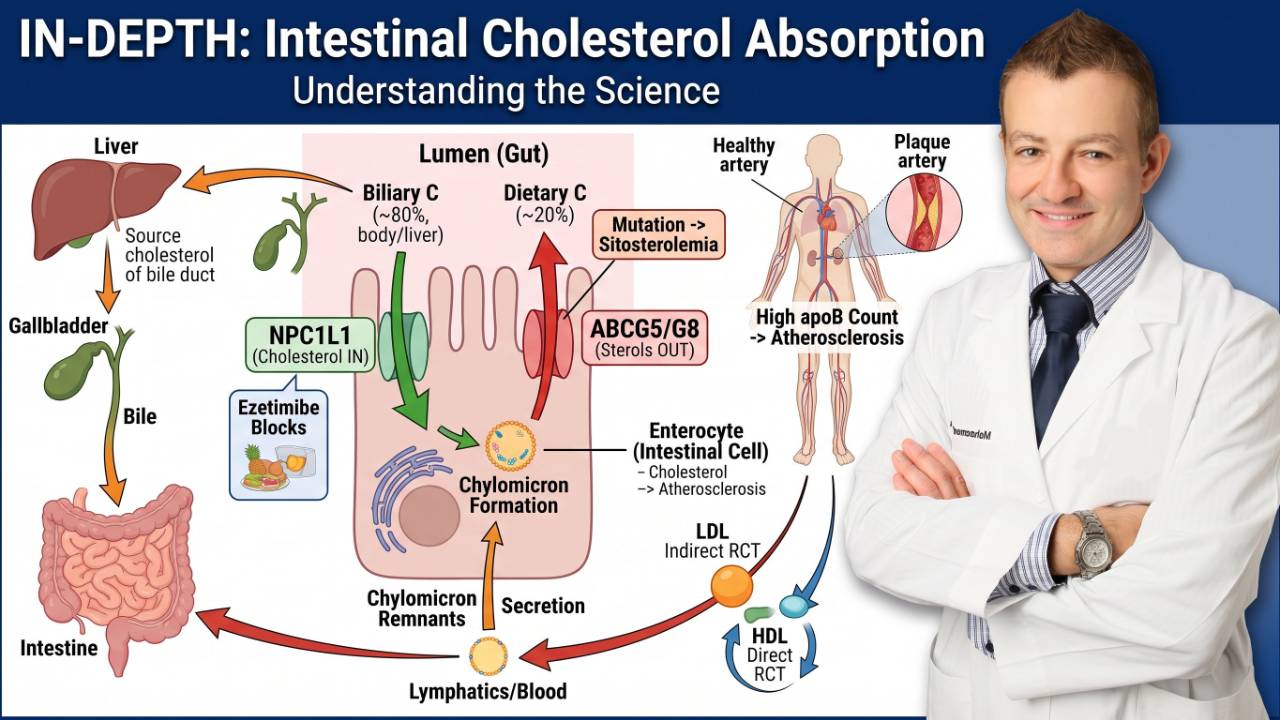
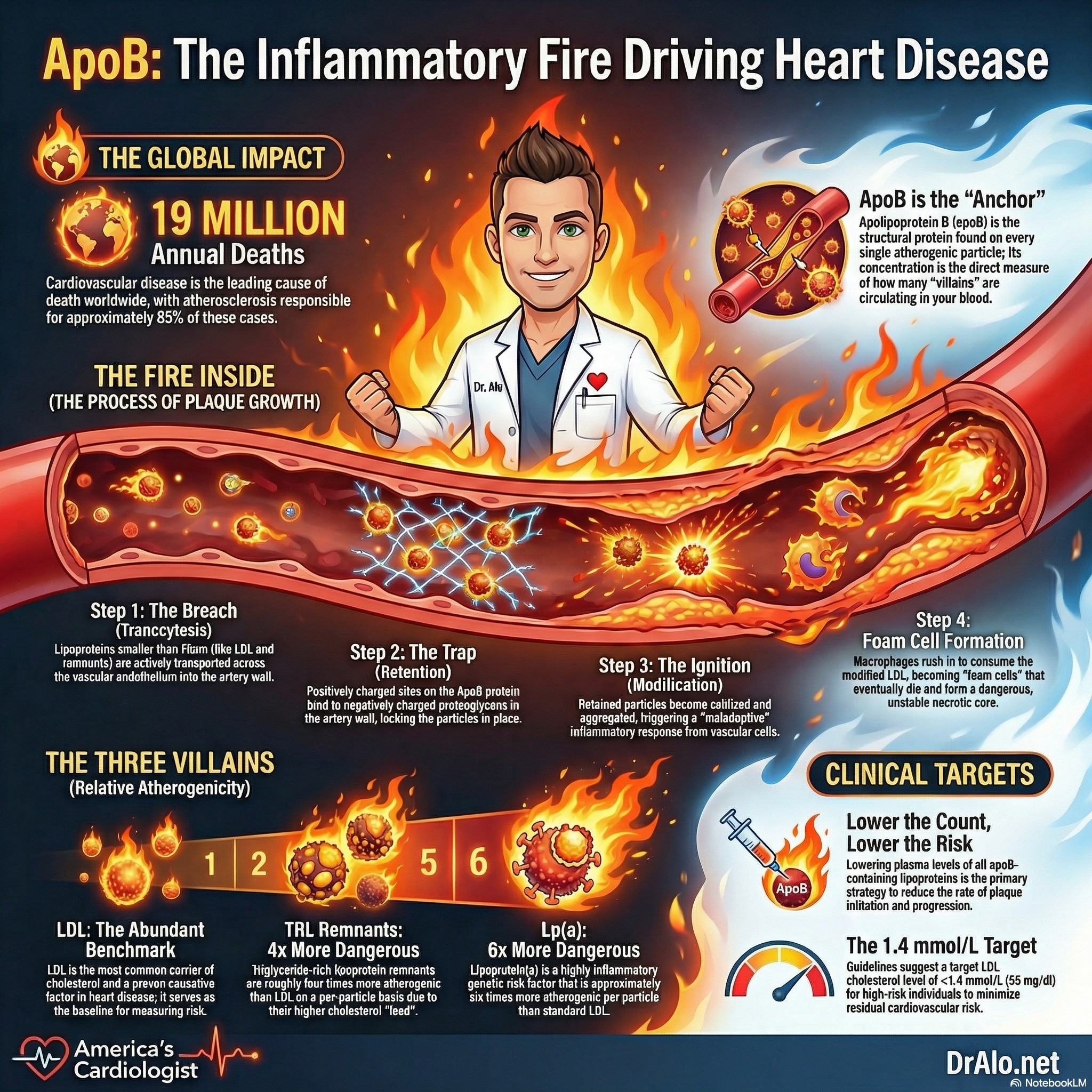
Retention Infographic Summary:
What Is ApoB?
ApoB, or Apolipoprotein B, is a protein found on particles that transport cholesterol through the bloodstream. These include LDL (often called “bad cholesterol”), triglyceride-rich remnants, and lipoprotein(a), also known as Lp(a). Each of these particles carries exactly one ApoB molecule.
When we measure ApoB in the blood, we are counting how many cholesterol-carrying particles are circulating. When we measure LDL cholesterol, we are measuring how much cholesterol is inside those particles. So ApoB is not separate from cholesterol — it is simply a different way of measuring the number of cholesterol-laden particles.
And when it comes to heart disease, the number of particles is critically important.
What Actually Starts Heart Disease?
Atherosclerosis, the process that leads to heart attacks and strokes, begins with one key event: retention of cholesterol-carrying ApoB particles inside the artery wall. This concept is strongly supported by decades of research and summarized clearly in a major review in Nature Reviews Cardiology .
Here is what happens.
ApoB-containing particles cross the thin inner lining of the artery. This occurs naturally and regularly. Most of these particles pass in and out without causing harm. However, some of them bind to structures within the artery wall called proteoglycans. When they bind, they become trapped. This is called particle retention, and it is the event that initiates the entire atherosclerotic cascade.
Once trapped, the cholesterol inside the particle begins to accumulate. The particle may become oxidized or chemically modified. These modified particles attract immune cells. The immune cells ingest the cholesterol and transform into what are called foam cells. Over time, inflammation increases, cholesterol crystals form, and a fatty plaque develops. If that plaque becomes unstable and ruptures, it can cause a heart attack.
But none of this happens without that first step: particle retention.
No retention, no plaque.
No ApoB particles, no retention.
No cholesterol-laden particles, no heart disease.
Why Particle Number Matters
Every ApoB particle carries cholesterol. The more ApoB particles circulating in your bloodstream, the more cholesterol is being transported and the greater the probability that some of those particles will enter and become trapped in the artery wall.
It is fundamentally a probability issue. Even if each particle carries a moderate amount of cholesterol, having more particles increases the chance that some will be retained. That is why ApoB is such a powerful measure of cardiovascular risk. It directly reflects how many atherogenic, cholesterol-carrying particles are present.
Are All ApoB Particles Equally Dangerous?
Not exactly. LDL is the most abundant cholesterol-carrying particle and is clearly a causal factor in heart disease. However, research suggests that other ApoB-containing particles may be even more atherogenic on a per-particle basis .
Triglyceride-rich remnant particles often carry more cholesterol per particle and may bind more strongly to the artery wall. Lipoprotein(a), or Lp(a), is genetically determined and may be substantially more atherogenic per particle than LDL . What they all have in common is ApoB. What they all carry is cholesterol. And what they all can do is become retained in the artery wall.
The Inflammation Connection
Inflammation is a major part of plaque progression, but it is not the starting point. Inflammation occurs after cholesterol-laden ApoB particles are retained in the intima and modified. The retained particles trigger immune activation, which leads to chronic arterial inflammation .
So while heart disease is often described as an inflammatory condition, it is more accurately described as a lipid-driven inflammatory disease. The initiating event is cholesterol particle retention.
Why This Matters Clinically
This understanding explains why individuals with lifelong very low LDL levels — and therefore very low ApoB particle numbers — have dramatically lower rates of heart disease. They simply do not have enough cholesterol-carrying particles to initiate plaque formation.
It also explains why advanced lipid testing can be helpful. Measuring ApoB provides insight into how many atherogenic particles are present. Measuring Lp(a) identifies genetically elevated risk. Evaluating triglycerides helps assess remnant particle burden.
Ultimately, reducing ApoB particle number reduces the probability of retention, which reduces the likelihood of plaque development and progression.
ApoB and LDL Particle Gradients Drive Atherosclerosis and Retention
The primary driving force that results in apoB particles entering the arterial intima (inner layer), is a gradient process precipitated by too many circulating apoB particles, the vast majority of which are LDL particles.
As an example, there are 2800 nmols of LDL particles on the circulating side and almost none on the intimal side. It’s important to note that a mole of particles is 6 x10²³ particles. With extrapolation, 2800 nmol/L particles would be several quadrillion LDL particles.
Once apoB particles enter the arterial wall, they rapidly bind to intimal proteoglycans. They become trapped and retained. Only a few can escape back out. Once trapped, their surface phospholipids translocate on the surface, and this promotes LDL aggregation, particle binding, then oxidation, and then internalization by macrophages.
HDL particles have an apoA-1, but no apoB, and do not bind to the intima and can leave the intima and re-enter plasma. They can go back and forth. They don’t get stuck inside.
However, some LDL particles are retained. And that’s the key. The intimal layer in the arteries can retain LDL particles. That’s how they end up stuck in there. Then they begin a cascade and process that we will discuss later.
Does Endothelial Damage Or Permeability Matter?
Williams and Tabas also looked at permeability. Do alterations in permeability need to be present in order for LDL particles to be retained? This was not the case either as LDL particles could cross and be retained at any time.
They even looked at what would happen if you took rabbits and infused them with high dose LDL-C. You had LDL particle retention within minutes to hours. You also had lipoprotein aggregation and foam cell formation within those first few hours of exogenously induced hypercholesterolemia.
They even tested shear stress and branchpoints to see if you needed shear stress in the arteries to cause injury and therefore LDL-P retention. It was not necessary. You actually needed intact and uninjured endothelium. The branchpoint areas of higher stress did not have more atherosclerosis than other areas. Hence, that was not “sufficient nor necessary”.
What About Lipoprotein Oxidation?
The theory back in the 1970s was that lipoproteins needed to be oxidized to cause damage. They even created bloodwork and labs to test for circulating oxidized lipoproteins. This was not necessary either. No lipoproteins were oxidized in circulation nor was it necessary for retention.
However, lipoproteins were oxidized after they were retained within the arterial wall.
Any circulating oxidized lipoproteins are removed by the liver immediately. The lab tests and blood tests (called oxLDL) that were popularized in the late 1990s and early 2000s were unsupported as having any usefulness once adjusted for apoB. It’s the apoB that is the problem.
The same researchers also found that lipoproteins seem to be retained by proteoglycans in the extracellular matrix. This is a layer on the outside of the endothelium that is present on all healthy endothelium. Proteoglycans are able to retain apoB particles.
They also found that an enzyme called lipoprotein phospholipase A2 (LpPLA2) must be present and helps apoB particles adhere to proteoglycans and be retained. People born with LpPLA2 absence have massive hypertriglyceridemia and have a very high incidence of pancreatitis, but no increase in atherosclerosis (since LDL particles cannot be retained).
It’s a very long and in-depth article that you will enjoy, and I highly recommend that you read it. It is a seminal work in the world of cardiology and atherogenesis.
Read full text:
https://www.ahajournals.org/doi/10.1161/01.ATV.15.5.551
The updated edition of this groundbreaking article:
https://www.ahajournals.org/doi/10.1161/CIRCULATIONAHA.106.676890
The Bottom Line
Cholesterol inside ApoB-containing particles is central to heart disease. ApoB is a way of measuring how many cholesterol-laden particles are circulating in the bloodstream. Atherosclerosis begins when those particles are retained in the artery wall. Without ApoB particles, plaque cannot form.
Heart disease is not simply about “high cholesterol.” It is about cholesterol-carrying particle retention and the inflammatory cascade that follows.
Understanding that mechanism allows us to prevent cardiovascular disease more precisely, more effectively, and earlier in life.
Still Have Questions? Stop Googling and Ask Dr. Alo.
You’ve read the science, but applying it to your own life can be confusing. I created the Dr. Alo VIP Private Community to be a sanctuary away from social media noise.
Inside, you get:
-
Direct Access: I answer member questions personally 24/7/365.
-
Weekly Live Streams: Deep dives into your specific health challenges.
-
Vetted Science: No fads, just evidence-based cardiology and weight loss.
Don't leave your heart health to chance. Get the guidance you deserve. All this for less than 0.01% the cost of health insurance! You can cancel at anytime!
[👉 Join the Dr. Alo VIP Community Today]
Cardiology & Obesity Medicine