
When Heart Palpitations Are Peri Menopause?
Jan 11, 2026
Perimenopause Symptoms and Heart Disease: What Every Woman Needs to Know
How Do You Know If It's Heart Disease Or Perimenopause?
Perimenopause is the transitional phase before menopause, often beginning in a woman’s 40s. During this time, fluctuating estrogen and progesterone levels can cause symptoms that overlap with signs of heart disease, leading to confusion and concern. Heart disease is the leading cause of death in women, and cardiovascular risk increases after menopause, making this topic critically important.
Peri Menopause Checklist

What Is Perimenopause?
Perimenopause is the period leading up to menopause and ends once a woman has gone 12 consecutive months without a menstrual period. Hormone levels fluctuate unpredictably, affecting the nervous system, blood vessels, metabolism, and heart rhythm. Diagnosis is clinical, not based on hormone blood tests.
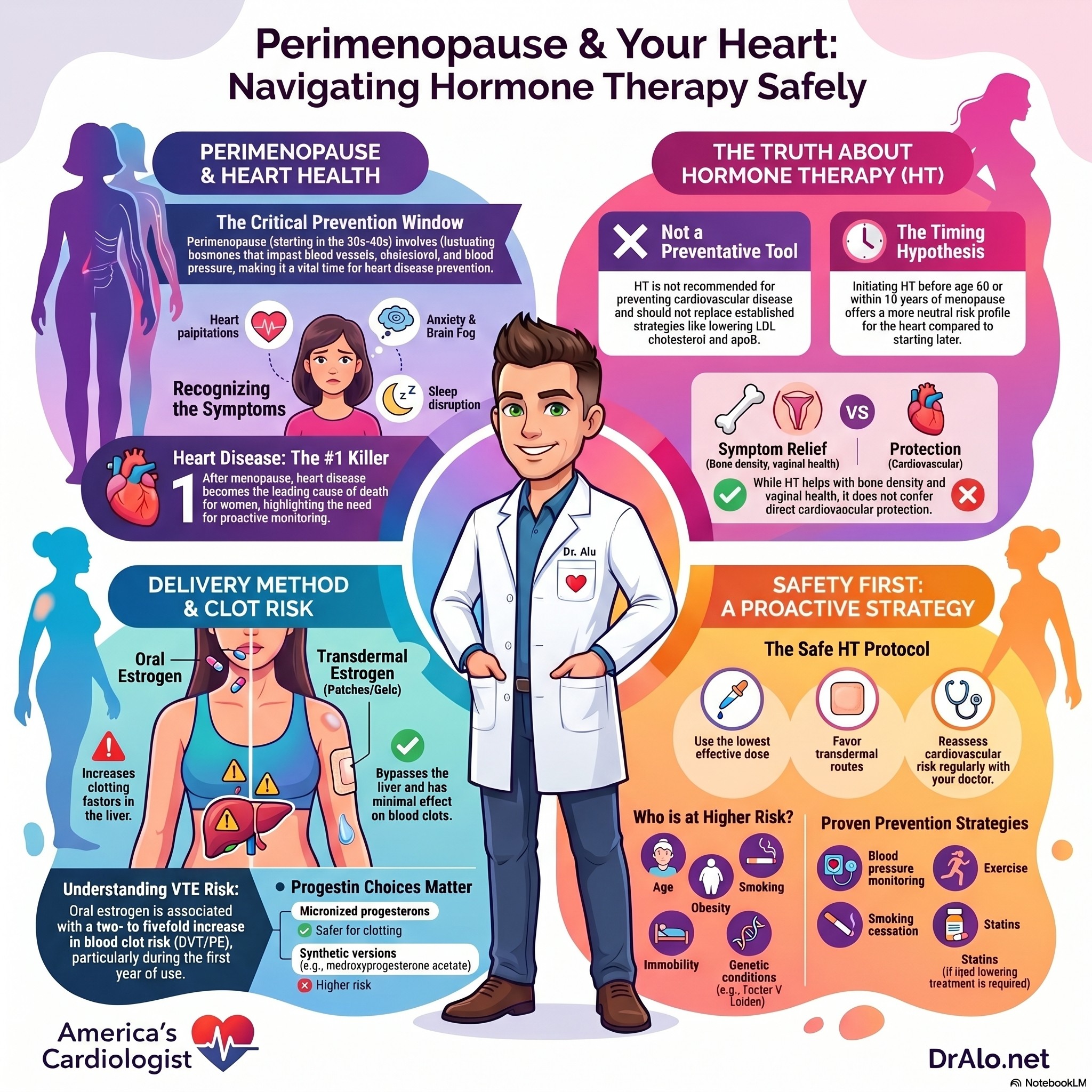
Perimenopause Heart Disease Infographic Summary:
Perimenopause Symptoms That Mimic Heart Disease
Common symptoms include heart palpitations, chest tightness, shortness of breath, dizziness, fatigue, anxiety, and sleep disturbances. These symptoms may be hormonally mediated but should never be dismissed without proper evaluation.
Why Heart Disease Risk Increases Around Menopause
After menopause, women experience changes in cholesterol, blood pressure, insulin resistance, and body fat distribution. Estrogen’s protective effects on blood vessels decline, accelerating cardiovascular risk.
Hormone Therapy and Heart Disease Risk
Hormone therapy is not recommended for preventing heart disease. Timing matters: starting therapy before age 60 or within 10 years of menopause carries lower absolute risk, while later initiation increases cardiovascular risk. Hormone therapy may be appropriate for symptom relief in select patients.
Blood Clots, DVT, and Hormone Therapy
Oral estrogen increases the risk of venous thromboembolism, especially in the first year of use. Transdermal estrogen is associated with lower clot risk. Progestin choice matters, with micronized progesterone appearing safer than some synthetic progestins. VTE risk returns to baseline after discontinuation.
When to Seek Cardiac Evaluation (when to see a cardiologist)
Women should seek evaluation for chest pain, palpitations with dizziness or fainting, shortness of breath with exertion, symptoms that wake them from sleep, or strong family history of heart disease.
Optimizing Heart Health During Perimenopause
Key strategies include blood pressure and cholesterol monitoring, regular physical activity, weight management, smoking cessation, sleep optimization, and stress reduction. Statins, not hormone therapy, are used for cholesterol management when indicated.
So, Is It Menopause, Or Heart Disease?
Perimenopause is a critical window for recognizing symptoms and preventing heart disease. Many symptoms may feel cardiac while true cardiovascular risk is rising. Proper evaluation, personalized care, and early prevention are essential.
Still Have Questions? Stop Googling and Ask Dr. Alo.
You’ve read the science, but applying it to your own life can be confusing. I created the Dr. Alo VIP Private Community to be a sanctuary away from social media noise.
Inside, you get:
-
Direct Access: I answer member questions personally 24/7/365.
-
Weekly Live Streams: Deep dives into your specific health challenges.
-
Vetted Science: No fads, just evidence-based cardiology and weight loss.
Don't leave your heart health to chance. Get the guidance you deserve. All this for less than 0.01% the cost of health insurance! You can cancel at anytime!
[👉 Join the Dr. Alo VIP Community Today]
Cardiology & Obesity Medicine