
Normal Blood Pressure by Age: What’s Healthy vs Concerning
Dec 31, 2025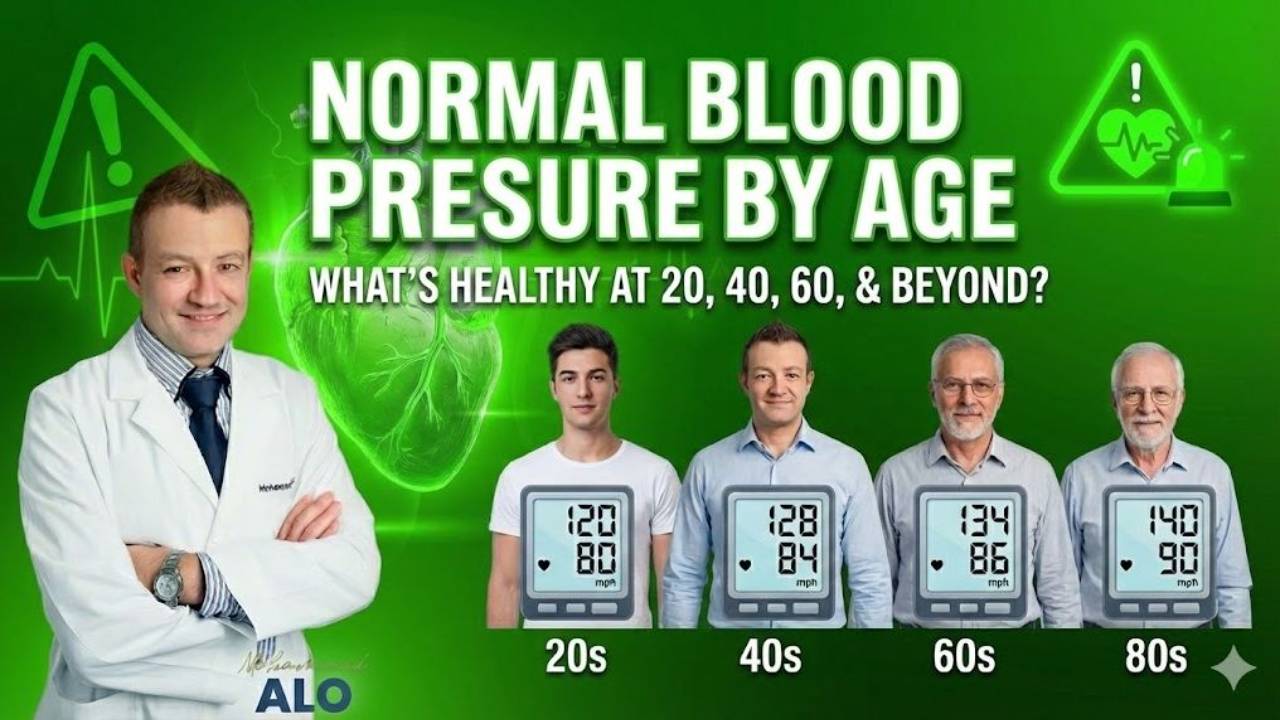
What's A Normal Blood Pressure For My Age?
If you’ve ever Googled “normal blood pressure by age,” you’re not alone. Most people do it for one reason: you’ve seen a number on a cuff (at home, at the pharmacy, or in the doctor’s office) and you want to know if it’s “good.”
Here’s the truth: for adults, *the definition of normal blood pressure does not change with age*. What changes with age is how common higher numbers become, and how important it is to measure correctly and look at your average over time.
Medical note: This article is for general education. If you have symptoms of a medical emergency (chest pain, shortness of breath, weakness on one side, difficulty speaking, vision changes), call 911.
Infographic Summary:
Key takeaways
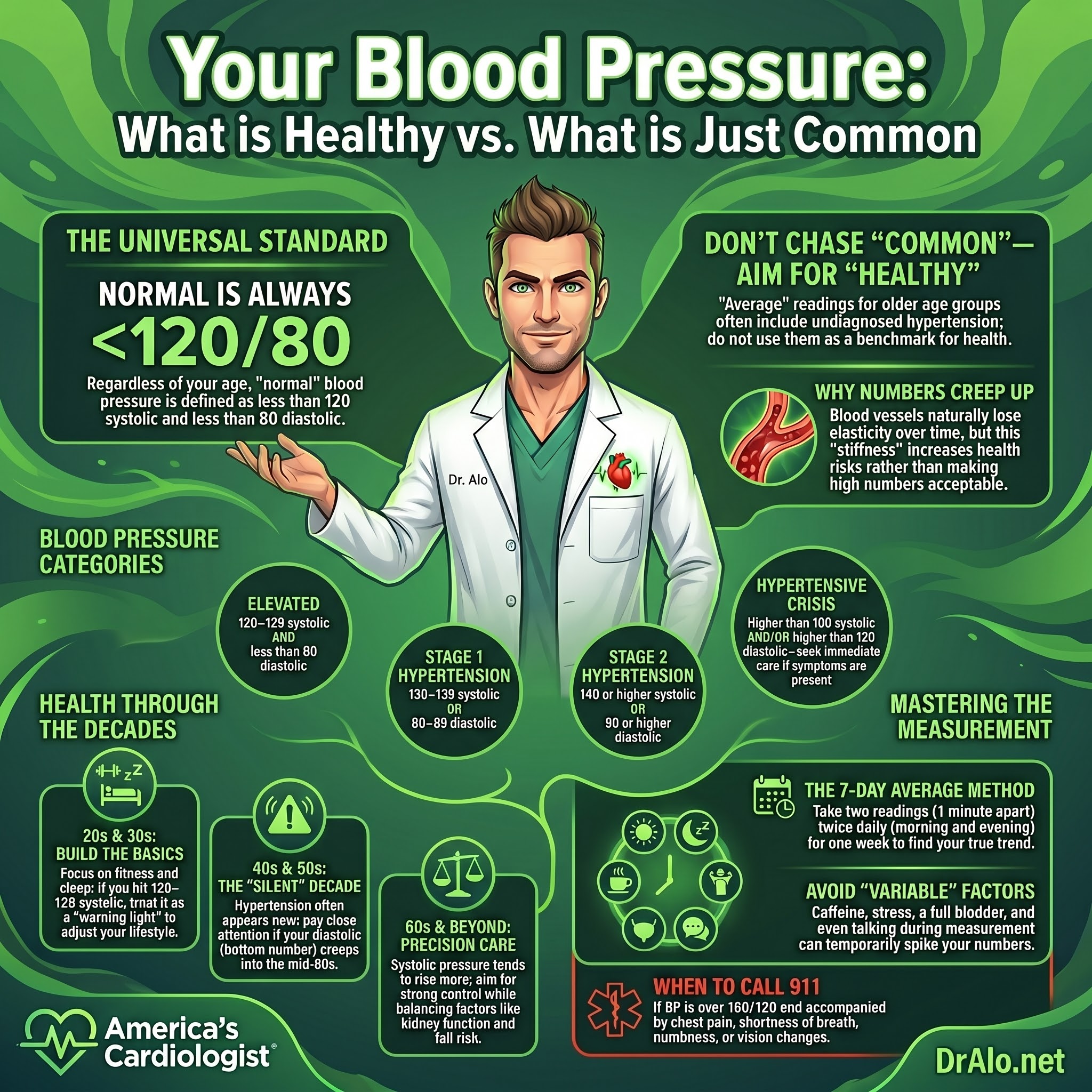
- “Normal” for most adults is below 120/80 mm Hg.
- Blood pressure often rises with age, but that doesn’t mean higher numbers are “normal” or harmless.
- One high reading isn’t a diagnosis. Your average, measured correctly, is what guides next steps.
What the two blood pressure numbers actually mean
A blood pressure reading looks like this: 120/80.
- Top number (systolic): the pressure in your arteries when your heart contracts.
- Bottom number (diastolic): the pressure when your heart relaxes between beats.
Both numbers matter, but systolic pressure tends to creep up with age because arteries can become stiffer over time.
Adult blood pressure categories (all adults, all ages)
Use this chart as your starting point:
- Normal: less than 120 / less than 80
- Elevated: 120–129 / less than 80
- Stage 1 hypertension: 130–139 or 80–89
- Stage 2 hypertension: 140 or higher or 90 or higher
- Severely high (crisis-level): higher than 180 / higher than 120 (especially concerning if you have symptoms)
Why categories beat “age averages”
You’ll sometimes see “average BP by age” tables online. The problem is that an “average” can include a lot of people with undiagnosed or uncontrolled hypertension, so it can normalize numbers that still carry risk.
If you remember one sentence: Don’t chase what’s common, aim for what’s healthy.
So why do people say blood pressure rises with age?
Because it often does. Common reasons include:
- Blood vessels naturally lose elasticity over decades.
- Weight and activity patterns change.
- Sleep issues (including sleep apnea) become more common.
- Chronic stress, alcohol, and higher sodium intake accumulate.
That’s why I encourage patients to think in decades: prevention early, precision later.
Normal blood pressure “by age”: what to focus on in each decade
Instead of giving you a misleading “normal range” that changes with age, here’s what matters most in real life.
In your 20s and 30s
Your advantage: your blood vessels are usually more flexible.
What to watch:
- If you’re consistently 120–129 systolic, that’s a warning light, not an emergency, but a moment to tighten lifestyle.
- Family history matters: if hypertension runs in your family, start checking at home a few times per month.
Best move:
- Build the basics: fitness, sleep consistency, low processed foods.
In your 40s and 50s
This is the decade where “silent” hypertension often shows up.
What to watch:
- Repeated readings 130/80 or higher deserve attention.
- If your diastolic is creeping up (mid-80s and above), don’t ignore it.
Best move:
- Get serious about your 7-day home BP average (more on that below).
In your 60s and beyond
Systolic pressure tends to rise more than diastolic.
What to watch:
- Persistent systolic 140+ increases risk over time.
- A large gap between systolic and diastolic (wide pulse pressure) can become more common and deserves a conversation with your clinician.
Best move:
- Keep treatment individualized. The goal for most adults is strong control, but your plan should consider fall risk, kidney function, and overall health.
How to know if your blood pressure is truly “your normal”
Blood pressure is a moving target. It changes with:
- pain
- stress
- caffeine
- poor sleep
- decongestants
- exercise
- a full bladder
- talking during measurement
That’s why I care far more about your **trend** than a single reading.
The “7-day average” method (simple and powerful)
For most people, the cleanest way to understand your real BP is:
- Take readings twice daily (morning and evening)
- Take two readings each time, 1 minute apart
- Do this for 7 days
- Bring the log (or the device) to your appointment
When to talk to your doctor about your numbers
Make an appointment (soon, not someday) if:
- Your home average is 130/80 or higher
- You’re consistently 140/90 or higher
- You’ve started seeing higher numbers suddenly (especially if you feel unwell)
- You’re pregnant (blood pressure deserves special attention)
When high blood pressure is an emergency
Call 911 if your BP is over 180/120 and you have symptoms like:
- chest pain
- shortness of breath
- weakness or numbness
- trouble speaking
- vision changes
- severe back pain
Don’t wait to “see if it comes down.”
Frequently asked questions
Is 140/90 normal for a 70-year-old?
It’s common, but it isn’t considered normal. It’s stage 2 hypertension, and it’s worth treating with lifestyle and, when appropriate, medication.
Is 120/80 normal or high?
It sits at the upper edge of what many people consider “normal,” but current categories define “normal” as less than 120/80. If you’re often 120–129 systolic, that’s considered “elevated.”
What if my blood pressure is low?
If you’re below about 90/60 and you feel dizzy, faint, weak, or confused, that’s worth medical evaluation. If you feel fine, low BP may simply be your baseline.
Your next step
If you want clarity (and peace of mind), do this:
1) Measure correctly at home for 7 days
2) Calculate your average
3) Review it with your clinician so your plan is tailored to *you*
Still Have Questions? Stop Googling and Ask Dr. Alo.
You’ve read the science, but applying it to your own life can be confusing. I created the Dr. Alo VIP Private Community to be a sanctuary away from social media noise.
Inside, you get:
-
Direct Access: I answer member questions personally 24/7/365.
-
Weekly Live Streams: Deep dives into your specific health challenges.
-
Vetted Science: No fads, just evidence-based cardiology and weight loss.
Don't leave your heart health to chance. Get the guidance you deserve. All this for less than 0.01% the cost of health insurance! You can cancel at anytime!
[👉 Join the Dr. Alo VIP Community Today]
Cardiology & Obesity Medicine