
How Do You Know If You Are In Peri Menopause And What Does It Mean For Your Heart
Jan 11, 2026
Peri Menopause And Heart Disease Risk
You think your symptoms are peri menopause, but how do you know for sure?
How do you know that "skipped beat" wasn't a serious heart condition?
How do you know if you need cholesterol meds?
How do you know if HRT is safe for your heart?
As a cardiologist who treats thousands of women annually, here what they wish they knew 20 years ago.
Unfortunately, most of my patients come to me long after they have already been diagnosed with heart disease, and long after menopause. The time for prevention is decades earlier.
But what if you are only 30 or 40 years old, and starting to feel different? How do you know if you are in peri or pre menopause? It's important to know the symptoms to know where to go next.
Peri Menopause Checklist:

Do You Need Blood Tests To Confirm Pre Or Peri Menopause?
The short answer, no. Just like we really don't need blood work to treat men with low testosterone, you really don't need a large battery of tests to prove if women have perimenopause. What if your doctor orders a tons of tests and they all "came back normal". Does that mean you don't have symptoms?
We should not treat the labs, we should treat the symptoms. If a woman has perimenopausal symptoms, she has perimenopause. Just get on the appropriate treatment.
The only exception to this rule, we will need a testosterone level to know how much you need. Just like we do in men. We can adjust testosterone dosing based on levels as well and can monitor progress. We can also look for symptom resolution. See the in depth article on women and testosterone replacement.
Estrogen and progesterone can be dosed and adjusted based on symptoms. See the articles on that.
Perimenopause Or Peri Menopause
Like most women, you probably have had some of these symptoms. The question is whether or not they are pre menopause or peri menopause, and trying to decide if you should go on HRT sooner, rather than later.
Perimenopause: How to Know If You’re in Perimenopause and What Your Symptoms Mean
Many women in their mid-30s to early 40s begin noticing changes such as anxiety, heart palpitations, poor sleep, brain fog, mood shifts, decreased libido, depression, or changes in their menstrual cycle. These symptoms are often dismissed as stress or anxiety, yet for many women they represent the beginning of perimenopause, a real biological transition.
Perimenopause Heart Disease Infographic Summary:
What Is Perimenopause?
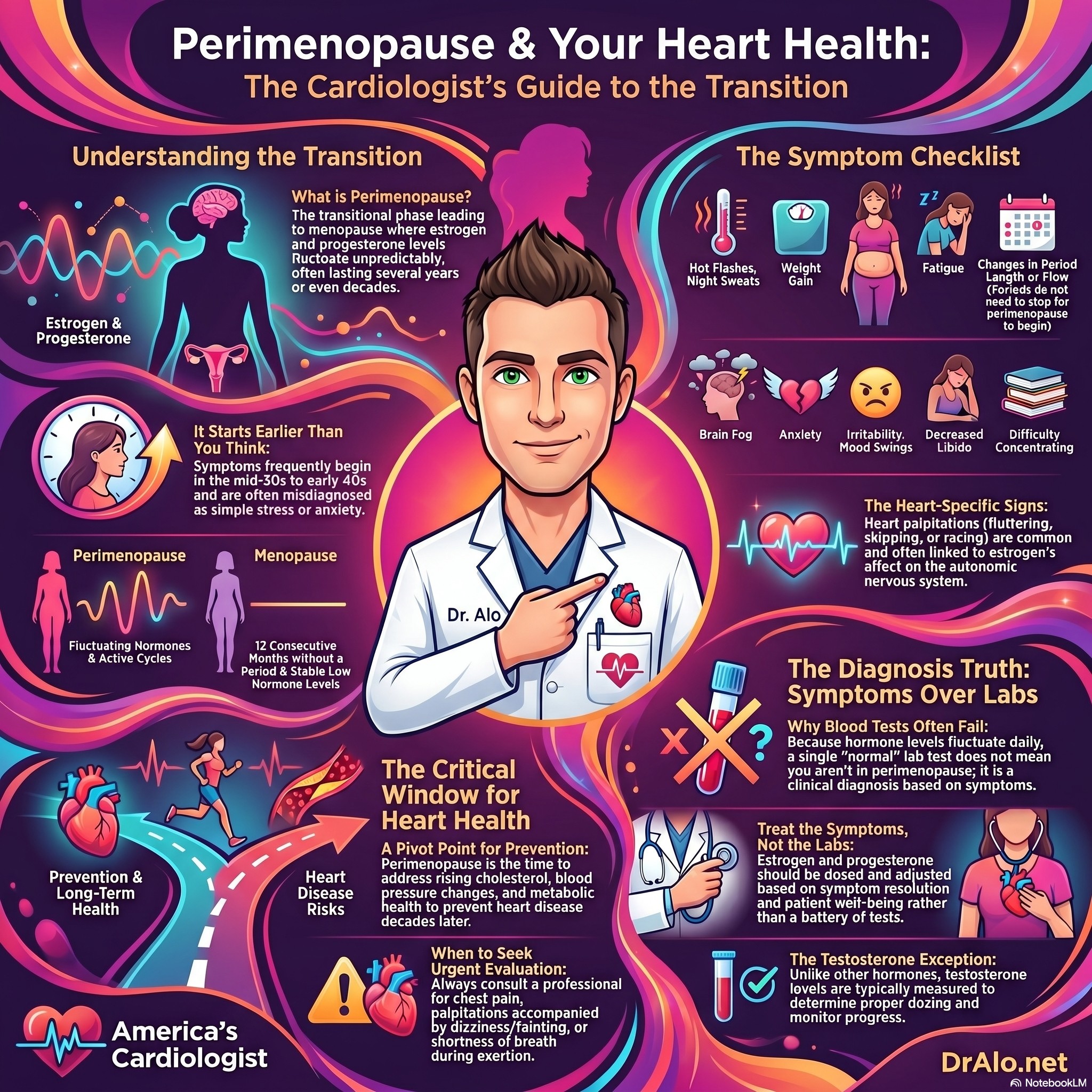
Perimenopause is the transitional phase leading up to menopause. It can begin as early as the mid-30s and often lasts several years, even decades. During this time, estrogen and progesterone levels fluctuate unpredictably, affecting multiple systems throughout the body. Menopause itself is reached once a woman has gone 12 consecutive months without a menstrual period.
Why Perimenopause Is Often Missed or Misdiagnosed
Perimenopause is frequently overlooked because hormone levels fluctuate daily, making blood tests unreliable. Symptoms may come and go, overlap with anxiety or heart symptoms, and are often minimized or dismissed. Perimenopause is a clinical diagnosis based on age, symptoms, and menstrual changes—not a single lab test.
Common Perimenopause Symptoms
Perimenopause can affect nearly every system in the body. Common physical symptoms include hot flashes, night sweats, heart palpitations, sleep disturbances, muscle and joint aches, headaches, fatigue, weight gain, vaginal dryness, dry skin, and hair thinning.
Emotional and Cognitive Symptoms
Hormonal fluctuations can significantly affect the brain and nervous system. Many women experience anxiety, irritability, mood swings, brain fog, difficulty concentrating, low libido, depressive symptoms, and a sense of feeling unlike themselves.
Menstrual Changes as an Early Sign
Changes in menstrual patterns are often one of the earliest signs of perimenopause. Periods may become shorter or longer, heavier or lighter, more irregular, or accompanied by more intense premenstrual symptoms. Periods do not need to stop for perimenopause to begin.
Perimenopause and Heart-Related Symptoms
Heart palpitations are one of the most alarming perimenopause symptoms. Women may experience fluttering, skipped beats, pounding, or a racing heart—sometimes at rest or during hot flashes. These symptoms are often related to estrogen’s effects on the autonomic nervous system, but they should always be properly evaluated rather than dismissed.
How to Know If You Are in Perimenopause
You may be in perimenopause if you are in your mid-30s to 40s, notice new or worsening symptoms without another clear cause, experience menstrual changes, or feel dismissed despite persistent symptoms. The key question is whether your symptoms fit the pattern of hormonal fluctuation rather than whether a single hormone level is abnormal.Perimenopause vs Menopause
Perimenopause is marked by fluctuating hormones and ongoing menstrual cycles, while menopause is defined by stable low hormone levels and the absence of periods for 12 months. Many women experience their most severe symptoms during perimenopause rather than after menopause.
Why Perimenopause Is a Critical Window for Long-Term Health
Perimenopause represents an important opportunity to address long-term health risks. During this time, cholesterol levels may rise, blood pressure may change, sleep disruption can worsen metabolic health, and stress may increase inflammation. Proactive attention to heart, metabolic, and mental health is essential.
When to Seek Medical Evaluation
Medical evaluation is important for symptoms such as chest pain, palpitations with dizziness or fainting, shortness of breath with exertion, symptoms that wake you from sleep, or a strong family history of heart disease. Perimenopause should never be used to dismiss concerning symptoms.
Perimenopause Bottom Line
Perimenopause is real, common, and frequently misunderstood. If something feels off, it is important to trust your body and seek informed care. The goal is understanding—not fear—and recognizing that perimenopause is a biological transition deserving of validation and proper medical attention.
Read other articles on my blog to know if HRT causes heart disease or DVTs.
Still Have Questions? Stop Googling and Ask Dr. Alo.
You’ve read the science, but applying it to your own life can be confusing. I created the Dr. Alo VIP Private Community to be a sanctuary away from social media noise.
Inside, you get:
-
Direct Access: I answer member questions personally 24/7/365.
-
Weekly Live Streams: Deep dives into your specific health challenges.
-
Vetted Science: No fads, just evidence-based cardiology and weight loss.
Don't leave your heart health to chance. Get the guidance you deserve. All this for less than 0.01% the cost of health insurance! You can cancel at anytime!
[👉 Join the Dr. Alo VIP Community Today]
Cardiology & Obesity Medicine