
What Does 130/80 Mean? Stage 1 Hypertension Explained (Without the Panic)
Dec 31, 2025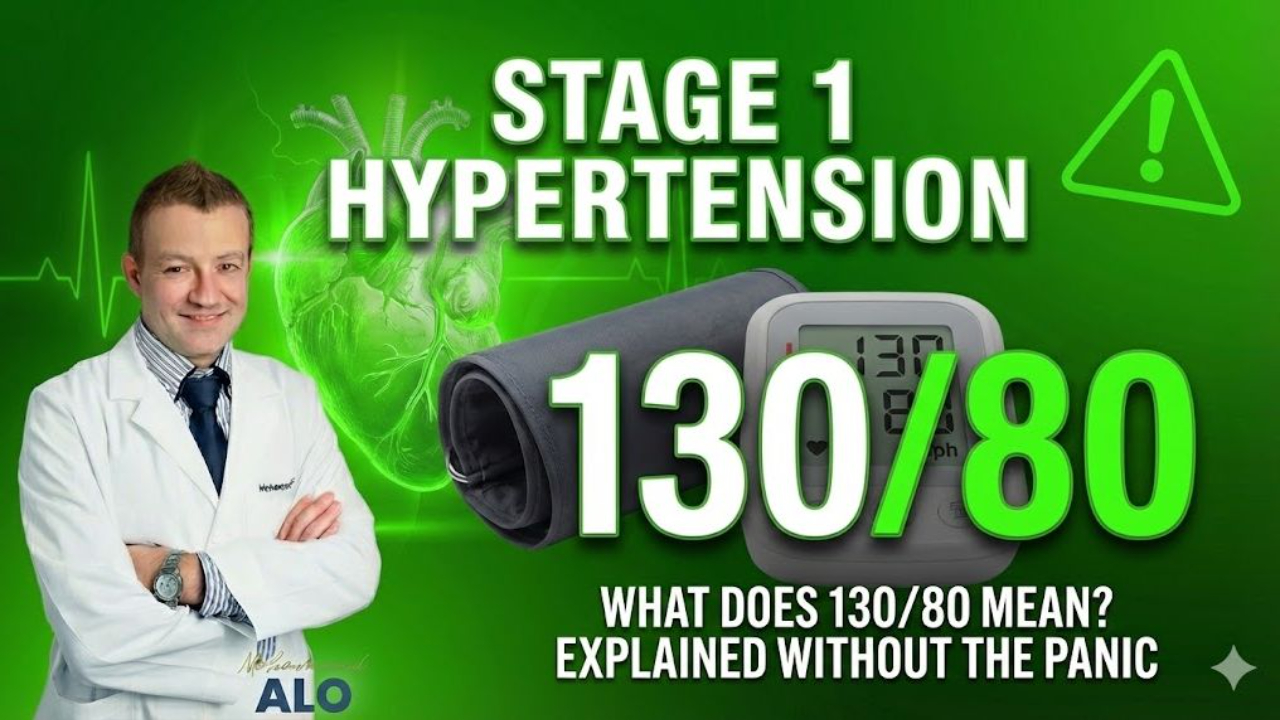
What Does A Blood Pressure Of 130/80 Really Mean?
Seeing 130/80 on a blood pressure cuff can feel like a red alert, especially if you feel fine.
Let’s make it simple: 130/80 is classified as stage 1 hypertension for adults. That doesn’t mean you’re in immediate danger. It does mean your body is showing an early warning sign that deserves a smart, calm plan.
Medical note: This article is educational and not a substitute for personal medical care. If you have BP above 180/120 with symptoms (chest pain, shortness of breath, weakness/numbness, vision changes, difficulty speaking), call 911.
Key takeaways
- 130/80 = stage 1 hypertension in adults.
- One reading is not a diagnosis. Your average over time matters.
- Many people can improve stage 1 numbers with lifestyle, but some should start medication sooner based on overall cardiovascular risk.
First: what do those numbers mean?
A blood pressure reading has two parts:
- 130 (systolic): pressure when your heart beats
- 80 (diastolic): pressure when your heart relaxes
Hypertension can be diagnosed when either number is consistently high.
Infographic Summary:
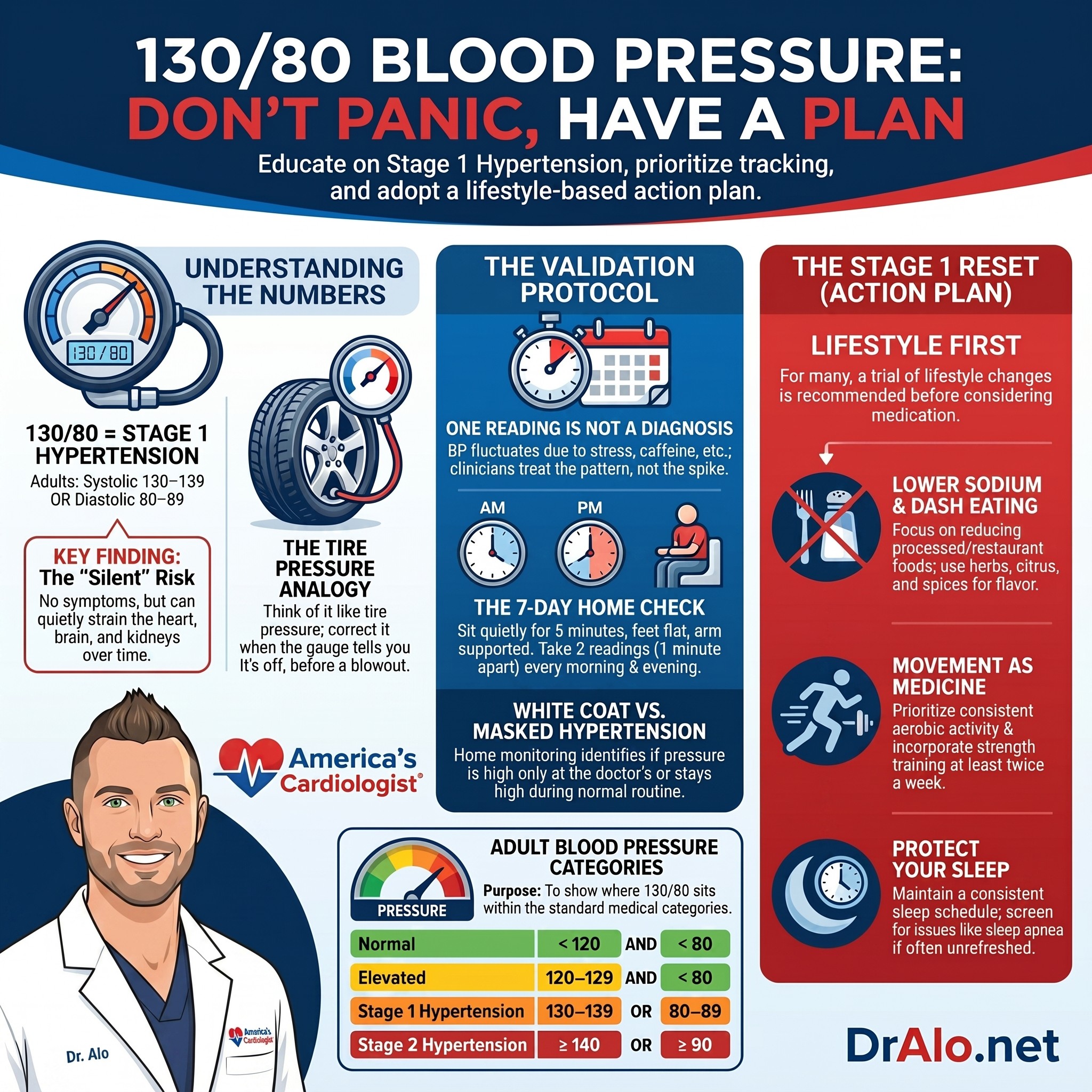
Where 130/80 fits on the chart
Adult categories:
- Normal: <120 and <80
- Elevated: 120–129 and <80
- Stage 1 hypertension: 130–139 OR 80–89
- Stage 2 hypertension: ≥140 OR ≥90
So if you’re 130/80 repeatedly, you’re in stage 1.
Why stage 1 hypertension matters (even if you feel “normal”)
High blood pressure is often called the “silent” risk factor because:
- you usually don’t feel it
- it can quietly strain the heart, brain, kidneys, and blood vessels over years
Think of BP like tire pressure: you don’t wait until the tire blows out, you correct it when the gauge tells you it’s off.
The biggest mistake: reacting to one number
Your BP can spike for completely non-dangerous reasons:
- stress or anxiety
- caffeine
- poor sleep
- pain
- exercise
- talking during the reading
- a full bladder
- the wrong cuff size
That’s why we don’t treat a single reading. We treat a pattern.
Step 1: confirm your real blood pressure (the right way)
If you saw 130/80 in the office, confirm with home BP monitoring:
The quick home protocol
- Measure at the same time each day (morning and evening is ideal)
- Sit quietly for 5 minutes
- Feet flat, back supported, arm supported at heart level
- Take 2 readings, 1 minute apart
- Track for 7 days
Bring your log to your clinician.
Why home readings help
Home monitoring can uncover two common issues:
- White coat effect: high in the office, normal at home
- Masked hypertension: normal in the office, high at home
Step 2: decide what to do next
This is where personalized medicine matters.
Most people start with lifestyle
If your average is around stage 1 and you don’t have high-risk conditions, many clinicians begin with:
- weight management (even 5% weight loss can matter)
- a DASH-style eating pattern (fruits, vegetables, fiber, lean protein)
- sodium reduction
- regular physical activity
- better sleep
- limiting alcohol
- stress management
Then recheck your average after a structured trial period.
When medication is considered sooner
Medication may be recommended earlier if stage 1 hypertension is paired with higher cardiovascular risk, such as:
- known cardiovascular disease
- prior stroke
- diabetes
- chronic kidney disease
- high predicted 10-year cardiovascular risk (your clinician can calculate this)
This is not about fear. It’s about prevention.
The 4-part “Stage 1 Reset” (practical plan)
1) Make your numbers real
- confirm with home readings and proper technique
2) Lower sodium without hating your food
- focus on reducing processed and restaurant foods first
- use herbs, citrus, vinegar, spices for flavor
3) Move like medicine
- aim for consistent aerobic activity
- add strength training 2x/week
4) Protect your mornings and sleep
- consistent bedtime and wake time
- screen for sleep apnea if you snore or feel unrefreshed
What if my BP is 130/80 only sometimes?
Occasional 130/80 isn’t a crisis. It’s data. If your average is under 120/80, you’re likely doing fine. If the average is 130/80 or above, you’ve earned a focused plan.
FAQs
Is 130/80 dangerous?
Not usually in the short term. Over the long term, sustained stage 1 hypertension increases risk, so it’s worth correcting early.
Is 130/80 “normal for my age”?
For adults, the categories don’t change with age. What changes is how common higher readings become.
Should I start medication at 130/80?
Some people should. Many people can start with lifestyle. The “right answer” depends on your overall risk profile and your true average BP.
Bottom line
130/80 is not a reason to panic. It is a reason to pay attention. Confirm your average at home, tighten the basics, and partner with your clinician on a plan that matches your risk.
Still Have Questions? Stop Googling and Ask Dr. Alo.
You’ve read the science, but applying it to your own life can be confusing. I created the Dr. Alo VIP Private Community to be a sanctuary away from social media noise.
Inside, you get:
-
Direct Access: I answer member questions personally 24/7/365.
-
Weekly Live Streams: Deep dives into your specific health challenges.
-
Vetted Science: No fads, just evidence-based cardiology and weight loss.
Don't leave your heart health to chance. Get the guidance you deserve. All this for less than 0.01% the cost of health insurance! You can cancel at anytime!
[👉 Join the Dr. Alo VIP Community Today]
Cardiology & Obesity Medicine