
Why Is My Blood Pressure High in the Morning? (And What to Do About It)
Dec 31, 2025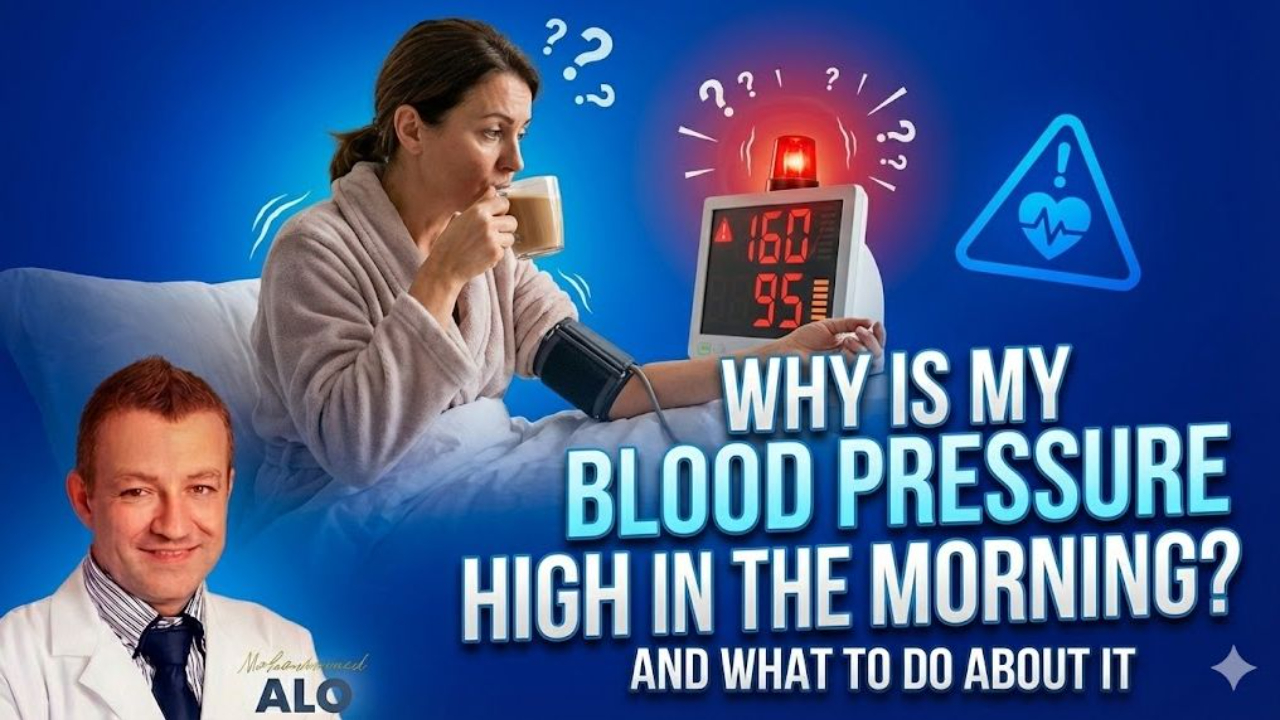
Morning High Blood Pressure: 8 Reasons Why + How to Fix It
The Thing Nobody Tells You About Morning Blood Pressure
You wake up, grab your blood pressure cuff, and the numbers are higher than they were yesterday evening. Your immediate thought: "Something's wrong."
Here's what I tell my patients: A higher morning reading doesn't mean something went wrong overnight. It means your body is doing exactly what it's supposed to do. But sometimes that natural rise gets amplified by things you can actually control.
The problem is that most people—and honestly, many doctors—treat morning high blood pressure like it's random. It's not. There are eight specific, identifiable reasons your pressure spikes in the morning. And once you know which one is yours, fixing it becomes straightforward.
Let me walk you through each one.
Why Your Blood Pressure Rises in the Morning (The Physiology)
Before we get to the problems, let's understand what's normal.
Your blood pressure follows a 24-hour rhythm called a circadian pattern. Here's what happens:
Around 2-3 AM, while you're still asleep, your cortisol (your wake-up hormone) and adrenaline start rising. This is your body preparing to wake. Blood vessels tighten slightly. Your heart rate inches up. By the time your alarm goes off, your blood pressure is already climbing. For most healthy people, this produces a reading that's 10-20 mmHg higher in the morning than at night.
That mild increase? Normal. Healthy. Expected.
But here's where it becomes a problem: If your morning reading is consistently in the stage 1 or stage 2 hypertension range, or if it's significantly higher than your evening readings, something else is amplifying that natural rise. And that's what we need to fix.
Infographic Summary:
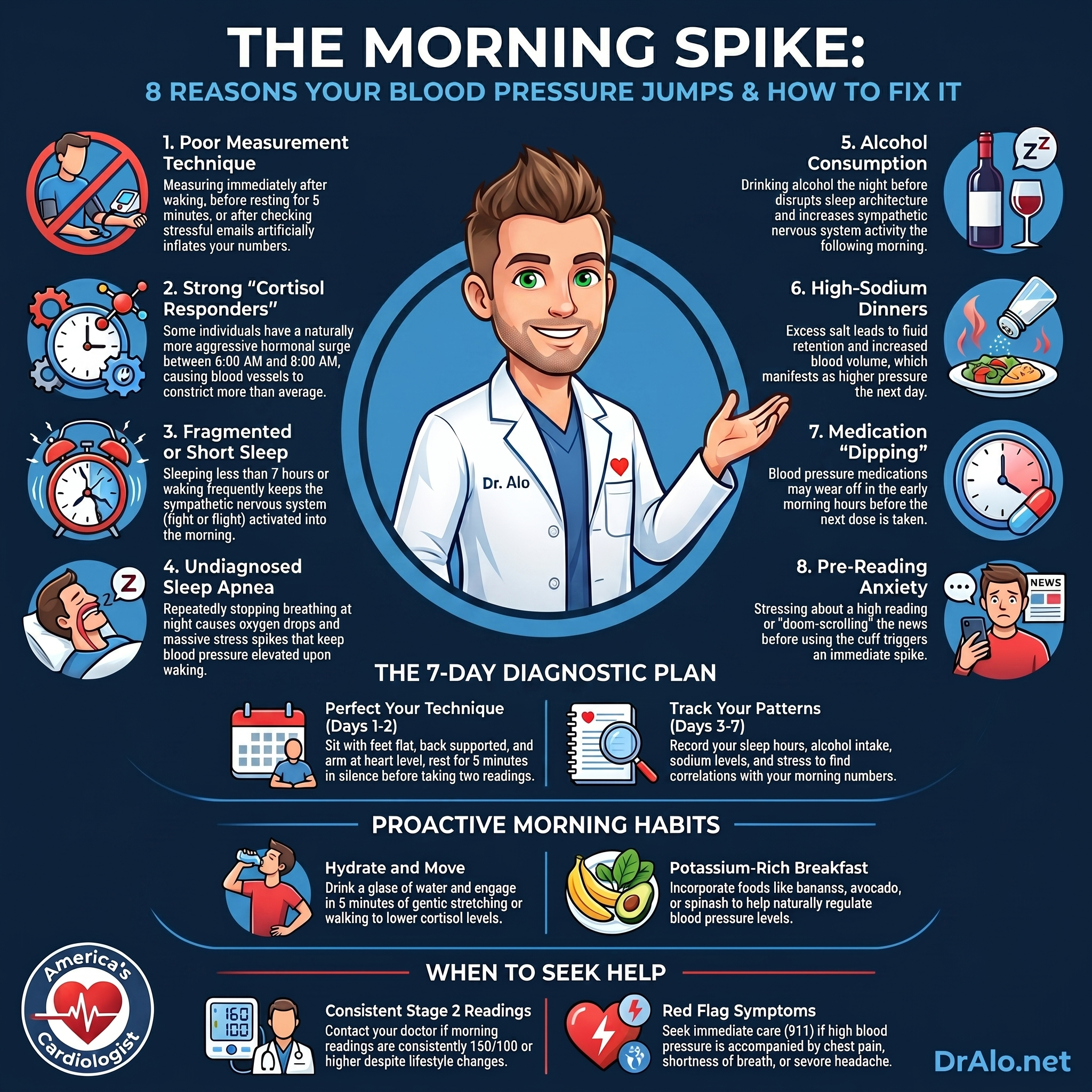
The 8 Reasons Your Morning Blood Pressure Is Too High
1. You're Measuring at the Wrong Time (Most Fixable Problem)
This is the number one reason I see inflated morning readings, and it's almost entirely fixable.
Here's what people do wrong:
They roll out of bed, immediately grab the cuff, and take a reading. They haven't sat down. They haven't taken a breath. Maybe they've just checked their phone and seen stressful messages. Or they grabbed coffee first.
All of these things artificially spike your reading.
The correct way: Sit quietly for 5 minutes. Breathe. Relax. Then measure. Measure before caffeine. Measure before nicotine. Measure before you check your email or news feed.
When you measure correctly, you'll often find your "high" reading is actually borderline or even normal.
2. Your Wake-Up Hormones Are Stronger Than Average
Cortisol and adrenaline are your body's alarm system. They're supposed to rise in the morning to make you alert.
But some people are what we call "cortisol responders." Their cortisol surge is more pronounced. Their blood vessels constrict more aggressively in response.
How do you know if this is you? Your morning readings are consistently elevated, but your daytime and evening readings are normal. You have no other symptoms. You sleep well. You exercise regularly. But 6-8 AM is your blood pressure peak, period.
This isn't dangerous—it's a trait. Some people just have a stronger wake-up surge.
The fix? We'll talk about it below, but it often involves medication timing or a specific lifestyle adjustment.
3. Your Sleep Was Fragmented or Too Short
Sleep deprivation is one of the most underrated blood pressure killers.
If you slept 5 hours instead of 7, your body is in a mild stress state. Your sympathetic nervous system (the "fight or flight" system) stays activated longer into the morning. Blood pressure stays elevated.
If you woke up three times during the night, or if you have insomnia, the same thing happens. Your body never fully relaxes.
Check this: Do your high morning readings happen on nights after poor sleep? If yes, sleep is your culprit.
4. You Have Sleep Apnea (And You Might Not Know It)
This is the big one. Sleep apnea is shockingly common and chronically underdiagnosed.
Here's what happens: While you're asleep, your airway collapses repeatedly. You stop breathing for 10-30 seconds. Your oxygen drops. Your body jolts awake (sometimes you don't remember it consciously). Your blood pressure spikes in response. This happens dozens or hundreds of times per night.
When you wake in the morning, your blood pressure stays elevated from all that nighttime stress.
Red flags for sleep apnea:
Loud snoring. Your partner witnesses pauses in your breathing. You wake with morning headaches. You feel exhausted during the day despite sleeping 8 hours. You take 3 or more blood pressure medications and your pressure is still not controlled (we call this "resistant hypertension").
If any of these fit, ask your doctor about a sleep study. Sleep apnea is treatable, and treating it often fixes morning and nighttime blood pressure completely.
5. You Drank Alcohol the Night Before
Alcohol disrupts sleep architecture. It fragments your sleep, suppresses REM sleep, and increases sympathetic nervous system activity.
Even if you don't feel "hungover," your body experienced a stress response. Your blood pressure can be elevated the next morning as a result.
This is especially true if you had 3+ drinks. Some people are also just alcohol-sensitive—even moderate amounts affect their morning readings.
6. You Ate a Sodium-Heavy Dinner
That restaurant meal had 2,000-3,000 mg of sodium. Your body retains fluid to dilute it. Fluid retention increases blood volume. Higher blood volume means higher pressure.
In salt-sensitive individuals, this effect shows up the next morning.
The fix is simple: Track it. Did you eat salty food last night? Check your morning reading. You'll often find the correlation.
7. Your Blood Pressure Medication Is Wearing Off Overnight
You take your medication at 8 AM. It's effective for 24 hours, technically. But in some people, the protective effect dips in those early morning hours before you take the next dose.
This is especially true with certain medication classes.
Important: Don't change your medication timing on your own. But bring your home blood pressure log to your doctor and say: "My readings are consistently high at 6-7 AM, then normal after I take my medication."
Your doctor might adjust your timing, switch to a longer-acting version, or add a second medication. But this conversation only happens if you bring data.
8. You're Stressed or Anxious Before the Reading
You wake up and immediately think about a work deadline. Or you scroll through your phone and see stressful news. Or you've had poor sleep and you're already anxious about your health.
All of these trigger your sympathetic nervous system. Blood vessels constrict. Heart rate climbs. Blood pressure rises.
Sometimes the "high morning reading" is actually anxiety about the reading itself (we call this "white coat effect" even at home).
The 7-Day Diagnostic Plan: Figure Out Which One Is Yours
Day 1-2: Perfect Your Measurement Technique
First, eliminate measurement error. This is non-negotiable.
Correct technique:
Sit with your feet flat on the floor. Back against the chair. Arm at heart level. Cuff snug but not tight. Rest for 5 minutes before measuring. Take two readings, 1 minute apart.
Do this before coffee, before nicotine, before checking your phone.
Day 3-7: Track and Look for Patterns
Measure morning and evening every day. Write down:
Morning reading. Evening reading. Hours of sleep last night. Did you sleep well or poorly? Did you have alcohol yesterday? What did you eat last night (salty or normal)? Did you take your medication on time? What's your stress level when you woke up?
After 7 days, look for correlations:
Do your high mornings happen after nights with poor sleep? Do they follow salty dinners or alcohol? Are they happening on days you forgot or delayed your medication? Are they higher on stressful mornings?
Once you identify the pattern, you've identified the problem.
How to Actually Lower Your Morning Blood Pressure
If It's a Measurement Problem
Measure correctly for another week. Most people find their "high" reading was actually normal.
If It's Poor Sleep
This deserves its own article, but the basics: consistent sleep schedule, no caffeine after 2 PM, no alcohol within 4 hours of bed, no screens 30 minutes before bed, cool dark room.
If You Suspect Sleep Apnea
Ask your doctor for a sleep study referral. Treating sleep apnea is one of the highest-impact things you can do for your blood pressure.
If It's Sodium or Alcohol
Reduce sodium to under 2,300 mg per day (ideally 1,500 mg if you have hypertension). Limit alcohol. Watch the next morning's reading.
If It's Medication Timing
Bring your data to your doctor. Don't self-adjust. Let them decide if timing changes, medication switches, or dosage adjustments make sense.
If It's Cortisol Surge or Stress
A calm morning routine helps. Deep breathing for 5 minutes after waking. A short walk. Avoid your phone and news for the first 30 minutes. Some people find morning meditation or yoga genuinely helpful.
The Morning Habits That Actually Work
These aren't gimmicks. They're evidence-based and they work:
Hydrate first thing: Mild dehydration increases heart rate and blood pressure response to stress. Drink a glass of water when you wake.
Move gently: A 5-minute walk, light stretching, or yoga before breakfast can lower cortisol and blood pressure slightly. It also improves sleep quality that night.
Eat potassium: Potassium lowers blood pressure. A potassium-rich breakfast (if you don't have kidney disease) helps. Banana, avocado, sweet potato, spinach, beans.
Avoid "doom scrolling": Don't check your phone, email, or news before your reading. This is non-negotiable if you're stress-sensitive.
Time your medication right: If you take blood pressure medication, ask your doctor if taking it at night (before bed) instead of morning might help your morning readings.
When to Worry
Call your doctor promptly if:
Your morning readings are consistently stage 2 (160/100 or higher). You've made lifestyle changes and your readings haven't budged. You've had a recent medication change and your readings are climbing. You have symptoms: chest pain, shortness of breath, severe headache, vision changes, weakness or numbness.
Call 911 if your blood pressure is above 180/120 AND you have chest pain, shortness of breath, severe headache, vision changes, weakness, or numbness.
Common Questions About Morning Blood Pressure
Is a morning rise always bad?
No. A mild rise (10-20 mmHg higher than evening) is normal and healthy. A large rise (50+ mmHg higher) or consistent stage 1/2 readings in the morning? That warrants investigation.
Should I take my blood pressure medication at night?
Maybe. It depends on the medication class and your individual blood pressure pattern. Some medications work better at night. Some don't. Don't change on your own. Bring your home log to your doctor and ask.
Is it true that stress causes high blood pressure?
Acute stress (short-term) raises blood pressure temporarily. Chronic stress contributes to sustained hypertension. Morning anxiety or a stressful thought before your reading can definitely spike it acutely.
How often should I measure?
For diagnostic purposes (figuring out if morning highs are real), twice daily for 7 days is reasonable. After that, once daily in the morning is typically enough. If you're on medication adjustments, your doctor might want more frequent monitoring.
Can I fix this without medication?
Maybe. If your issue is sleep, salt, alcohol, stress, or measurement technique, lifestyle changes alone might work. If it's medication timing or sleep apnea, you'll need medical intervention. If it's genetics and cortisol surge, you may need medication. The 7-day diagnostic plan will tell you which category you're in.
The Bottom Line
Your morning blood pressure isn't random. It's not bad luck. It's your body responding to one (or more) specific things. Your job is to figure out which ones.
The good news: Most of the reasons are fixable.
Start with the 7-day diagnostic plan. Track sleep, sodium, alcohol, stress, and medication timing. Look for patterns. Bring your data to your doctor. Together, you'll identify what's actually driving your morning readings and what to do about it.
And if you find yourself consistently stressed about your numbers, remember this: Anxiety about blood pressure raises blood pressure. Sometimes the best thing you can do is take a breath, measure correctly, track the data, and let your doctor help you sort it out.
Want Personalized Guidance on Your Blood Pressure?
Blood pressure management isn't one-size-fits-all. Your morning readings might be driven by sleep apnea. Your neighbor's might be driven by medication timing. Getting clarity on what's actually happening with YOUR numbers requires data and physician interpretation.
That's what the Heart 2 Heart VIP Community is for. You can text me any time with your blood pressure log, discuss your sleep patterns, and get answers specific to your situation. Join live video calls where we talk cardiovascular health directly. No waiting rooms. No vague advice. Just evidence-based guidance from a cardiologist who understands your actual numbers.
💪🏻🩺🫀
Dr. Alo
References
Torpy JM, Burke AE, et al. Sleep Apnea. JAMA. 2014.
Related Blood Pressure Management Posts
Complete blood pressure library:
- What Does 130/80 Mean? Stage 1 Hypertension
- How to Take Blood Pressure at Home Correctly
- White Coat vs Masked Hypertension
- Blood Pressure Spikes After Coffee, Stress, or Exercise
- When Is High Blood Pressure an Emergency?
- Low Blood Pressure Symptoms
- Best Foods to Lower Blood Pressure
- Blood Pressure Medications Explained
- How To Lower Blood Pressure Naturally Without Meds
- Is Salt Burning Your Heart?
Prevention & Guidelines
- Dr. Alo's Dietary Guidelines – Complete prevention framework
- Statins And Dementia – Medication options
Still Have Questions? Stop Googling and Ask Dr. Alo.
You’ve read the science, but applying it to your own life can be confusing. I created the Dr. Alo VIP Private Community to be a sanctuary away from social media noise.
Inside, you get:
-
Direct Access: I answer member questions personally 24/7/365.
-
Weekly Live Streams: Deep dives into your specific health challenges.
-
Vetted Science: No fads, just evidence-based cardiology and weight loss.
Don't leave your heart health to chance. Get the guidance you deserve. All this for less than 0.01% the cost of health insurance! You can cancel at anytime!
[👉 Join the Dr. Alo VIP Community Today]
Cardiology & Obesity Medicine