
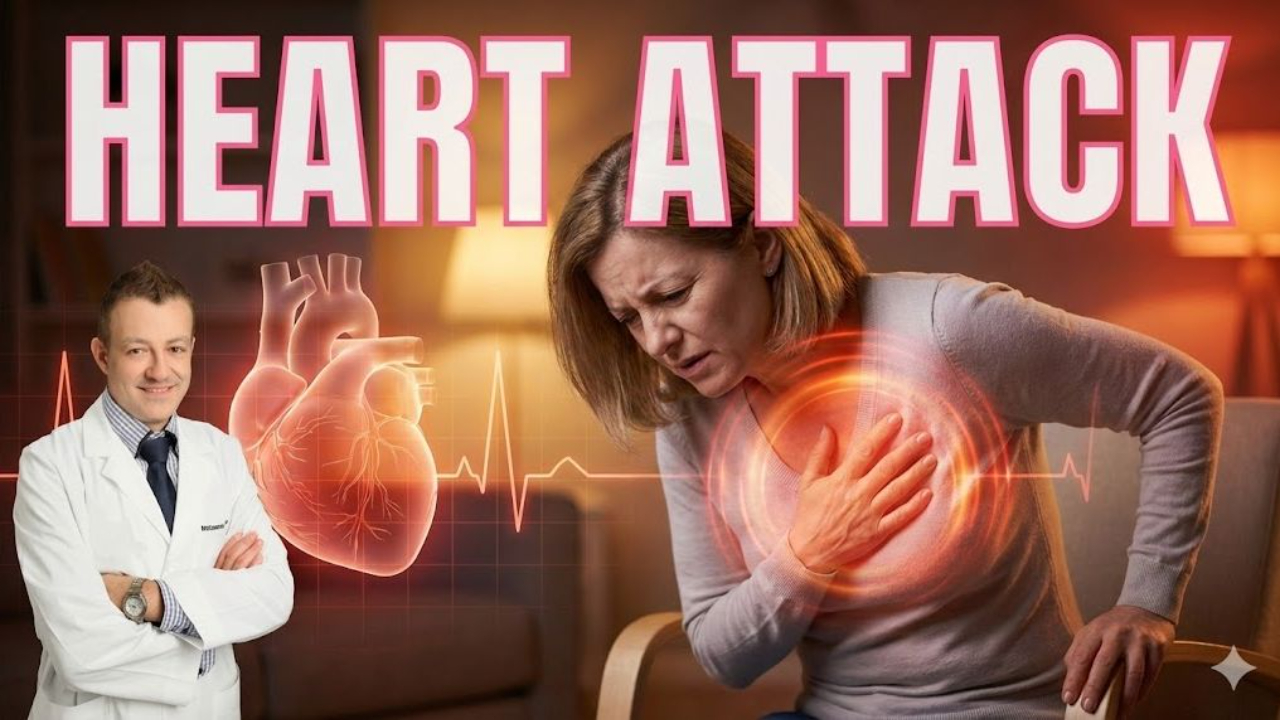
The "Silent" Heart Attack: Why Women Are at Higher Risk

cardiology Dec 29, 2025
women heart attck

The Surprising Truth About Heart Disease in Women

For decades, cardiology was studied almost exclusively in men. The protocols, the symptoms, and the 'textbook' cases were all based on male biology. The result? We treated women like 'small men.'

That was a mistake.

As a cardiologist, I see the consequences of this misconception every day. Heart disease remains the number one killer of women, yet many female patients are sent home from ERs with a diagnosis of 'anxiety' or 'indigestion' when their heart is actually in distress. Understanding the biological sex differences in heart disease isn't just about equality—it’s a matter of life and death. Here is the physiological truth about how your heart differs from his.


Different Sexes, Different Symptoms

Yes, men and women experience heart disease in fundamentally different ways—from the age when symptoms first appear to how the disease develops, what symptoms look like, and even survival rates. Understanding these differences could save your life or the life of someone you love.

Heart disease is the leading cause of death for both men and women, accounting for 24.2% of all deaths in men and 21.8% in women. Yet despite these similar overall rates, the way heart disease affects each sex is remarkably different—and these differences have life-or-death consequences.


When Does Heart Disease Strike Women? The 10-Year Gap

Women develop heart disease approximately 7-10 years later than men, with symptoms typically appearing after menopause. While this delay was historically attributed to the protective effects of estrogen, recent research suggests the relationship is more complex than simply hormone levels.

But here's the critical difference: the first presentation of cardiovascular disease differs dramatically between the sexes. Women are more likely to experience stroke or heart failure as their first cardiovascular event, particularly after age 70. In contrast, coronary heart disease is the leading first presentation in men at every age.


The Symptoms: Why "Typical" Chest Pain Isn't So Typical for Women

Women are 37% less likely to present with chest pain during a heart attack compared to men. The National Registry of Myocardial Infarction found that only 31% of women presented with chest pain during myocardial infarction, compared to 42% of men.

What Women Experience Instead:

Instead of the "classic" crushing chest pain, women more frequently report what doctors call "atypical" symptoms:

  • Unusual fatigue (reported by 73% of women before a heart attack)
  • Sleep disturbances (50%)
  • Shortness of breath (44.5%)
  • Back pain, jaw pain, or pain between the shoulder blades
  • Nausea and vomiting
  • Epigastric discomfort (upper stomach pain)
  • Palpitations and lightheadedness
  • Sense of dread or anxiety

Remarkably, chest discomfort was reported by only 37.7% of women in the period before myocardial infarction. Women also experience angina during periods of mental stress or rest, whereas angina in men is most frequently related to physical exertion.


The Hidden Danger: Different Disease Mechanisms

The underlying disease process itself differs between men and women. Men are more likely to have obstructive coronary artery disease affecting large epicardial vessels—the kind that shows up clearly on traditional angiograms. Women, however, more frequently experience:

  • Coronary microvascular dysfunction (disease in the smallest blood vessels)
  • Plaque erosion rather than plaque rupture
  • Spontaneous coronary artery dissection
  • Stress cardiomyopathy (broken heart syndrome)

Women have smaller epicardial coronary arteries, lower plaque burden, higher baseline blood flow, and increased endothelial shear stress. Data from large registries show that women with stable angina and acute coronary syndrome have significantly lower odds of obstructive coronary artery disease, yet they experience equal or greater degrees of ischemia and mortality.

This creates a dangerous paradox: women can have severe heart disease that doesn't show up on standard tests designed to detect blockages in large arteries.


Risk Factors: Not Created Equal

While men and women share many traditional cardiovascular risk factors, these factors affect women more powerfully:

  • Diabetes confers a 44% greater risk of cardiovascular disease in women compared to men with diabetes
  • Smoking carries a 35% higher relative risk in women
  • Obesity increases coronary artery disease risk by 64% in women compared to 46% in men
  • Systolic blood pressure, hypertension, and diabetes are all associated with higher hazard ratios for myocardial infarction in women than in men


Female-Specific Risk Factors

Women also face unique risk factors that men never experience:

  • Pregnancy complications (preeclampsia, gestational diabetes, preterm delivery)
  • Premature menopause (before age 40)
  • Polycystic ovarian syndrome
  • Cardiotoxic breast cancer treatments
  • Inflammatory diseases like systemic lupus erythematosus and rheumatoid arthritis

The 2018 American Heart Association/American College of Cardiology guidelines now recognize early menopause and history of preeclampsia as "risk enhancers" for cardiovascular disease prevention decisions.


The Diagnostic Challenge: Why Women Are Underdiagnosed

Women face significant barriers to accurate diagnosis:

Atypical symptoms lead to delays. Women are less likely to have a prehospital diagnosis of myocardial infarction and experience longer time intervals between symptom onset and initial medical intervention. Women are also four times less likely than men to identify chest pain as a symptom of ischemic heart disease.

Diagnostic tools were designed for men. Traditional diagnostic tests focused on identifying obstructive coronary lesions don't work as well in women. Risk scores based on thresholds determined in predominantly male populations may not predict cardiac risk accurately in women.

Biomarkers need sex-specific thresholds. Cardiac troponin levels correlate with left ventricular size, so baseline troponin levels differ by sex. This historically resulted in underdiagnosis of MI in women. The use of sex-specific troponin cutpoints doubled the diagnosis of acute MI in women.

The Outcome Gap: Women Face Higher Mortality

Despite developing heart disease later, women face worse outcomes:

  • Within one year of a first heart attack, 23% of women die compared to 18% of men
  • Within five years47% of women versus 36% of men have died
  • These differences are most pronounced in younger age groups, where in-hospital mortality for women under 65 can be 2-3 times higher than age-matched men

The VIRGO trial found that poorer one-year outcomes among middle-aged women (under age 55) were largely attributed to less frequent reporting of typical chest pain, leading to delays in appropriate treatment.

Women experience higher morbidity associated with ischemic heart disease, including:

  • More symptoms
  • More frequent hospitalizations
  • Worse health status
  • More complications after procedures


Troubling Trends: Progress Stalled for Women

Recent temporal trends show declining ischemic heart disease incidence and mortality among men but not among women. Since 2000, there has been minimal improvement in heart disease mortality among young women under 55 years of age.


What This Means for You: Action Steps

For Women:

  1. Know your unique risk factors beyond traditional ones—pregnancy complications, early menopause, and autoimmune conditions all matter
  2. Don't dismiss unusual fatigue, sleep disturbances, or shortness of breath—these may be your heart's warning signs
  3. Advocate for yourself if you have symptoms but initial tests are "normal"—ask about microvascular disease testing
  4. Understand that "normal" angiogram doesn't mean normal heart—you may need additional evaluation

For Healthcare Providers:

  1. Use sex-specific diagnostic thresholds for troponin and other biomarkers
  2. Consider microvascular dysfunction in women with angina and non-obstructive coronary disease
  3. Screen for female-specific risk factors including pregnancy history and menopause timing
  4. Educate patients that atypical symptoms are actually typical for women

For Everyone:

  1. Recognize that chest pain is not the only—or even the most common—heart attack symptom in women
  2. Take women's cardiovascular symptoms seriously, even when they don't fit the "Hollywood heart attack" pattern
  3. Support research that includes adequate numbers of women across all age groups


The Bottom Line For Women And Heart Disease

Men and women don't just experience heart disease differently—they experience fundamentally different diseases that require sex-specific approaches to prevention, diagnosis, and treatment. The one-size-fits-all approach to cardiovascular care has failed women, contributing to persistent disparities in outcomes.

Recognition of these differences—from microvascular dysfunction in women to the higher potency of traditional risk factors and the importance of female-specific risk enhancers—is essential for improving cardiovascular outcomes in both sexes. The future of cardiovascular medicine must be personalized, accounting for the biological sex differences and social gender factors that shape how heart disease develops, presents, and responds to treatment.

Understanding these differences isn't just academic—it's potentially lifesaving. Whether you're a woman concerned about your own risk, someone who loves a woman, or a healthcare provider, knowing that heart disease looks different in women could make the difference between early intervention and tragic outcomes.

Heart disease is an equal opportunity killer, but it doesn't kill equally. It's time our approach to prevention, diagnosis, and treatment reflected that reality.

Would you like me to summarize the latest evidence on diagnostic strategies specifically for microvascular angina and ischemia with non-obstructive coronary arteries (INOCA) in women, including which tests and biomarkers are most effective for early and accurate detection? This could help guide clinical decision-making for female patients presenting with atypical symptoms.


"Is it just anxiety?" No. It’s your health.

Too many women are told their symptoms are "all in their head." My mission is to change that.

I built the Dr. Alo VIP Community to be a place where your health questions are taken seriously. From nutrition deep dives to medication management, we cover the real science without the fluff. Join us, and let's get your heart health on the right track—together.

Click here to become a VIP Member


References:

Comprehensive Reviews on Sex Differences in Heart Disease

  1. Solola Nussbaum S, Henry S, Yong CM, et al.Sex-Specific Considerations in the Presentation, Diagnosis, and Management of Ischemic Heart Disease: JACC Focus Seminar 2/7Journal of the American College of Cardiology.2022;79(14):1398-1406.
  • Covers epidemiology, presentation, diagnostic testing, and management differences
  • Discusses atypical symptoms, female-specific risk factors, and treatment disparities
  1. Clayton JA, Gaugh MD.Sex as a Biological Variable in Cardiovascular Diseases: JACC Focus Seminar 1/7Journal of the American College of Cardiology.2022;79(14):1388-1397.
  • Addresses sex differences in diagnosis, treatment, adverse effects, and outcomes
  • Discusses biomarker differences and sex-specific diagnostic thresholds
  1. Mauvais-Jarvis F, Bairey Merz N, Barnes PJ, et al.Sex and Gender: Modifiers of Health, Disease, and MedicineLancet (London, England).2020;396(10250):565-582.
  • Comprehensive review of sex and gender differences across multiple diseases
  • Includes epidemiology, pathogenesis, and manifestations of heart disease
  1. Bartz D, Chitnis T, Kaiser UB, et al.Clinical Advances in Sex- And Gender-Informed Medicine to Improve the Health of All: A ReviewJAMA Internal Medicine.2020;180(4):574-583.
  • Discusses differential associations of risk factors by sex
  • Covers sex-specific troponin thresholds and microvascular disease

Risk Factors and Prevention

  1. Rajendran A, Minhas AS, Kazzi B, et al.Sex-Specific Differences in Cardiovascular Risk Factors and Implications for Cardiovascular Disease Prevention in WomenAtherosclerosis.2023;384:117269.
  • Detailed review of traditional and female-specific risk factors
  • Discusses role of coronary artery calcium scores and biomarkers

Clinical Guidelines and Scientific Statements

  1. McSweeney JC, Rosenfeld AG, Abel WM, et al.Preventing and Experiencing Ischemic Heart Disease as a Woman: State of the Science: A Scientific Statement From the American Heart AssociationCirculation.2016;133(13):1302-31.
  • American Heart Association scientific statement
  • Covers sex differences in pathophysiology, symptoms, diagnostic tests, and outcomes
  • Discusses obstructive versus non-obstructive disease patterns


Power of 3 Bundle

Grab My 5 Step Quick Guide for Weight Loss & My Ultimate Macro Counting Guide & My Ultimate Lipid Guide for FREE! Normally a $197 Bundle!

Everything you need to live a healthy life, live longer, and lose weight properly!

Most of my clients, friends, and patients lost all the weight they ever wanted with this bundle!

I hate SPAM. I will never sell your information, for any reason.

The "Silent" Heart Attack: Why Women Are at Higher Risk

Dec 29, 2025
Mitral Valve Prolapse: Symptoms, Risks, and Treatments

Dec 29, 2025

Power of 3 Longevity Bundle

Grab My 5 Step Quick Guide for Weight Loss & My Ultimate Macro Counting Guide & My Ultimate Lipid Guide or FREE! Normally a $197 Bundle!

Everything you need to live a healthy life, live longer, and lose weight properly!

Most of my clients, friends, and patients lost all the weight they ever wanted with this bundle!

Disclaimer:

This blog is for general informational, educational, and entertainment purposes only and does not constitute the practice of medicine, nursing or other professional health care services, including the giving of medical advice, and no doctor/patient relationship is formed. The use of information on this blog or materials linked from this blog is at the user's own risk. The content of this blog is not intended to be a substitute for professional medical advice, diagnosis, or treatment. Users should not disregard, or delay in obtaining, medical advice for any medical condition they may have, and should seek the assistance of their health care professionals for any such conditions. Dr. Alo and his subsidiaries can not be held responsible for any harm, deleterious effects, up to an including death form the information contained on this website and blog.