
Do Statins Work In Women? Benefits And Side Effects
Dec 30, 2025
Do Statins Work in Women? The JUPITER Trial Shows 46% Risk Reduction (And Why Doctors Still Underprescribe Them)
The Myth That Won't Die
I hear it all the time from my female patients: "My doctor says statins don't work as well in women." Some have been told to "wait and see" before starting therapy. Others get prescribed lower doses despite meeting treatment criteria. And some are outright declined statins by well-meaning physicians who harbor lingering doubts about efficacy in women.
This is medical theater masquerading as evidence-based care. The science is settled. Statins work in women. Period.
But I'm not here to just tell you that. I'm here to show you the actual data, because the data is stunning. And I need to explain why, despite having this evidence for over a decade, women remain the most undertreated group in preventive cardiology.
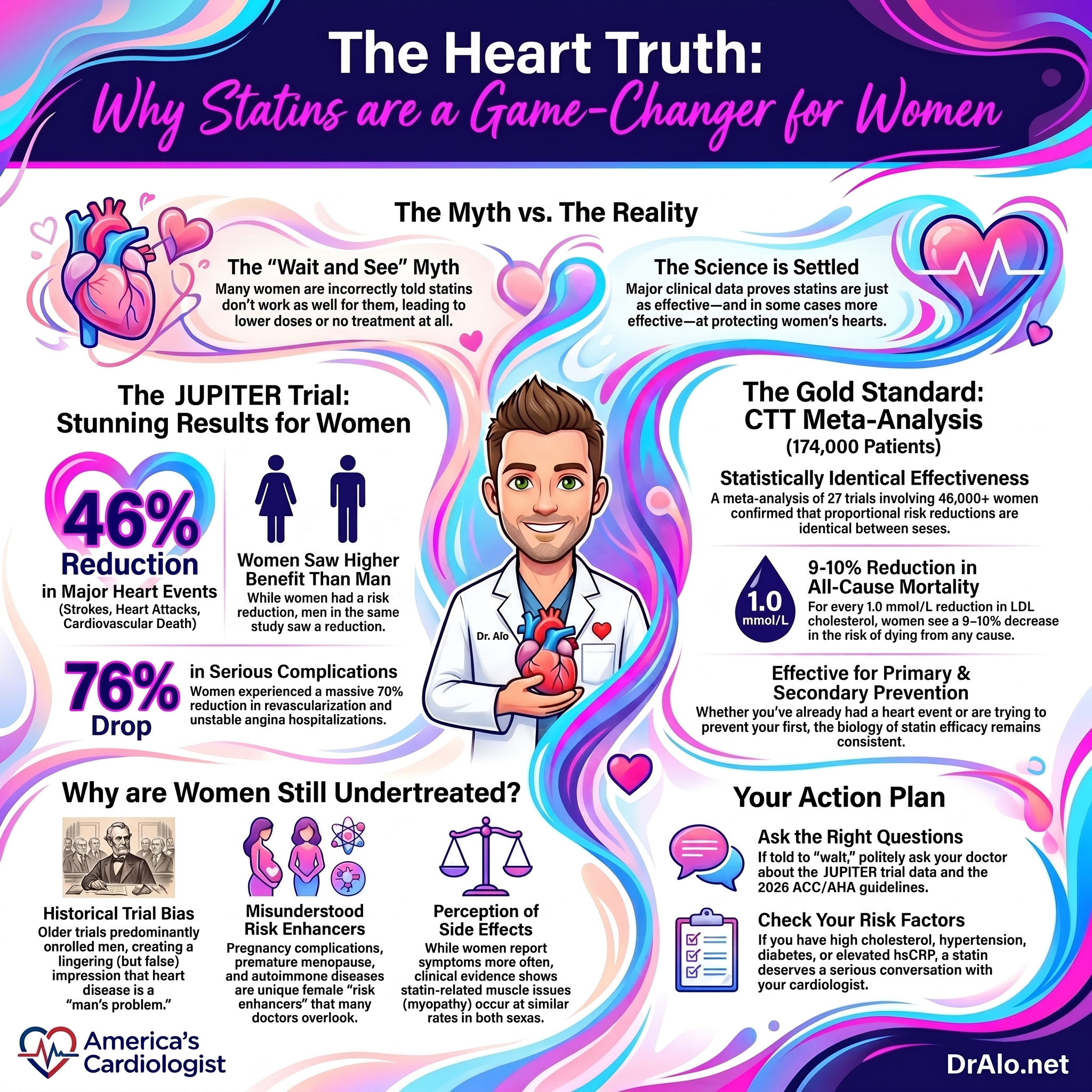
Infographic Summary:
The JUPITER Trial: The First Real Evidence in Women
The JUPITER trial (Justification for the Use of Statins in Prevention: An Intervention Trial Evaluating Rosuvastatin) was a landmark 2008 study published in The New England Journal of Medicine. It enrolled 17,802 apparently healthy men and women—specifically, 11,001 men (≥50 years) and 6,801 women (≥60 years)—who had normal cholesterol levels but elevated hsCRP (high-sensitivity C-reactive protein), a marker of vascular inflammation.
Here's what happened in the women:
Composite cardiovascular events (the primary outcome): Women taking rosuvastatin 20 mg daily experienced a 46% relative risk reduction in major cardiovascular events (MI, stroke, revascularization, or cardiovascular death). The hazard ratio was 0.54 (95% CI 0.37–0.80; P=0.002). For comparison, men saw a 42% reduction (HR 0.58; 95% CI 0.45–0.73).
Let that sink in. Women's risk reduction was numerically GREATER than men's.
Revascularization and hospitalization for unstable angina: Women showed an even more dramatic benefit. The HR was 0.24 (95% CI 0.11–0.51)—a 76% reduction compared to men's 37% reduction (HR 0.63). This difference was statistically significant (P=0.01 for sex interaction).
Number needed to treat (NNT): Over 5 years, the NNT to prevent one major cardiovascular event was 31 for women and 17 for men. Yes, women's absolute event rates are lower (which is why the NNT is higher), but that still means 1 in 31 women avoided a heart attack, stroke, or revascularization. That's clinically meaningful.
All-cause mortality: The trial was stopped early after 1.9 years of median follow-up due to overwhelming benefit. There was a 44% reduction in MACE and a significant decrease in total mortality across both sexes.
The JUPITER trial wasn't just important because it showed benefit in women. It was important because it showed women and men benefit similarly. This wasn't some weak, inconclusive, "maybe statins help women a little" result. This was a landslide.
The CTT Collaboration Meta-Analysis: The Definitive Word
But here's what some cardiologists cling to: "JUPITER was just one trial, and maybe it was a fluke because it used a biomarker (hsCRP) instead of traditional lipid criteria." Fair point. Let's go bigger.
The Cholesterol Treatment Trialists' (CTT) Collaboration is the gold standard for statin evidence. In 2015, they published in The Lancet their meta-analysis of individual participant data from 27 randomized controlled trials involving 174,000 patients—including 46,675 women. This isn't cherry-picking a single trial. This is combining decades of statin research.
Here are the sex-specific findings:
Major vascular events per 1.0 mmol/L reduction in LDL-C:
- Women: RR 0.84 (99% CI 0.78–0.91)
- Men: RR 0.78 (99% CI 0.75–0.81)
- Test for heterogeneity by sex: P=0.33 (meaning NO significant difference)
That middle finding is crucial: proportional risk reductions were statistically identical between women and men. Any apparent difference? It's due to baseline risk factors and population characteristics, not differential statin efficacy.
All-cause mortality per 1.0 mmol/L reduction in LDL-C:
- Women: RR 0.91 (99% CI 0.84–0.99)
- Men: RR 0.90 (99% CI 0.86–0.95)
Both sexes experienced a 9–10% reduction in all-cause mortality for every 1.0 mmol/L reduction in LDL. In other words, statins don't just prevent heart attacks and strokes in women—they help women live longer.
The CTT Collaboration's conclusion was unambiguous: "In men and women at equivalent risk of cardiovascular disease, statin therapy is of similar effectiveness for the prevention of major vascular events."
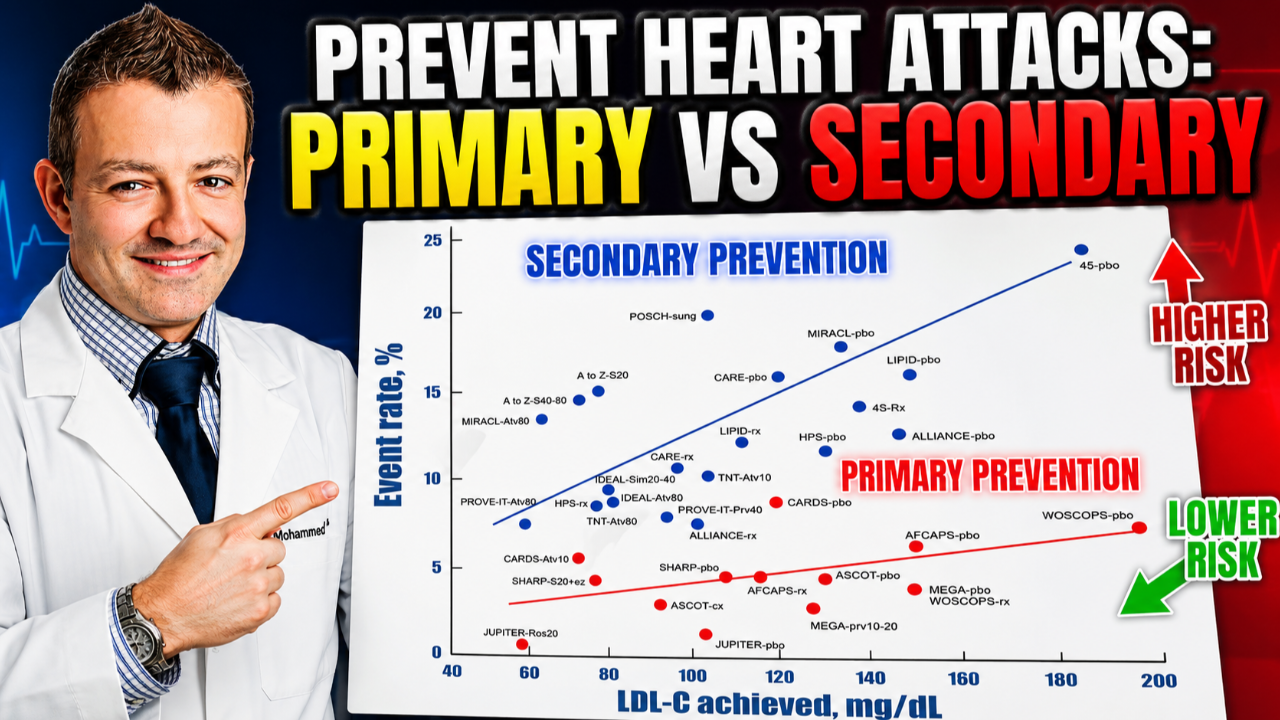
Primary vs. Secondary Prevention: Where the Confusion Lives
Now, here's where I need to be honest about the nuance (because nuance matters in medicine, and I won't sell you a false certainty).
The evidence for statins is strongest in secondary prevention—women who have already had a heart attack, stroke, or revascularization. In this population, statins reduce subsequent CHD events by 20% (RR 0.80; 95% CI 0.71–0.91). For MI specifically in secondary prevention, the reduction is 31% (RR 0.69). For cardiac interventions, it's also 31% (RR 0.69).
These numbers are rock-solid.
For primary prevention alone (women without prior cardiovascular disease), the overall data from some meta-analyses historically showed smaller and sometimes statistically nonsignificant effects in women. One CTT subgroup analysis found a rate ratio of 0.85 (95% CI 0.72–1.00) for primary prevention in women—which technically grazes the line of statistical significance.
But here's the critical point: this isn't because statins don't work in women. It's because:
1. Absolute event rates are lower in women at lower risk, so sample sizes need to be larger to show statistical significance (even if relative risk reduction is proportionally identical).
2. Earlier primary prevention trials included very few women, which skewed the analysis.
3. JUPITER, which was specifically designed to test primary prevention in women and had adequate enrollment, showed a clear 46% benefit in women. This trial directly contradicts the notion that primary prevention doesn't work in women.
So here's my take: If a woman meets criteria for statin therapy—whether that's elevated cholesterol, diabetes, hypertension, or elevated inflammatory markers like hsCRP—she should get a statin at an appropriate dose. The guideline recommendations (2018 AHA/ACC and 2026 ACC/AHA) contain no sex-specific differences in statin indications. They shouldn't. The biology doesn't support it.
The Real Problem: Undertreatment
Here's what keeps me up at night as a cardiologist: We don't have an evidence problem. We have a treatment problem.
Despite this overwhelming data, women remain less likely to be prescribed statins than men. When they are prescribed, they receive lower doses. And they're more likely to discontinue therapy due to side effects—partly because they're not counseled properly on what to expect.
Why? Several reasons:
1. Historical bias from trial design: Older statin trials enrolled predominantly men. That created a false impression that statins were primarily beneficial for men. Some physicians—even cardiologists—internalized this bias and never updated their priors.
2. Misremembering the women's hormone therapy trials: The Women's Health Initiative showed that hormone replacement therapy didn't prevent cardiovascular disease and actually increased certain risks. Some physicians overgeneralized this to mean that women don't respond well to cardiovascular medications. This is wrong. Statins are not HRT.
3. Fear of side effects: There's perception (not evidence-based) that women tolerate statins worse than men. In reality, statin myopathy occurs at similar rates in both sexes. Women may report more side effects—but this is often a communication issue where women are more likely to report symptoms to their doctors, not that they actually experience more side effects.
4. Lower perceived absolute risk: Because women at any given age have lower absolute cardiovascular event rates than men (due to delayed atherosclerosis until post-menopause), some physicians are overly conservative about initiation. But lower absolute risk doesn't mean zero risk. And the relative risk reduction from statins applies regardless.
5. Lack of awareness about women-specific risk enhancers: The 2018 AHA/ACC guidelines explicitly list premature menopause, pregnancy complications, and autoimmune diseases as women-specific risk enhancers that warrant more aggressive cardiovascular risk factor management—including statin therapy. Many physicians haven't read this section.
Women-Specific Considerations (The Nuances That Matter)
Now, there ARE legitimate sex-specific considerations for statin prescribing—but they're not about efficacy. They're about practicality:
Pregnancy and Teratogenicity: Statins are contraindicated in pregnancy. But this is easily managed with contraception discussion in women of reproductive age. It's not a reason to avoid statins in post-menopausal women or in women on reliable contraception.
Liver Function and Metabolism: Women have lower glomerular filtration rates than men and higher body fat percentage, which can affect statin metabolism. This argues for dosing attention—not avoidance. The 2026 guidelines appropriately recommend considering dose adjustments in older women with reduced renal function. But the solution is correct dosing, not withholding therapy.
Drug Interactions: Older women (post-menopausal age) are more likely to be on multiple medications. Some drugs interact with statins (certain antiretrovirals, antifungals, macrolide antibiotics). Again, this is a reason to check interactions—not to avoid statins.
Adherence: Women are more likely to discontinue statins due to perceived side effects. This is a reason to counsel women BEFORE starting therapy about what to expect, what's normal, and what warrants investigation. It's not a reason to not start them.
The Bottom Line
If you're a woman and your doctor told you statins don't work in women, or that you should wait before starting one, I'd ask questions. Politely but firmly.
Statins work in women. The JUPITER trial proved it. The CTT meta-analysis of 174,000 patients confirmed it. Your current guidelines (2026 ACC/AHA) recommend no sex-specific differences in statin therapy.
Do statins prevent ALL heart attacks and strokes? No. They're a risk-reducing tool, not a magic eraser. But they reduce your risk by about 20–46%, depending on your baseline risk and the population studied. That's real. That matters.
If you have high cholesterol, diabetes, hypertension, or elevated inflammatory markers—especially if you're post-menopausal or have other cardiovascular risk enhancers—a statin deserves serious consideration.
And if you're a physician reading this and still harboring doubts about statin efficacy in women: revisit the JUPITER trial. Revisit the CTT meta-analysis. Update your priors. Your female patients deserve better.
Want to Dive Deeper?
If you're looking to understand your own cardiovascular risk and whether a statin is right for you, or if you want a physician perspective on the evidence without the noise, I invite you to join the Heart 2 Heart VIP Community. You can text me anytime with questions, jump on live video calls, and connect directly with me and others focused on real evidence-based cardiovascular health. No fluff. Just science and answers. https://dralo.net/community
💪🏻🩺🫀
Dr. Alo
References
Still Have Questions? Stop Googling and Ask Dr. Alo.
You’ve read the science, but applying it to your own life can be confusing. I created the Dr. Alo VIP Private Community to be a sanctuary away from social media noise.
Inside, you get:
-
Direct Access: I answer member questions personally 24/7/365.
-
Weekly Live Streams: Deep dives into your specific health challenges.
-
Vetted Science: No fads, just evidence-based cardiology and weight loss.
Don't leave your heart health to chance. Get the guidance you deserve. All this for less than 0.01% the cost of health insurance! You can cancel at anytime!
[👉 Join the Dr. Alo VIP Community Today]
Cardiology & Obesity Medicine