
New 2026 Heart Failure Treatment Guidelines
Apr 16, 2026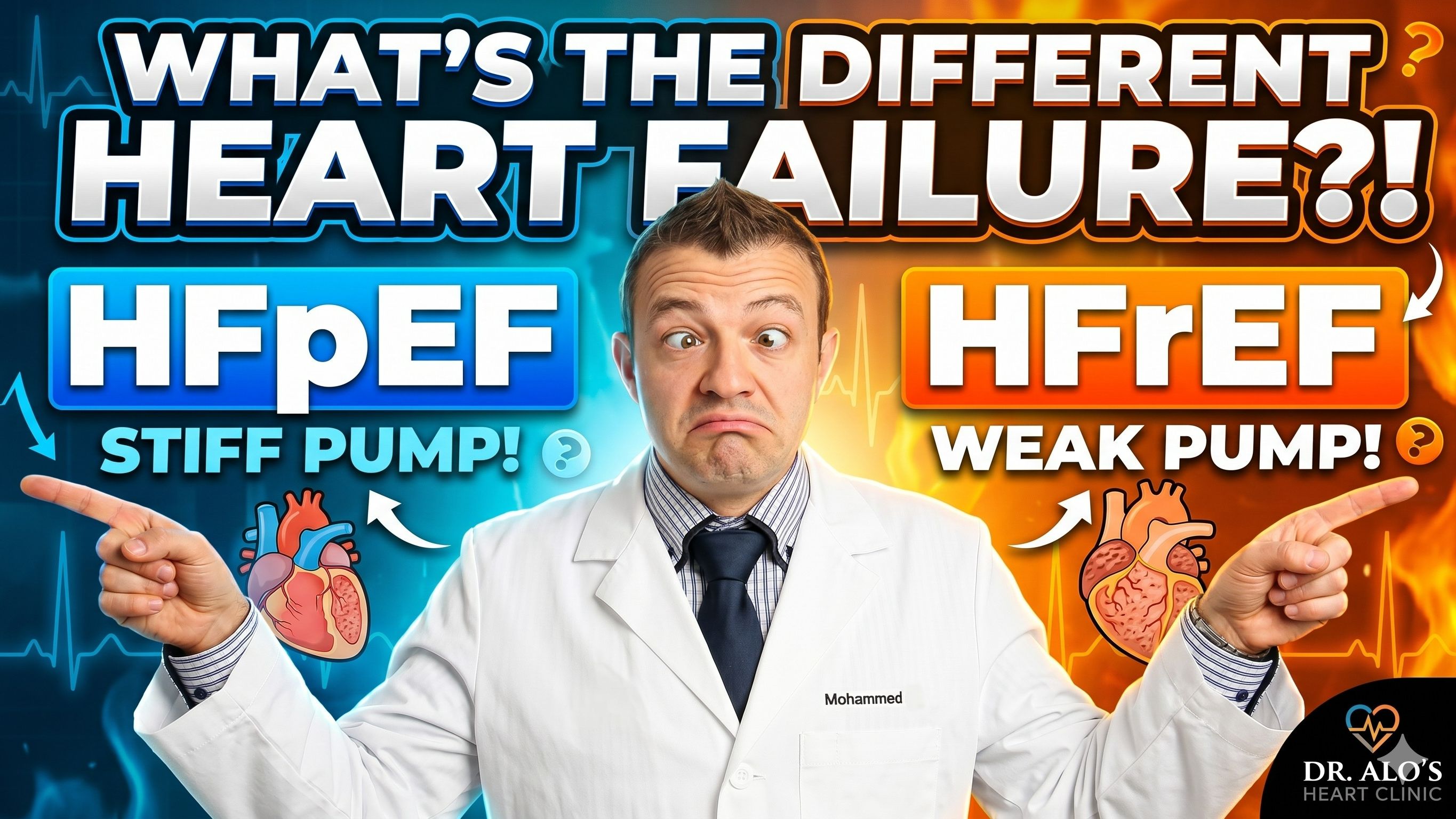
Treating Two Types of Heart Failure: HFpEF and HFrEF In 2026
What Is Heart Failure? I get asked this every day.
Heart failure doesn't mean the heart has stopped working. Instead, it means the heart isn't pumping blood as well as it should. This causes fluid to build up in the body, leading to symptoms like shortness of breath, swelling in the legs and ankles, and feeling tired all the time. It's because forward flow is reduced. Cardiac output has diminished.
There are two main types of heart failure, and they work differently in the body: HFrEF and HFpEF.
Heart failure with reduced ejection fraction has traditionally been called systolic heart failure, or a "weak heart".
Heart failure with preserved ejection fraction has traditionally been called diastolic heart failure. The heart doesn't relax well, hence doesn't fill as much, and even though the squeeze is strong, not enough blood goes forward, since it is not as full.
Heart Failure with Reduced Ejection Fraction (HFrEF)
Think of HFrEF as a "weak pump" problem. The heart muscle becomes damaged and weakened, so it can't squeeze strongly enough to push blood out to the body. The ejection fraction, a measurement of how much blood the heart pumps out with each beat, is low (usually less than 40%).
What causes HFrEF?
- Heart attacks that damage the heart muscle
- Long-term high blood pressure
- Heart valve problems
- Infections of the heart
- Alcohol or drug abuse
What happens in the heart?
The heart chambers stretch out and become enlarged (like an overstretched balloon). The heart muscle cells die or become damaged, and scar tissue forms where healthy muscle used to be. The heart tries to compensate by getting bigger, but this makes the problem worse over time.
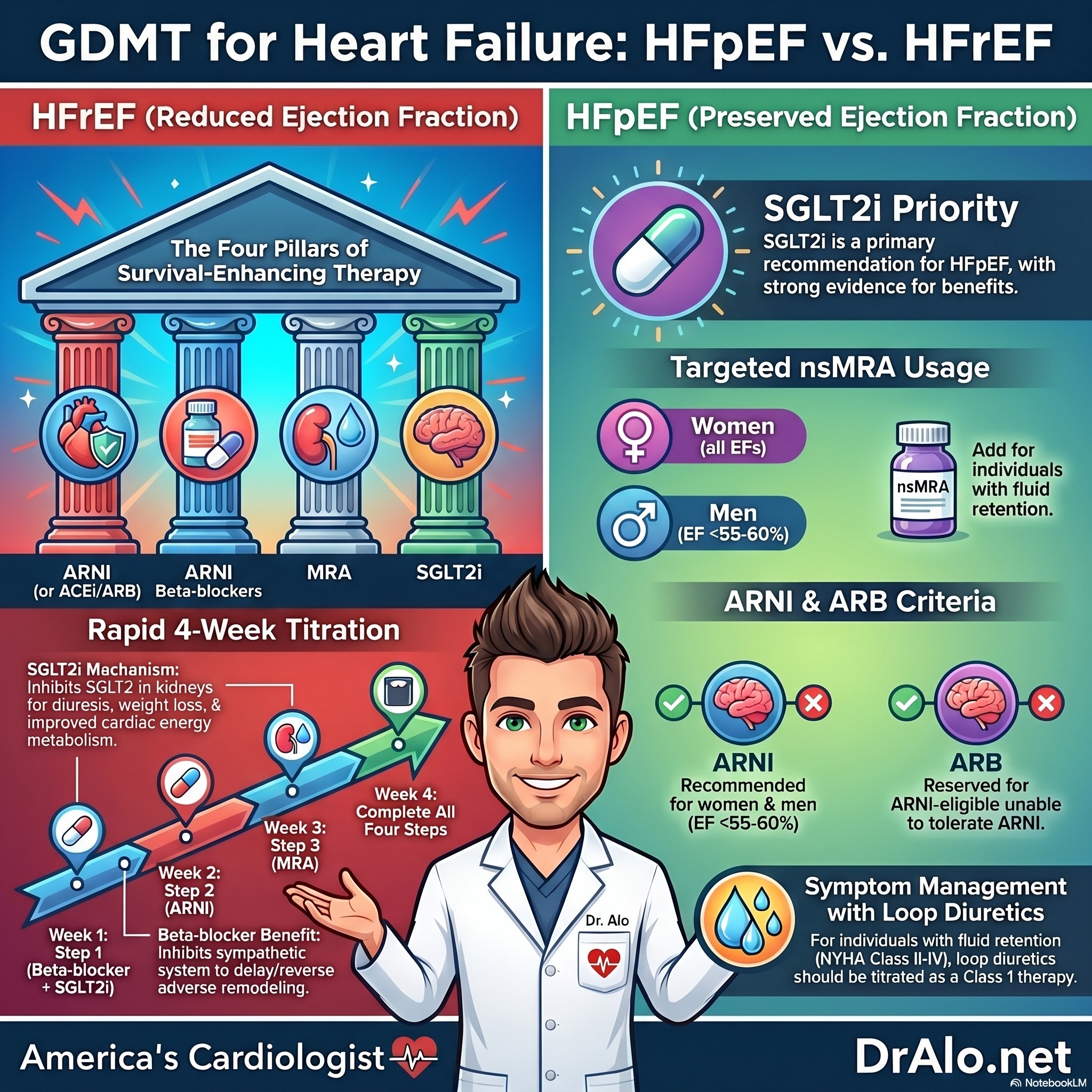
HFpEF and HFrEF Summary Infographic:
Heart Failure with Preserved Ejection Fraction (HFpEF)
Think of HFpEF as a "stiff pump" problem. The heart muscle becomes thick and stiff, so it can't relax and fill with blood properly. The heart can still squeeze fairly well (ejection fraction is 50% or higher), but it can't fill up with enough blood between beats.
What causes HFpEF?
- Aging
- High blood pressure over many years
- Diabetes
- Obesity
- Kidney disease
- Atrial fibrillation (irregular heartbeat)
What happens in the heart?
Instead of the heart getting bigger and weaker like in HFrEF, the walls of the heart become thick and rigid. Inflammation throughout the body, triggered by conditions like diabetes and obesity, damages the small blood vessels in the heart. This leads to a stiff heart that can't relax properly.
Key Differences Between HFpEF and HFrEF
Who gets it?
- HFrEF: More common in men, often younger patients who've had heart attacks
- HFpEF: More common in women, typically older patients with multiple health conditions
What's happening in the heart?
- HFrEF: Heart is enlarged and weak, can't squeeze well
- HFpEF: Heart is thick and stiff, can't relax well
What drives the disease?
- HFrEF: Damage to heart muscle cells, activation of stress hormones
- HFpEF: Body-wide inflammation, blood vessel problems, metabolic issues
Prognosis:
Both types are serious. About 15% of patients with either type die within the first year, and up to 75% within 5-10 years after hospitalization. While HFrEF historically had worse outcomes, with modern treatments the survival rates are becoming more similar. However, with these newer therapeutics, we have been able to improve these outcomes.
Treatment for HFrEF: The "Fantastic Four"
The good news is that HFrEF has very effective treatments. Four types of medications work together to help the heart pump better, reduce symptoms, and help people live longer:
1. ARNI (Angiotensin Receptor-Neprilysin Inhibitor)
- Brand name: Entresto (sacubitril/valsartan)
- What it does: Relaxes blood vessels and helps the body get rid of extra salt and water
- Benefit: Reduces hospitalizations and helps people live longer
2. Beta-Blockers
- Examples: Carvedilol, metoprolol succinate, bisoprolol
- What they do: Slow the heart rate and reduce stress on the heart
- Benefit: Helps the heart pump more efficiently and improves survival
3. Mineralocorticoid Receptor Antagonists (MRAs)
- Examples: Spironolactone, eplerenone
- What they do: Help the body get rid of extra fluid and protect the heart from scarring
- Benefit: Reduces hospitalizations and death
4. SGLT2 Inhibitors
- Examples: Dapagliflozin (Farxiga), empagliflozin (Jardiance)
- What they do: Originally diabetes medications, they help the kidneys remove sugar and salt
- Benefit: Reduces hospitalizations and improves symptoms
Additional medications when needed:
- Diuretics (water pills) like furosemide to reduce swelling and shortness of breath
- Other medications for specific situations, such as hydralazine/isosorbide dinitrate for African-American patients
- The goal is to start all four main medications as soon as possible,ideally within 3 months of diagnosis, and increase the doses to the target levels that have been proven to work best.
Treatment for HFpEF: Newer Options
For many years, doctors had few proven treatments for HFpEF. Recently, this has changed:
1. SGLT2 Inhibitors (First-Line Treatment)
- Examples: Dapagliflozin (Farxiga), empagliflozin (Jardiance)
- What they do: Help kidneys remove extra sugar and salt, reduce inflammation
- Benefit: Reduce hospitalizations by about 20%
2. Diuretics (Water Pills)
- Examples: Furosemide, torsemide
- What they do: Remove extra fluid from the body
- Benefit: Improve breathing and reduce swelling
3. Lifestyle Changes (Very Important)
- Exercise training: Improves how far you can walk and quality of life
- Weight loss: For people with obesity, losing weight significantly improves symptoms, including with GLP1 medications like Ozempic.
- Managing other conditions: Controlling blood pressure, diabetes, and other health problems
4. Other Medications (For Specific Patients)
- Mineralocorticoid receptor antagonists (ex: spironolactone) may help some patients. However, newer data shows that Non Steroids MRAs are better, like finerenone. These are now called nsMRA.
- ARNI (sacubitril/valsartan) may help women and some men with lower ejection fractions
Why Are the Treatments Different?
The treatments differ because the two types of heart failure work differently in the body:
- HFrEF is driven by damaged heart muscle cells and overactive stress hormones. The four-drug combination targets these problems directly, helping the heart pump better and preventing further damage.
- HFpEF is driven by inflammation, stiff blood vessels, and metabolic problems throughout the body. The treatments focus on reducing inflammation, removing excess fluid, and managing the conditions (like diabetes and obesity) that contribute to the stiffness.
This is why medications that work wonderfully for HFrEF (like beta-blockers and ARNIs) don't help most people with HFpEF, they're targeting the wrong problem.
Living With Heart Failure
Regardless of which type you have, several strategies help manage heart failure:
- Take medications exactly as prescribed
- Monitor your weight daily (sudden weight gain means fluid buildup)
- Limit salt intake (usually less than 2,000 mg per day)
- Stay physically active as recommended by your doctor
- Attend all follow-up appointments
- Report new or worsening symptoms immediately
- Get vaccinated against flu and pneumonia
Heart Failure Bottom Line
HFrEF and HFpEF are two different diseases that both cause heart failure symptoms. HFrEF involves a weak, enlarged heart that can't pump well, while HFpEF involves a stiff heart that can't fill properly. Thanks to research, we now have effective treatments for both types, though the specific medications differ. Working closely with your healthcare team and following your treatment plan can help you live longer and feel better.
Still Have Questions? Stop Googling and Ask Dr. Alo.
You’ve read the science, but applying it to your own life can be confusing. I created the Dr. Alo VIP Private Community to be a sanctuary away from social media noise.
Inside, you get:
-
Direct Access: I answer member questions personally 24/7/365.
-
Weekly Live Streams: Deep dives into your specific health challenges.
-
Vetted Science: No fads, just evidence-based cardiology and weight loss.
Don't leave your heart health to chance. Get the guidance you deserve. All this for less than 0.01% the cost of health insurance! You can cancel at anytime!
[👉 Join the Dr. Alo VIP Community Today]
Cardiology & Obesity Medicine