
How To Lower Blood Pressure Naturally Without Meds
May 03, 2026
How to Lower Blood Pressure Naturally: Cardiologist's Evidence-Based Guide
High blood pressure is common, silent, and dangerous. But here's the good news: lifestyle changes can meaningfully lower blood pressure, and sometimes they're enough to avoid medication in early cases. Even if you do end up needing meds later, these changes reduce long-term risk and improve your overall health.
This guide focuses on the highest-impact, evidence-based steps you can take to lower blood pressure naturally, with clear safety notes on when to seek urgent care.
Important safety note: If you're already on blood pressure medication, do not stop it without your clinician's guidance, even if you start seeing better numbers. If your blood pressure is extremely high or you have symptoms, follow the emergency guidance below.
First: Know When It's an Emergency
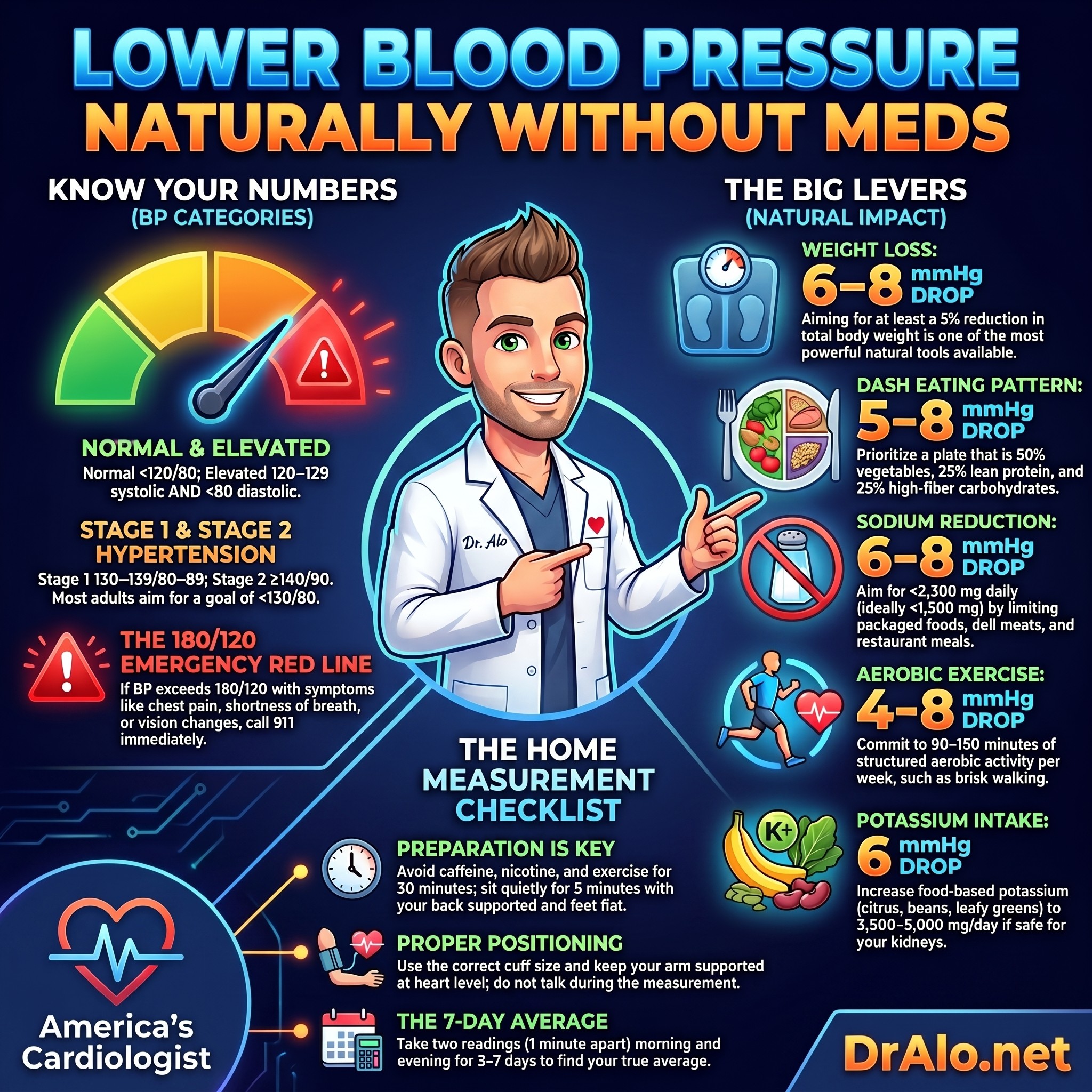
If your blood pressure is higher than 180/120, repeat it after a short wait and check for symptoms like chest pain, shortness of breath, back pain, weakness or numbness, vision changes, or trouble speaking. If you have symptoms, call 911 or your local emergency number immediately.
What Counts as "High" Blood Pressure?
Blood pressure is typically grouped into categories:
Normal: Less than 120 systolic AND less than 80 diastolic
Elevated: 120-129 systolic AND less than 80 diastolic
Stage 1 hypertension: 130-139 systolic OR 80-89 diastolic
Stage 2 hypertension: 140 or higher systolic OR 90 or higher diastolic
Many treatment plans aim for under 130/80 for most adults, but goals should be individualized based on your age, risk factors, and medical history.
Infographic Summary:
Can You Lower Blood Pressure Naturally Without Meds?
Often yes, especially in elevated blood pressure or early stage 1 hypertension. Many people can see meaningful improvements over three to six months of consistent lifestyle change.
However, if your readings are in stage 2 (140/90 or higher) or you have higher-risk conditions like established cardiovascular disease, prior stroke, diabetes, or chronic kidney disease, lifestyle changes are still essential. But medication is often recommended as well to reduce risk sooner.
Step 1: Confirm Your Real Blood Pressure (Don't Guess)
One high reading isn't a diagnosis. What matters is your average over time, measured correctly.
Home BP measurement quick checklist:
Avoid caffeine, smoking or nicotine, alcohol, and exercise for 30 minutes before measuring
Sit quietly for 5 minutes
Back supported, feet flat, legs uncrossed
Arm supported at heart level with the correct cuff size
Don't talk during measurement
Take at least 2 readings, 1 minute apart, and record them
A practical approach is two readings in the morning and evening for 3-7 days, then average them (excluding day 1 if readings were unusually high due to anxiety). Bring the log to your clinician.
Step 2: Use the "Big Levers" That Actually Move the Numbers
The strategies below are the highest-yield lifestyle changes. Your results will vary, but these moves tend to produce consistent improvements when practiced regularly.
The Highest-Impact Natural BP Reducers
Weight loss (if overweight): Aim for 5% or more body weight reduction. Typical systolic drop: 6-8 mmHg
DASH or heart-healthy eating: Fruits, vegetables, whole grains, low-fat dairy, lower saturated fat. Typical systolic drop: 5-8 mmHg
Lower sodium: Less than 2,300 mg per day (ideal: less than 1,500 mg per day). Typical systolic drop: 6-8 mmHg
Potassium (food-first, when safe): 3,500-5,000 mg per day. Typical systolic drop: 6 mmHg
Reduce alcohol: Best is abstinence; otherwise less than 1 drink per day for women, less than 2 drinks per day for men. Typical systolic drop: 4-6 mmHg
Aerobic exercise: 90-150 minutes per week (structured). Typical systolic drop: 4-8 mmHg
Resistance training: 2-3 days per week. Typical systolic drop: 2-7 mmHg
Breathing or meditation (adjunct): Daily practice. Typical systolic drop: 5-7 mmHg
1. Lose 5% of Your Weight (If You Have Overweight or Obesity)
If you're carrying extra weight, this is one of the most powerful natural BP tools. Even modest weight loss can lead to measurable improvements.
Practical steps:
Start with a small, sustainable calorie deficit
Prioritize protein and fiber at meals
Walk daily (it lowers BP and supports weight loss)
Focus on consistency over perfection
2. Follow a DASH-Style Eating Pattern
DASH emphasizes fruits, vegetables, whole grains, and low-fat dairy while lowering saturated fat and ultra-processed foods. It's one of the most studied dietary patterns for BP reduction.
Real-life DASH plate:
Half plate: vegetables
Quarter: protein (fish, poultry, beans, tofu, Greek yogurt)
Quarter: high-fiber carbs (beans, oats, quinoa, whole grains)
Add healthy fats (nuts, olive oil) in sensible portions
3. Lower Sodium (Where Many People Get Fast Wins)
Most sodium comes from packaged and restaurant foods, not the salt shaker.
What to do this week:
Choose foods with labels you can control (or whole foods)
Pick "no salt added" when possible
Rinse canned beans and vegetables
Limit deli meats, fast food, pizza, sauces, and packaged snacks
Use herbs, spices, citrus, and vinegar for flavor
Important exception: If you have severe dizziness when standing or certain medical conditions, aggressive sodium restriction may not be appropriate. Discuss with your clinician.
4. Increase Potassium (Food-First) But Only If It's Safe
Potassium intake is associated with lower blood pressure, but it must be individualized. If you have chronic kidney disease or take medications that raise potassium, you may need monitoring.
Potassium-rich foods:
Kiwis, lemons, limes, oranges and other citrus
Beans and lentils
Potatoes and sweet potatoes
Yogurt and milk
Leafy greens
Avocados
Be cautious with potassium-based salt substitutes if you have kidney disease or take potassium-retaining medicines.
5. Exercise Like It's a Prescription
Aim for 150 minutes per week of moderate aerobic activity, plus strength training 2 days per week.
Simple plan:
Walk 30 minutes per day, 5 days per week (or three 10-minute walks)
Strength train 2 days per week (20-30 minutes, full body)
Reduce sitting time throughout the day
6. Reduce Alcohol (Or Eliminate It)
Alcohol can raise blood pressure in a dose-dependent way. If you drink regularly, cutting back often produces noticeable BP improvements.
Best goal: abstinence. Otherwise: less than 1 drink per day for women or less than 2 drinks per day for men.
7. Fix Sleep and Screen for Sleep Apnea
Poor sleep and sleep apnea are common contributors to hypertension. If you snore loudly, feel excessively sleepy during the day, or have resistant blood pressure, ask your clinician about sleep apnea screening.
8. Add a 5-Minute Stress "Off Switch"
Stress isn't the only driver, but it can worsen BP and make healthy habits harder to sustain.
Try slow breathing:
Inhale for about 4 seconds
Exhale for about 6 seconds
Repeat for 5 minutes
9. Remove Common BP-Raisers You Didn't Realize Mattered
If your BP won't improve, review possible contributors with your clinician. Common culprits include frequent NSAID use (ibuprofen or naproxen), certain decongestants (pseudoephedrine), stimulants, excess alcohol, high-sodium packaged foods, and real licorice.
A Simple 7-Day "Natural BP Reset" Plan
Day 1: Measure correctly and start a BP log
Day 2: Replace 1 meal with a DASH-style meal
Day 3: Walk 20-30 minutes
Day 4: Sodium audit: remove 2 high-sodium items you eat weekly
Day 5: Strength training (20 minutes)
Day 6: Alcohol reset (aim for zero today)
Day 7: Add potassium-rich foods (if safe) and repeat your BP average
How Fast Can BP Drop Naturally?
Some changes can move numbers within days, especially sodium reduction and alcohol reduction. Others take weeks to months, like exercise conditioning and weight loss. Track trends over time, not a single reading.
When Lifestyle Isn't Enough (And What to Do Next)
If your home BP average remains high after a consistent lifestyle trial, talk with your clinician about next steps. Many people benefit from lifestyle plus medication. This is not a failure. It's risk reduction.
The fact that you're taking these natural steps first means you're already ahead. You're not relying on medication alone. You're building a foundation that works with medication when it's added, and you're reducing your long-term risk for heart disease, stroke, and kidney disease.
The Bottom Line
Lowering blood pressure naturally is possible for many people. It takes consistency, patience, and the right strategy. Start with one or two changes this week. Build from there. Monitor your numbers correctly. And be honest with your clinician about what's working and what isn't.
Ready for personalized guidance on lowering your blood pressure? Join the Heart 2 Heart VIP Community where you can share your BP readings with me, discuss your specific barriers to lifestyle change, and get coaching on which strategies will work best for YOUR life. No generic advice. Just cardiology tailored to you.
💪🏻🩺🫀 Dr. Alo
Related Blood Pressure Management Posts
- What Does 130/80 Mean?
- How to Take BP at Home
- Why BP High Morning?
- White Coat vs Masked
- BP Spikes
- When BP Emergency?
- Low BP Symptoms
- Foods Lower BP
- BP Medications
- Salt & Heart
- Dietary Guidelines
- Statins & Dementia
Still Have Questions? Stop Googling and Ask Dr. Alo.
You’ve read the science, but applying it to your own life can be confusing. I created the Dr. Alo VIP Private Community to be a sanctuary away from social media noise.
Inside, you get:
-
Direct Access: I answer member questions personally 24/7/365.
-
Weekly Live Streams: Deep dives into your specific health challenges.
-
Vetted Science: No fads, just evidence-based cardiology and weight loss.
Don't leave your heart health to chance. Get the guidance you deserve. All this for less than 0.01% the cost of health insurance! You can cancel at anytime!
[👉 Join the Dr. Alo VIP Community Today]
Cardiology & Obesity Medicine