Lipid And Cholesterol Metabolism In Depth Review
Aug 02, 2026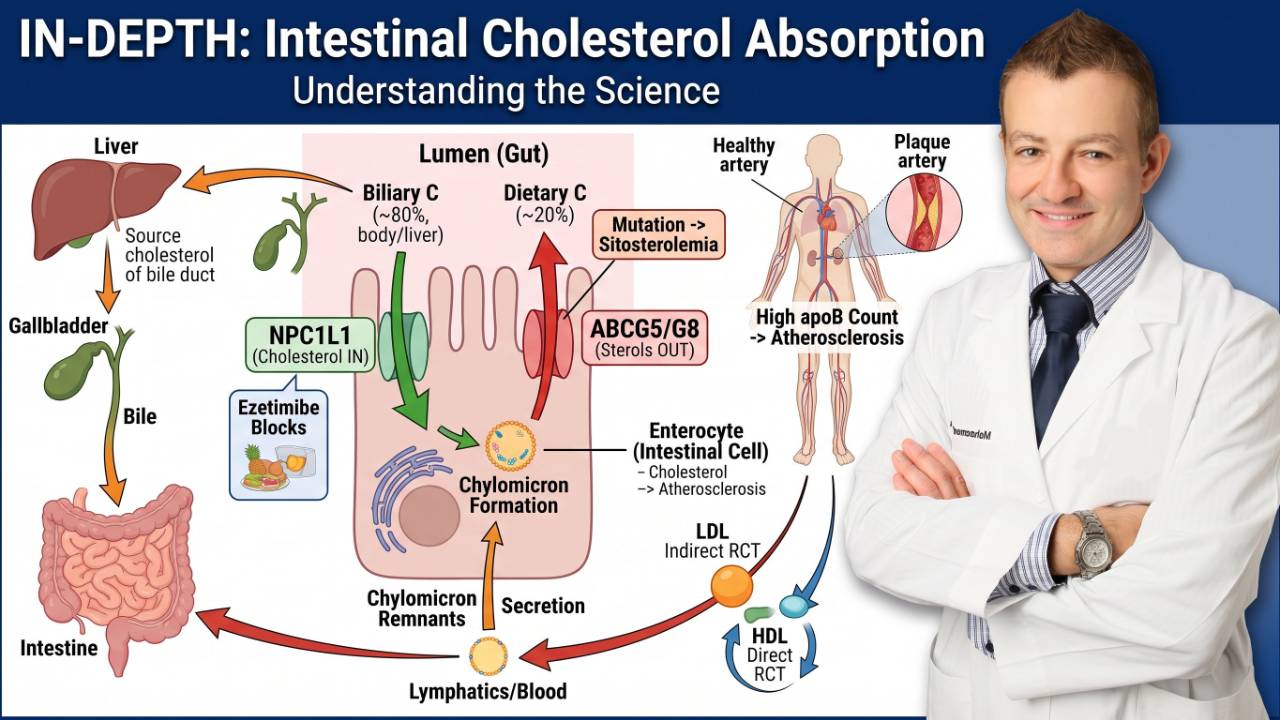
Intestinal Absorption of Cholesterol
Having an overall understanding of lipid and lipoprotein metabolism is important to understanding how we arrive at cholesterol in our arteries and develop atherosclerosis.
The first step is cholesterol or fatty acids arriving inside your intestinal lumen. This is the open area in your intestine where food is digested. It comes after your stomach but before your colon. It is called the small intestine.
Cholesterol absorption occurs in the proximal small intestine (jejunum). The only form of cholesterol or non-cholesterol sterols that can be absorbed are the unesterified or free forms.
Cholesterol that is sent to the intestine from the liver via the bile duct is free cholesterol, and thus immediately available for reabsorption or fecal excretion. Most cholesterol ingested in the diet is cholesteryl ester which is a molecule too large to be absorbed. It must be de-esterified and converted to free cholesterol by pancreatic lipases (enzymes that can break down the cholesteryl ester). If not de-esterified it cannot be absorbed and is excreted fecally.
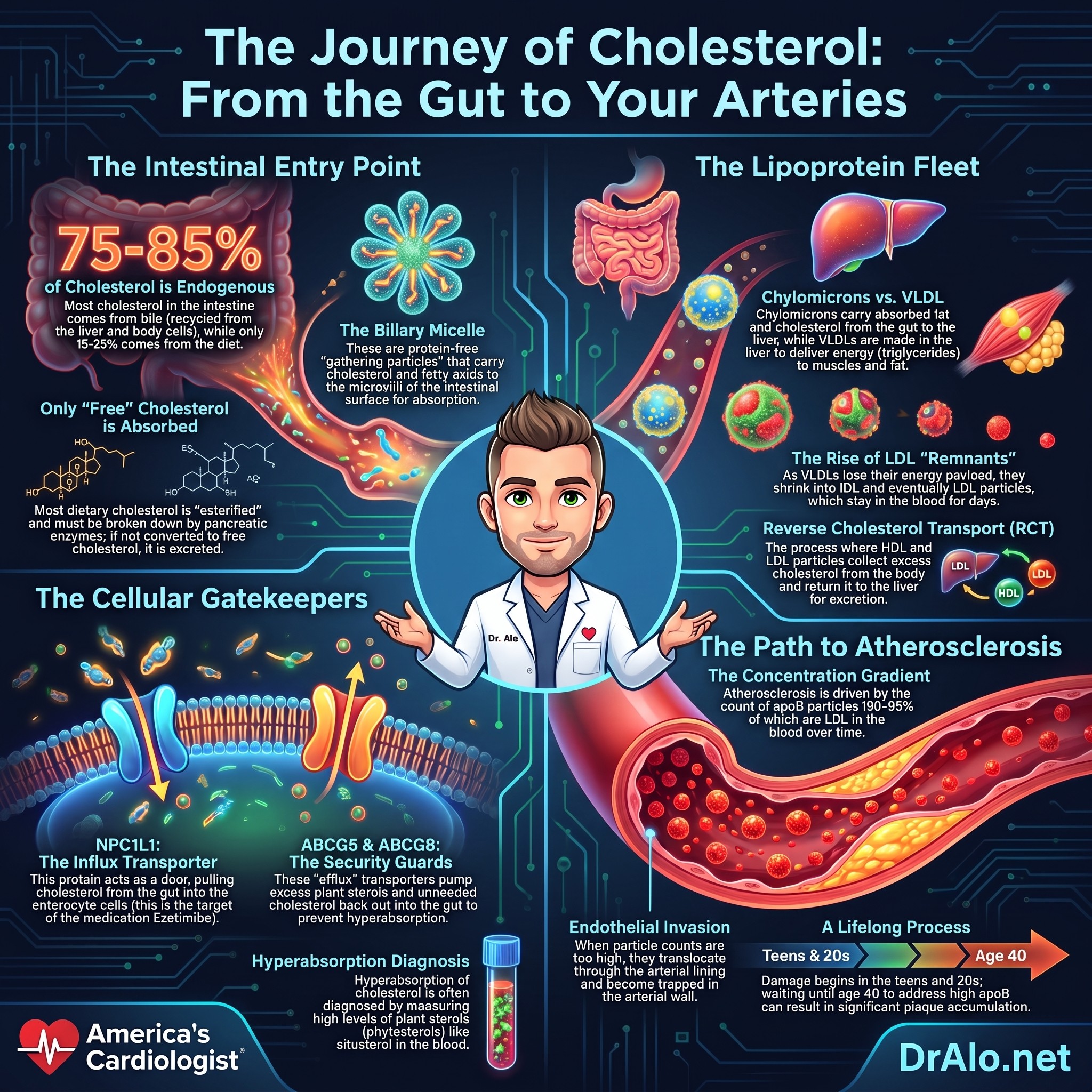
Of the absorbable pool of free cholesterol, approximately 75-85% comes from the bile. The cholesterol coming from the bile is cholesterol that has been made in all the other cells in your body and transported back to the liver, as well as cholesterol that is made newly by your liver. This is the majority of cholesterol that ends up in your intestines. This also means the diet supplies a distinct minority of absorbable cholesterol, about 15-25%.
The cholesterol coming from your liver to the small intestine via the bile duct comes from several sources. The first of which is de novo synthesis. De novo is a scientific word that means “new”. So, it is new cholesterol coming from all the cells in your body. Cells are always making new cholesterol.
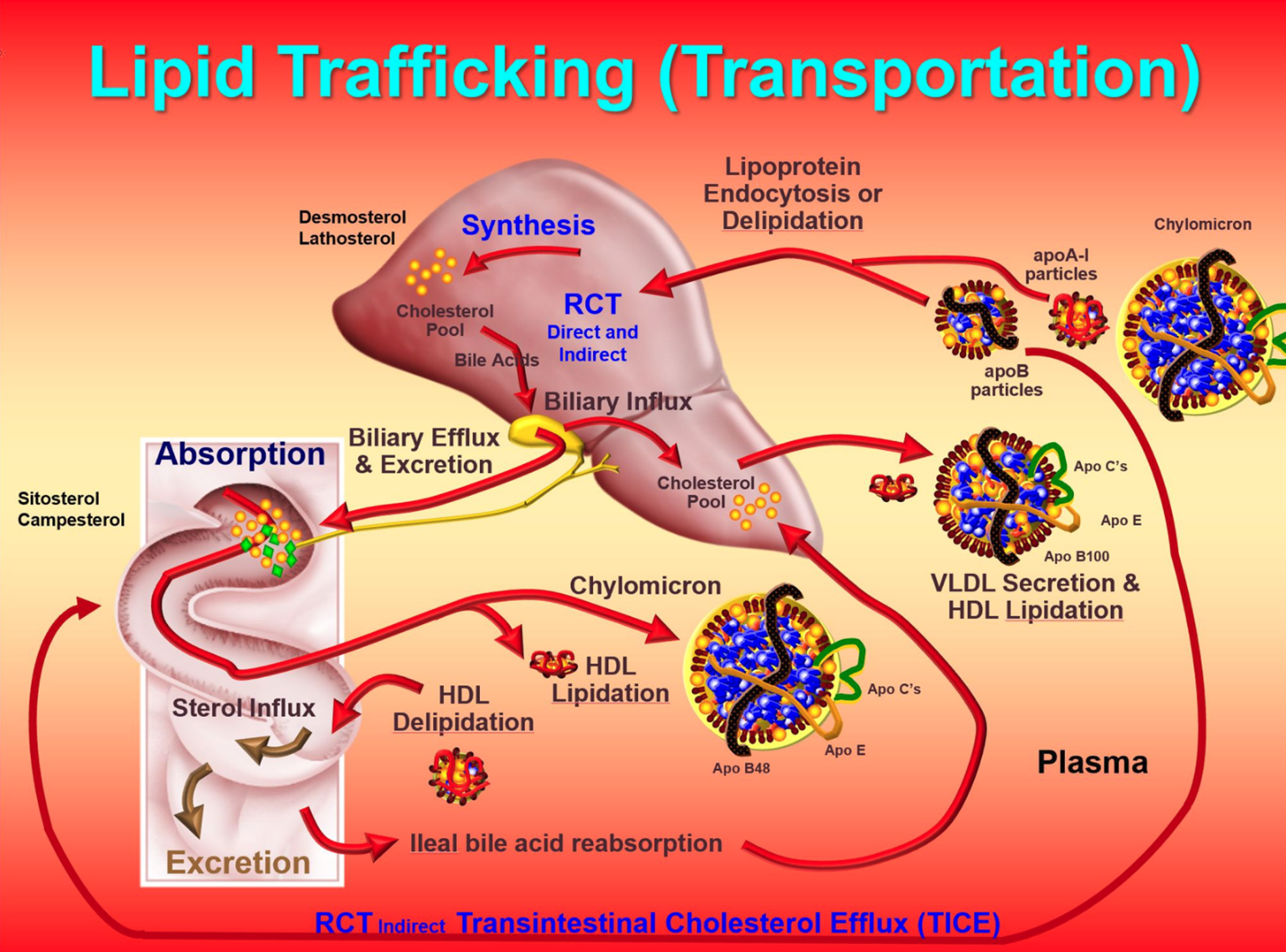
Infographic Summary:
The second way cholesterol arrives in your liver is from chylomicrons delivering absorbed cholesterol (absorbed from your intestines previously) back to the liver for processing and elimination.
The third way cholesterol arrives at your liver is reverse cholesterol transport directly from HDL particles and indirectly from LDL particles. This is generally excess cholesterol that is being collected by lipoproteins and brought back to the liver from all the other cells in your body.
The primary way the body excretes unneeded cholesterol is by converting it to bile acids in the liver, which are then excreted via the bile duct into the intestines. Cholesterol can also be secreted into the bile, but it is not converted to bile acids in the biliary system. When your liver sends cholesterol to the bile duct, it is combined with bile acids creating biliary micelles. Once in the intestinal lumen, the micelles further acquire ingested fatty acids (triglycerides and phospholipid lipolytic by-products) and other lipids (e.g. phytosterols, lipophilic vitamins, etc). Micelles serve as intestinal lipid transportation particles like what lipoproteins do in plasma. The only difference is that intestinal micelles carry no proteins.
Bile acids are transiently used to create lipid-gathering particles called biliary micelles. The micelles deliver intestinal lipid to the microvilli of the proximal jejunum where they can be absorbed by cells called enterocytes. Microvilli are small fingers on the surface of the intestinal jejunal cells that are used to pull the micelles into the cell to start processing their payload.
The micelles then break up and the bile acids are either reabsorbed at the distal small intestine (the ileum) or excreted fecally. Note that biliary micelles traffic cholesterol, non-cholesterol sterols (primarily of plant origin), and fatty acids (derived from ingested triglycerides and phospholipids). Very different receptors absorb fatty acids than cholesterol and thus, the absorption of cholesterol and fat is quite different.
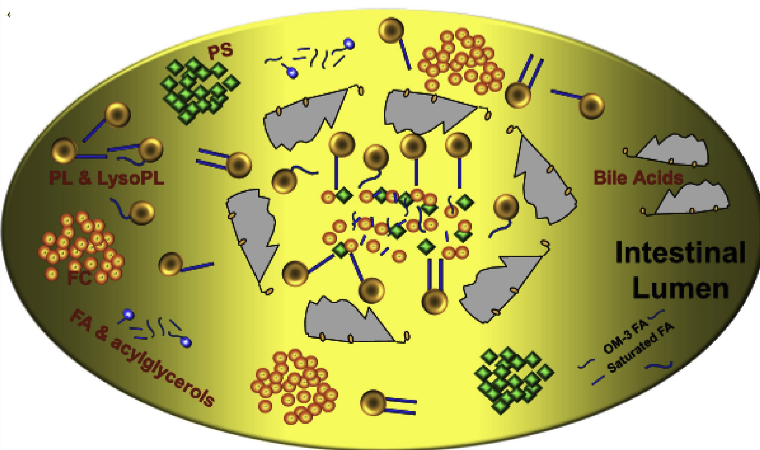
Micelles are very similar in structure to lipoproteins.
The lipids, other than the bile acids, within the micelles are then taken up by the cells in your intestine. These cells are generally called enterocytes. But they can be duodenocytes, jejunocytes or ileocytes depending on where in the intestine they exist. Almost all sterol absorption occurs in the proximal jejunum, not the duodenum or ileum.
Enterocytes absorb cholesterol and non-cholesterol sterols (phytosterols) via a sterol influx transporter called the Niemann Pick C1 Like 1 protein (NPC1L1), which has a much greater affinity for cholesterol and a far lesser affinity for phytosterols. This means that the NPC1L1 likes to absorb cholesterol more so that phytosterols.
Once in enterocytes, any excessively absorbed sterols can be returned to the gut via sterol efflux transporters called ATP-Binding Cassette Transporters G5 and G8 (ABCG5 and ABCG8). Thus, intestinal absorption of sterols is regulated by the combined actions of NPC1L1 and ABCG5 and ABCG8.
Hypoabsorption of cholesterol is due to loss of function mutation (LOF) of NPC1L1 and hyperabsorption of cholesterol or non-cholesterol sterols is due to LOF mutation of ABCG5/G8. LOF mutations of ABCG5/G8 can also contribute to familial hypercholesterolemia.
People who have homozygous LOF for either ABCG5 or ABCG8 will have an extremely rare lipid disorder originally called sitosterolemia but currently phytosterolemia or xenosterolemia, covered in another chapter.
The destiny of free cholesterol that is not effluxed out by ABCG5/G8 is one of three possibilities:
(1) Joined with phospholipids on the surface layer of chylomicrons.
(2) Effluxed out of enterocytes via ABCA1 efflux transporters into small plasma HDLs (increased HDL-C can serve as a surrogate of hyperabsorption of cholesterol).
(3) Be esterified into cholesteryl ester and joined with triglycerides in the core of chylomicrons.
Chylomicrons are secreted into intestinal lymphatics, enter plasma at the thoracic duct near the neck and then deliver triglycerides to muscles and fat cells and then deliver their cholesterol to the liver.
If absorption is normal (normal enterocyte functioning), phytosterols should never appear in the bloodstream in any appreciable amounts.
NPC1L1 does not have a high affinity for gut phytosterols. But if they allow a few to enter, the ABCG5/G8 will immediately expel them. If phytosterol entry is limited, and ABCG5/G8 evict properly, they should never gain entry into plasma. Significant phytosterol hyperabsorption implies serious cholesterol hyperabsorption.
Hyperabsorption of cholesterol is diagnosed by demonstrating excessive concentrations of phytosterols such as sitosterol or campesterol in plasma. About 20% of people hyperabsorb cholesterol. If you need to reduce apoB in hyperabsorbers, then ezetimibe becomes the drug of choice. Ezetimibe, by interfering with NPC1L1 action, is a medication that blocks intestinal cholesterol absorption that will be discussed in depth later.
Enterocytes absorb fatty acids (FA) using an influx transporter called CD-36 or intestinal fatty acid binding protein (FABP). Once in the enterocytes, fatty acids are converted into phospholipids or triglycerides: the former go on to form the surface of chylomicrons and the triglycerides make up most of the chylomicron’s core lipids.
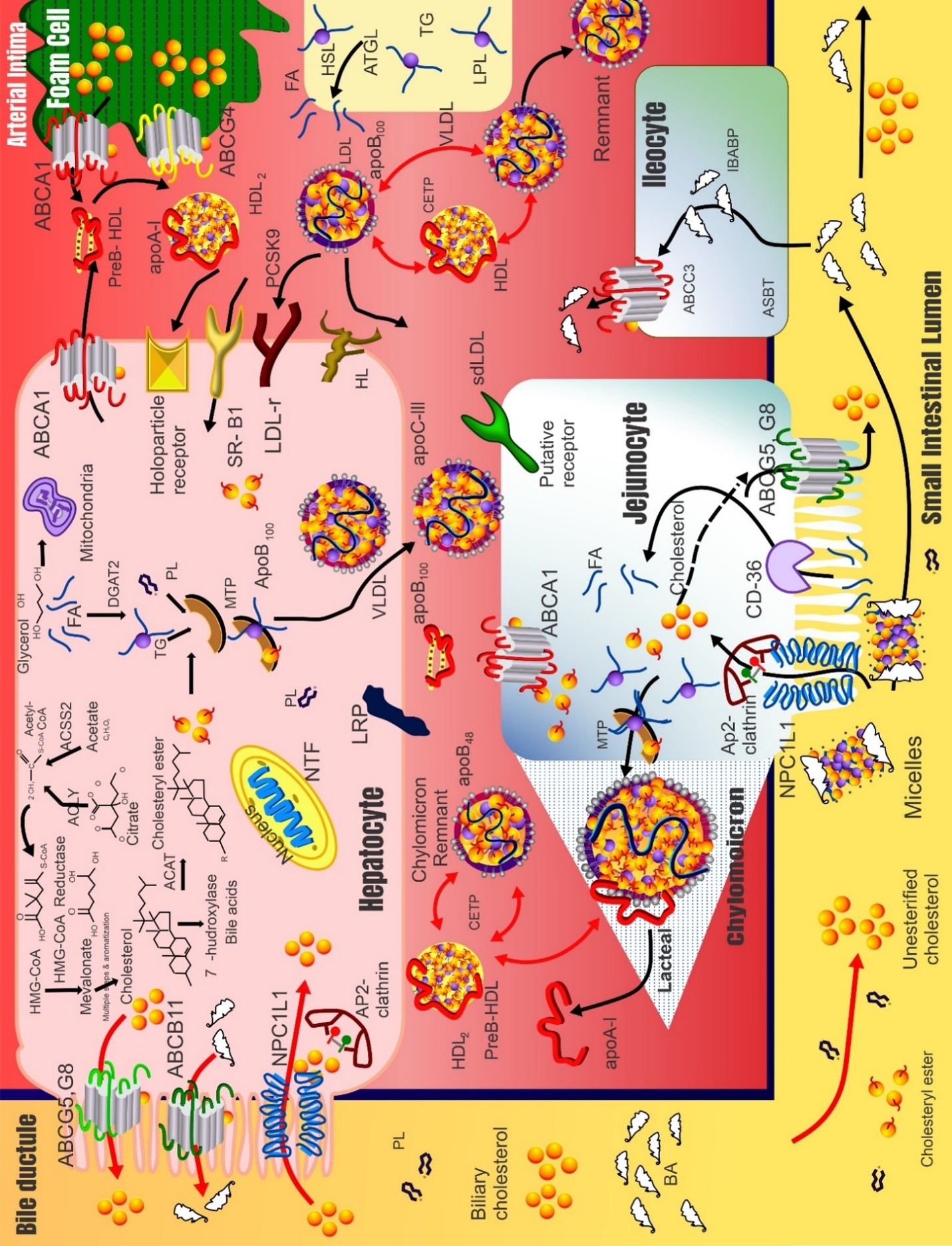
The next graphic is a great overview of cholesterol absorption.
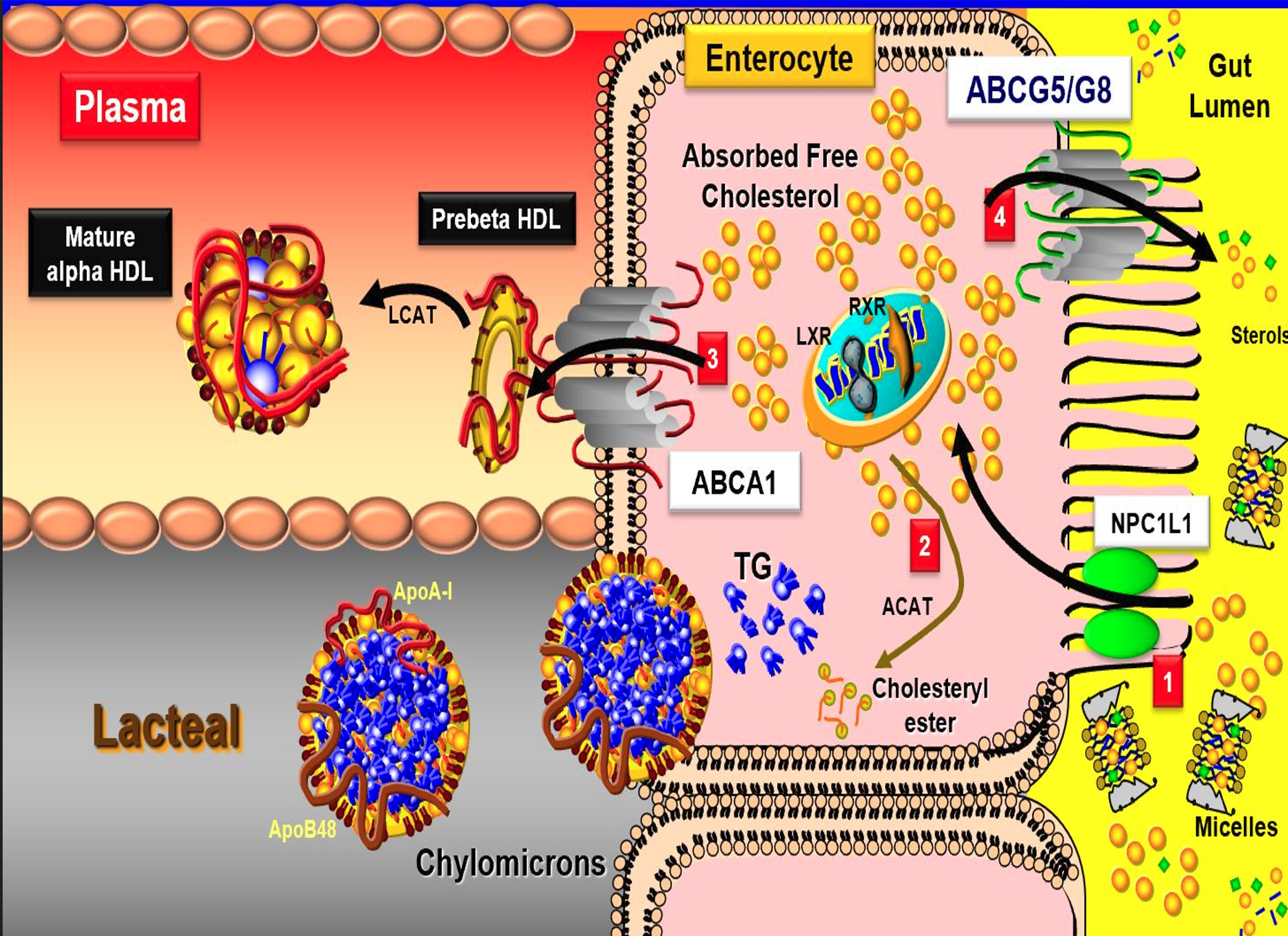
A few highlights:
- NPC1L1 influx of sterols
- Esterification of cholesterol to cholesteryl ester via the enzyme acylcholesterol-acyl transferase (ACAT)
- Efflux of free cholesterol into small HDL particles which esterify the cholesterol using the enzyme lecithin cholesterol acyl-transferase (LCAT)
- Efflux of phytosterols and excess cholesterol back to gut lumen by ABCG5 and ABCG8
The main structural peptide on chylomicrons is apoB48. It also carries dozens of other apolipoproteins which have many functions. Of interest, they also carry extra copies of intestinally produced apoA-1 (the main structural peptide on HDL particles).
As the chylomicron loses its triglycerides in plasma, it shrinks and releases the apoA-1 peptide into circulation which can then lipidate at cells and evolve into more mature HDL particles.
When phospholipids are freed from chylomicrons and VLDL surfaces, they rapidly bind to phospholipid transfer protein (PLTP) and are trafficked to maturing HDL particles or cells.
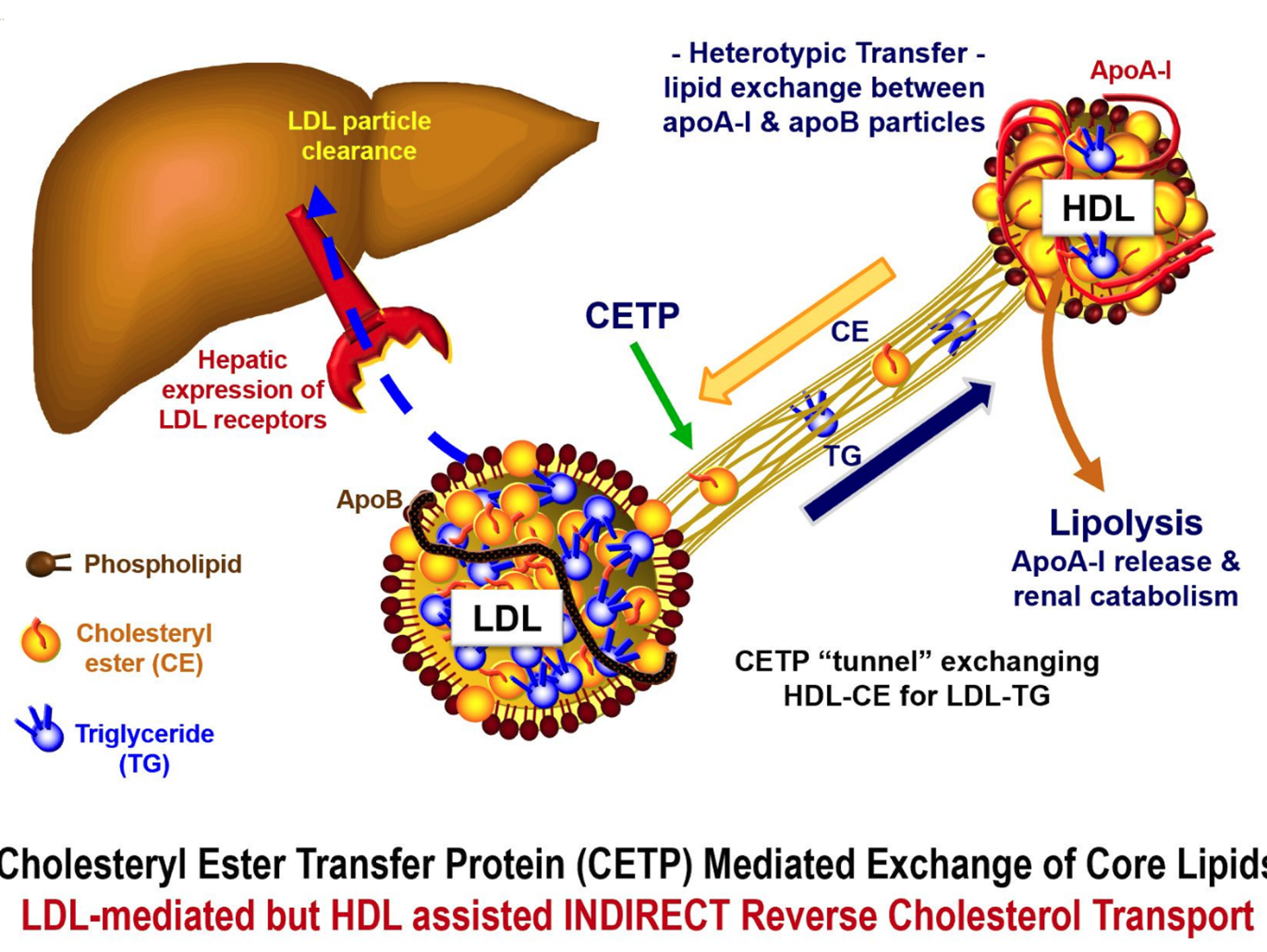
HDL biogenesis (construction) is unusual in that it is the only lipoprotein not constructed within the liver or intestinal cells. Both of those tissues produce apoA-1 which is the building block upon which HDL particles form in plasma.
The liver (hepatocytes) and the intestinal (enterocytes) produce apoA-I. ApoA-I binds to the surface of the chylomicron surface. The apoA-I from hepatocytes is secreted as a free peptide. The liver does not attach apoA-I and apoB100 particles it produces. Free circulating apoA-1 can then start acquiring phospholipids, from PLTP, and cholesterol via cellular efflux of cholesterol via membrane ABCA1 transporters. The free cholesterol is rapidly esterified to cholesteryl ester and the particle changes from a discoid to full spherical shape.
Once mature, the average HDL particle carries ~ 45 molecules of cholesterol (compared to an LDL particle which carries ~2500 and a VLDL particle which carries ~ 4000.
During lipolysis, chylomicrons (and all lipoproteins) lose their core triglyceride content and become smaller in diameter. They do not lose their cholesterol, so the resultant particles are smaller triglyceride-poor but cholesterol-rich particles and are called “remnants”. Those in the apoB family include; chylomicron remnants, VLDL remnants, IDL remnants, and LDL remnants (the small LDL particles). If not cleared at the liver, they have atherogenic potential.
The HDL particles acquire cholesterol from peripheral cells looking to have their excess cholesterol removed. These peripheral cells may be fat cells (adipocytes which store cholesterol), and if needed from arterial wall foam cells (called macrophage reverse cholesterol transport), but primarily from the liver and small intestine.
HDL particles carry their acquired cholesterol to steroidogenic tissues (adrenal & gonads), or back to the liver, or back to the intestine in the rather complex reverse cholesterol transport system. HDL particles can bring cholesterol to the liver and be delipidated by SRB1. HDL can also be delipidated in other tissues as well by SRB1.
HDL particles can also bring cholesterol back to the intestine in a process called Trans Intestinal Cholesterol Efflux or TICE. They can also exchange their core cholesteryl ester and triglycerides with apoB particles (primarily LDLs) using cholesteryl ester transfer protein or CETP. Then the LDL particles will return the cholesterol to the liver.
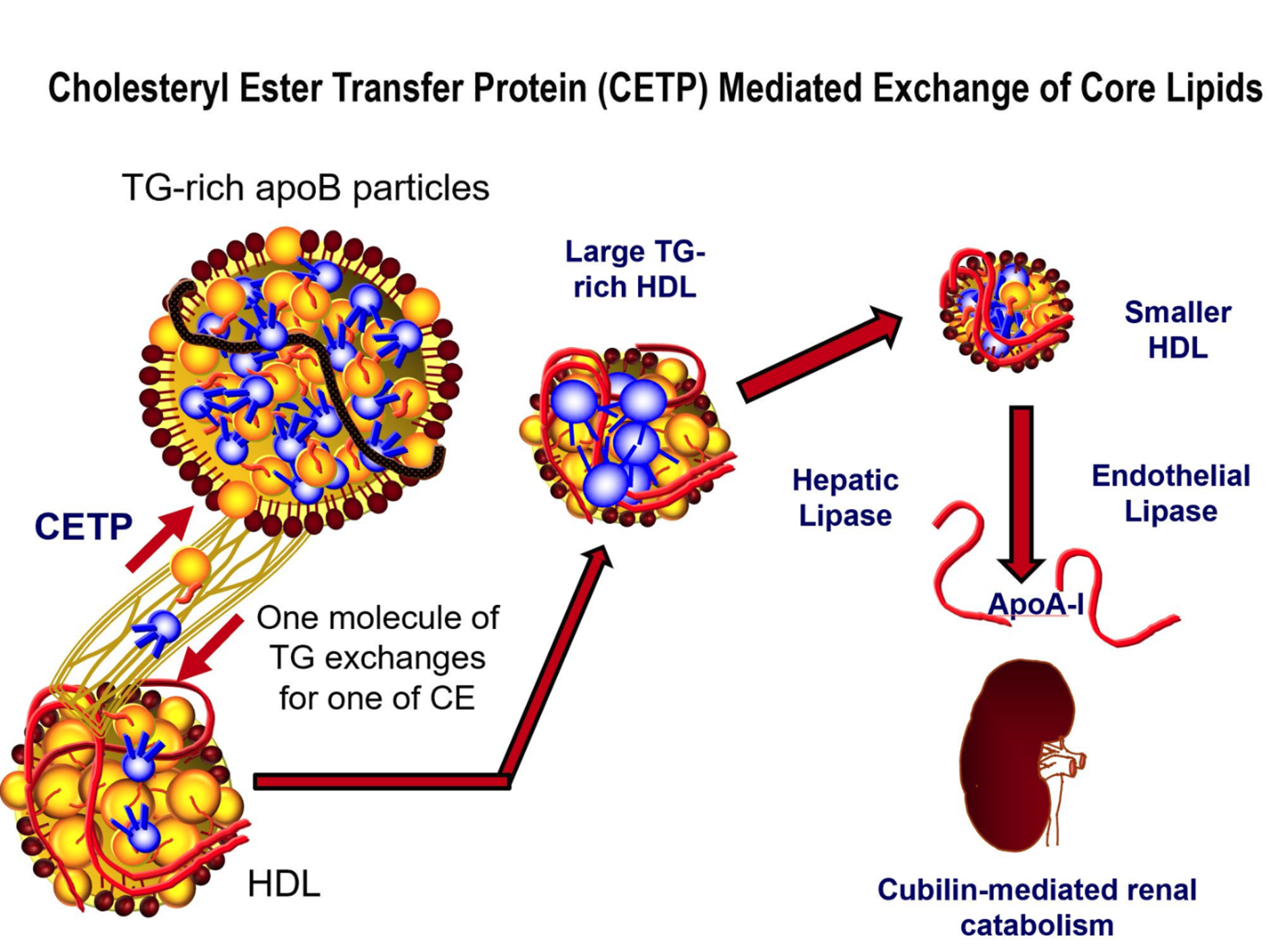
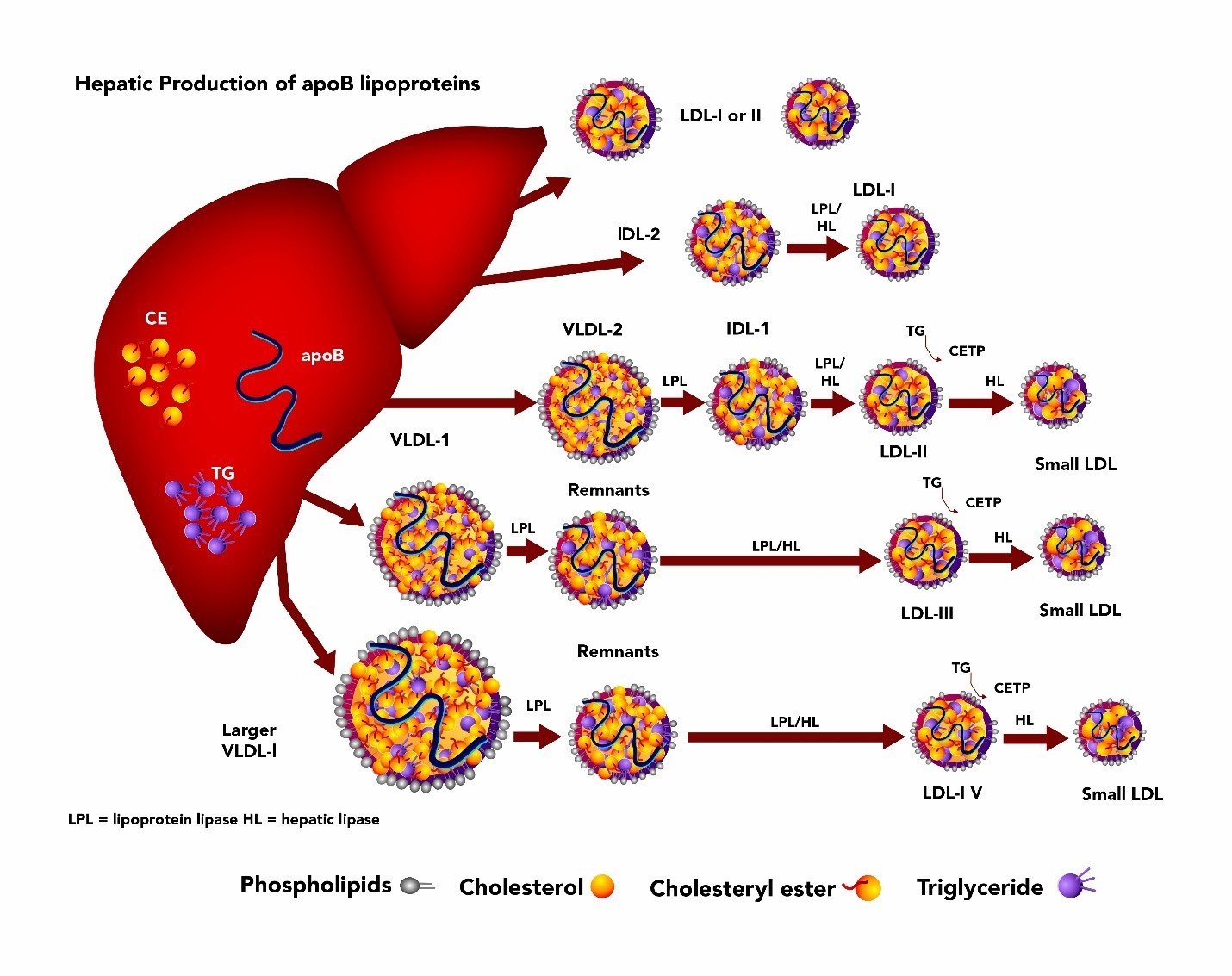
The liver, using its pool of cholesteryl ester and triglycerides, lipidates the apoB100 molecule and creates primarily VLDL particles, but also LDL particles. In patients with normal lipid levels, about 40% of the circulating LDL particles originated in the liver.
As the liver’s pool of triglycerides increases, the number and the size of VLDL particles produced increases and the number of LDL particles decreases. Large VLDL particle diameter and large VLDL particle number is a marker of insulin resistance.
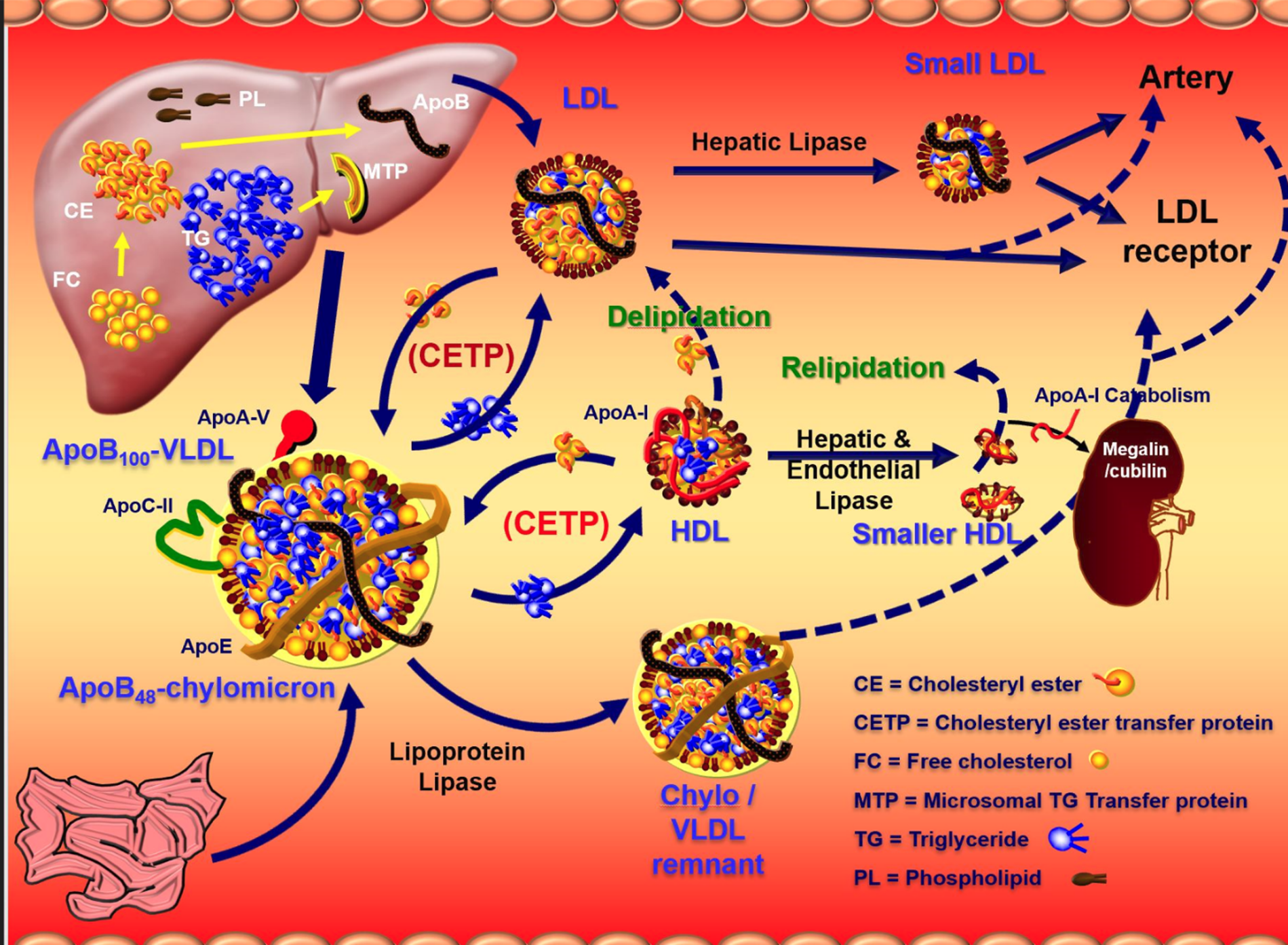
VLDL particles deliver their triglyceride content to muscle cells (myocytes) and or fat cells (adipocytes) which are tissues were lipoprotein lipase (LPL), a triglyceride hydrolyzing enzyme, is expressed. The fatty acids enter the cells (myocytes or adipocytes) or bind to albumin and are transported elsewhere.
When HDLs return their cholesterol to the liver or intestine it is called direct reverse cholesterol transport (RCT) and when LDLs bring their cholesterol back to the liver it is termed indirect RCT. Total RCT is the combination of direct or indirect cholesterol transport. So, where do the LDL particles come in?
Plasma LDL particles have two origins:
(1) They can be produced de novo (newly) within the liver and then secreted. During their plasma residence (3-5 days) they acquire, facilitated by CETP, cholesteryl ester from mature HDL particles in exchange for their core triglycerides. The LDL particles are then cleared by LDLR in the liver, which is the final step of the indirect reverse cholesterol transport pathway. About 40% of all LDL particles come from this pathway.
(2) As VLDL particles undergo lipolysis via LPL, they lose their triglycerides and become smaller, more dense lipoproteins. Because of their apoB100 and apoE, they are rapidly cleared by hepatic LDLR. About 60% of all LDL particles come from this pathway.
Those that are not cleared undergo continued lipolysis and their density and size changes and they are called intermediate density lipoproteins (IDL). IDL particles also contain apoB100 and apoE, so they are rapidly cleared, which explains their very short plasma residence time.
But in the liver, IDL particles are exposed to hepatic lipase (HL) which is both a triglyceridase and a phospholipase. The IDL particle loses its core triglycerides and surface phospholipids and then is converted to smaller, higher density apoB-particles called LDL particles.
In effect, some VLDL particles are the "fathers" of IDL particles and the "grandfathers" of LDL particles. Because the LDL particles do not contain apoE, but only apoB100, their clearance from plasma is much slower than VLDL particles and IDL particles and their plasma residence time increases.
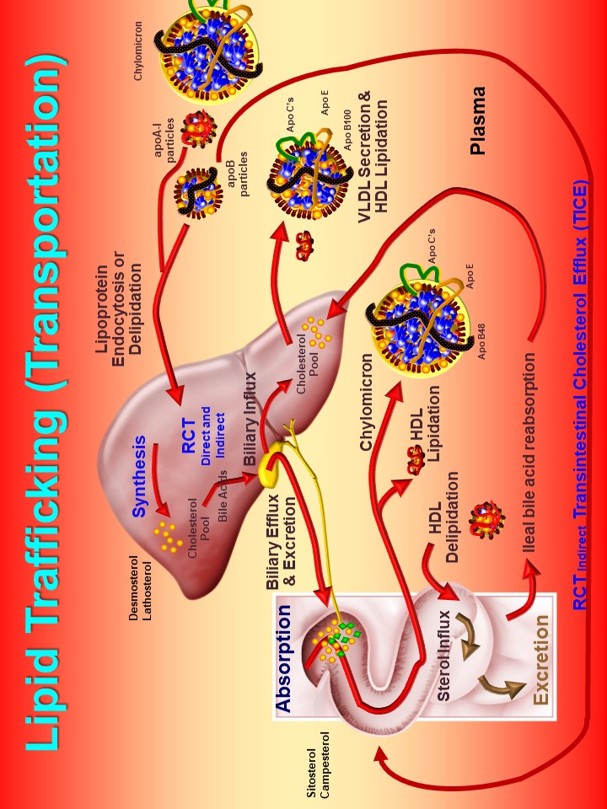
The below graphic based on Dr. Thomas Dayspring’s illustrations may help give a more visual representation of this.
This graphic demonstrates the various lipoproteins and particles that the liver can make and excrete:
Back to LDL particles.
Because of the longer half-life and plasma residence time, LDL particles have more time to accept cholesteryl ester from HDL particles and return it to the liver. VLDLs, IDLs, and LDLs are all apoB-containing particles. But because of the much longer plasma residence time of LDLs (days) compared to VLDLs and IDLs (a few hours), 90 to 95% of circulating apoB particles are LDL particles.
So how does cholesterol end up inside your arterial wall?
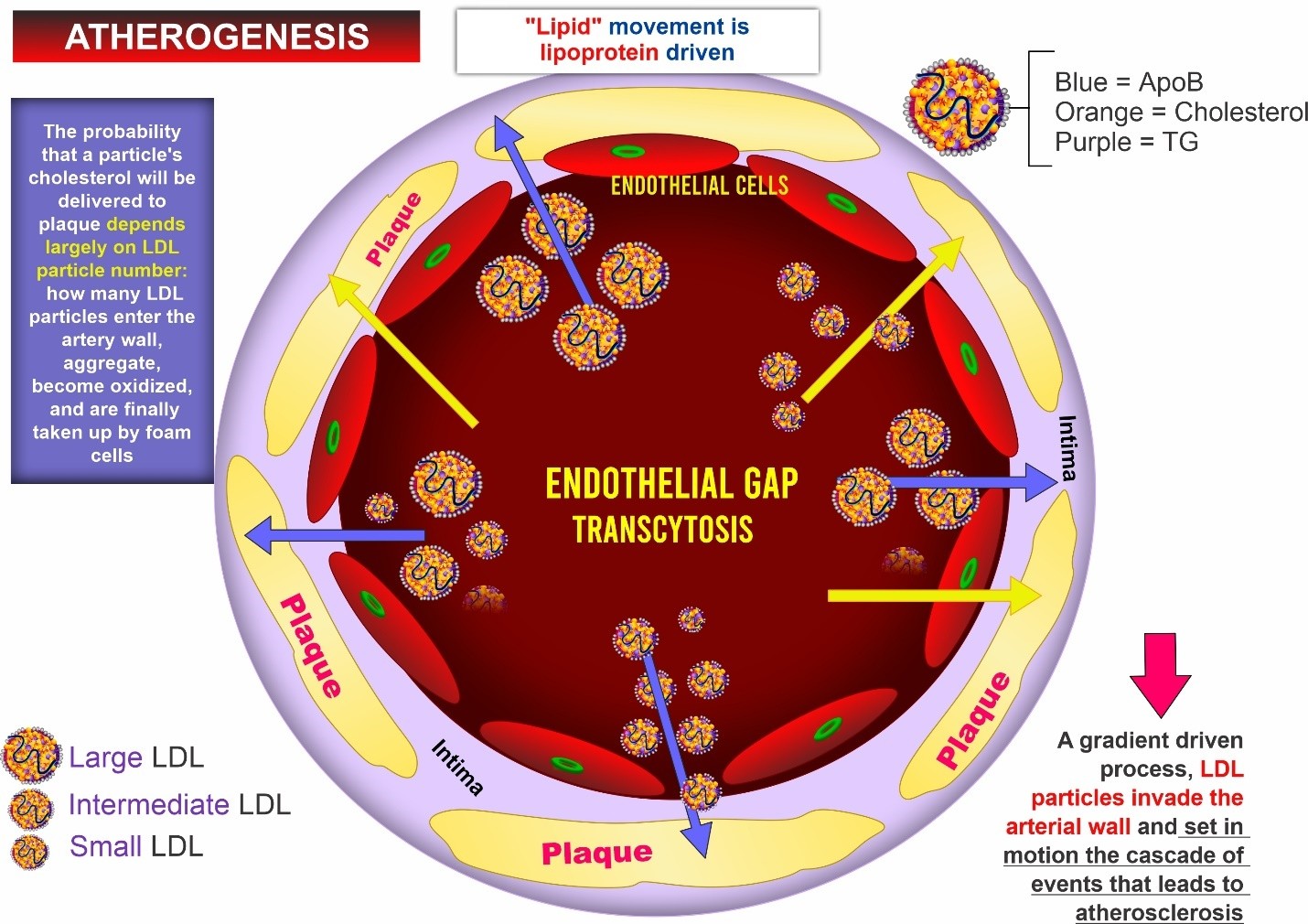
If the LDL particle count crosses a certain concentration threshold, they start to translocate through arterial endothelial surfaces and make their way into the arterial intima and bind to tissue proteoglycans (from which they cannot easily escape) which sets the stage for atherogenesis. It’s a concentration gradient coupled to an ability to be retained.
This endothelial invasion is slow and atherogenesis is determined by apoB particle counts (90-95% of which are LDL particles) over time (measured in years or decades). Again, it’s lifelong exposure to high apoB that leads to atherosclerosis. And since this can begin in your teenage years and 20s, you need to be vigilant and not wait. As has been discussed, waiting until you are 40 years old to finally address elevated apoB may be too late and you will have significant plaque.
Chylomicrons are taken up at the liver by the LDL Receptor Related Protein (LRP) which has affinity for the apoB48 and apoE on chylomicrons. VLDL particles are taken up at the liver by the LDL receptor (LDLR) which has affinity for apoB100 and apoE. But the LDL receptor cannot clear chylomicrons.
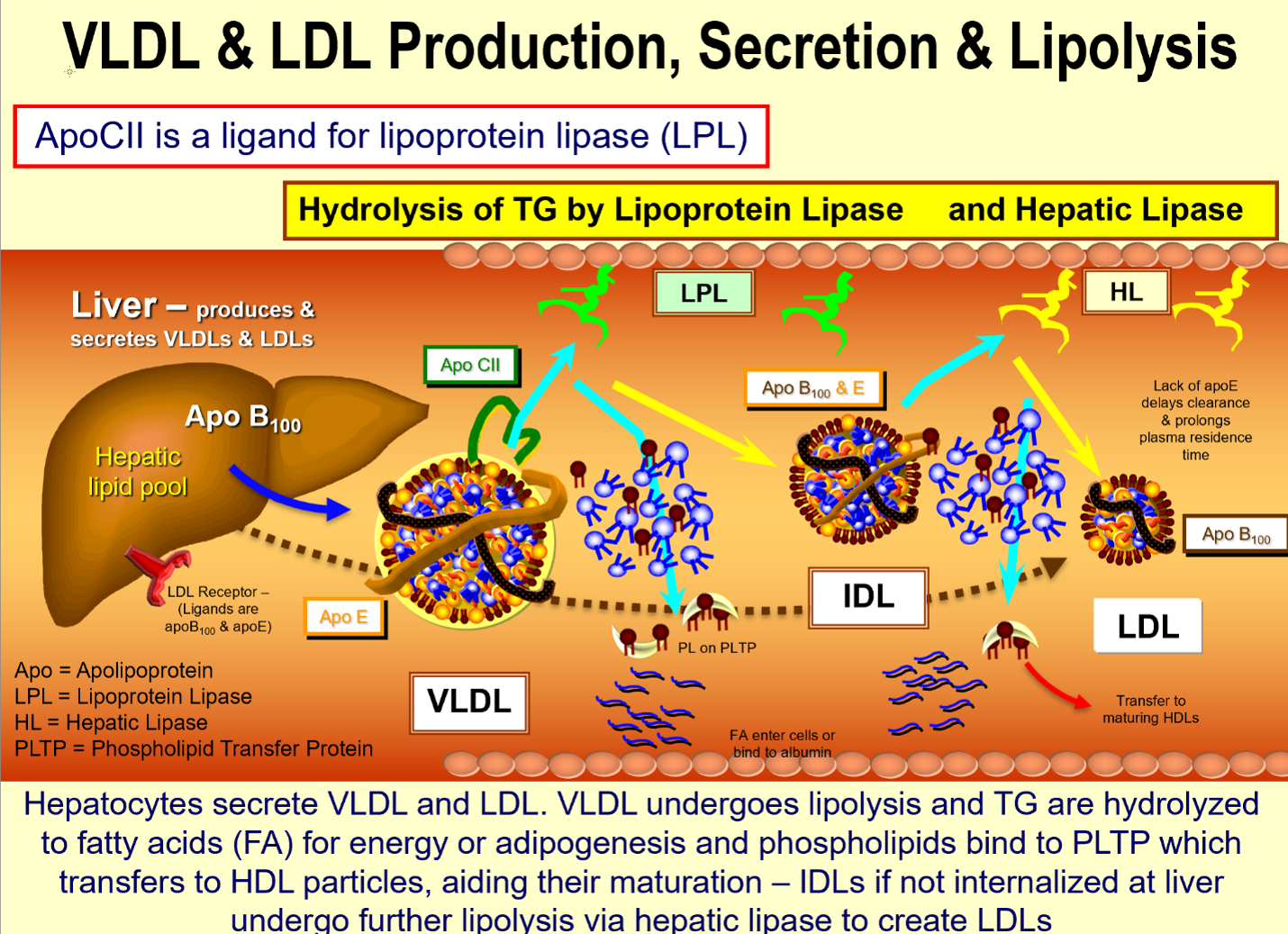
The liver can also produce or excrete a lipoprotein called apoE which is usually bound to VLDL particles, but a minority can function as cholesterol acceptors like apoA-1. The apoE goes into circulation, attracts phospholipids, and creates a unique type of HDL particle that is capable of carrying more cholesteryl ester than the apoA-1 type of HDL particles.
As a side note, chylomicrons from the intestine also acquire apoE from chylomicrons once they enter the lymphatic circulation. They can also acquire apoE from HDL particles when they meet up in the lymphatic system.
So how does cholesterol end up in your arteries?
When cholesterol rich apoB particles exceed a certain threshold in circulation, they pass through the arterial walls and are retained. The artery is under constant assault from apoB, cholesterol rich particles. ApoB particles have a multitude of ways to enter and dump their cholesterol.
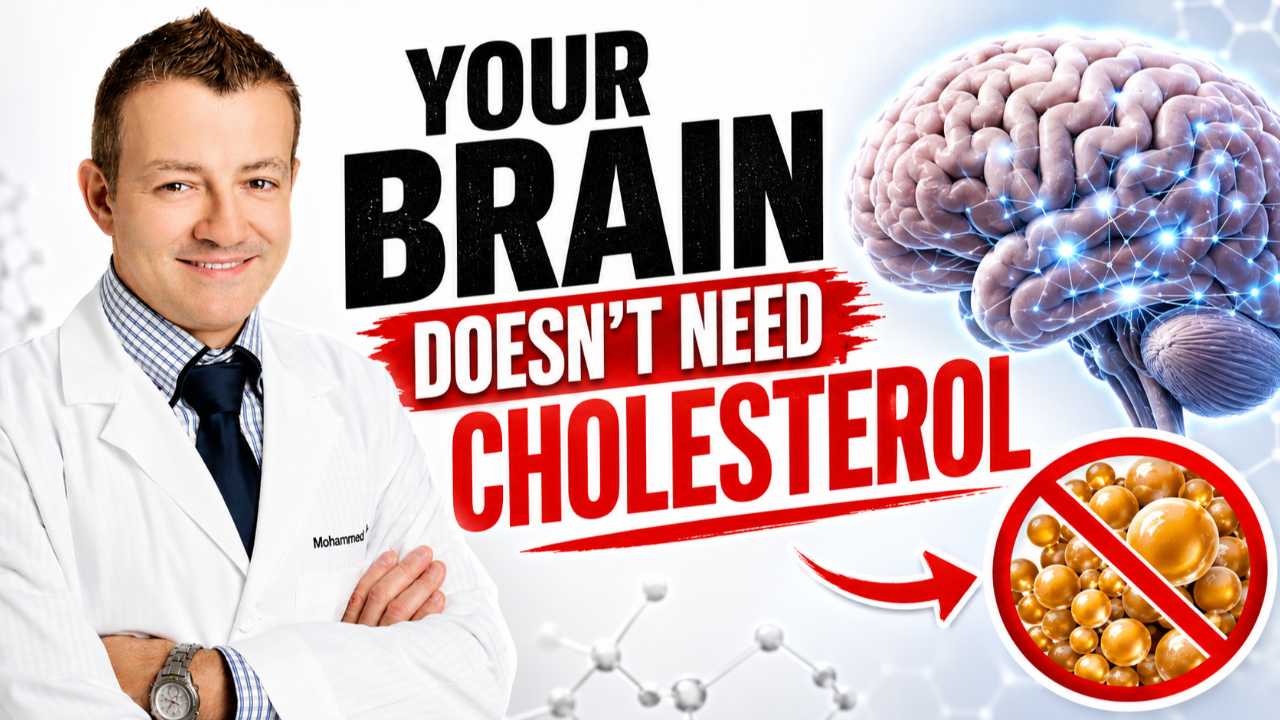
As discussed elsewhere, the blood brain barrier will not allow plasma apoB containing particles to enter the brain. You do not have to worry about high or low LDL-C, LDL-P, or apoB levels in circulation having a major effect on brain cholesterol levels as the brain synthesizes 100% of its own cholesterol.
The brain makes more cholesterol than any other organ. One thing that is unique about the brain is that the cholesterol in your brain has a half-life of 5 years and much of the cholesterol synthesis occurs in utero, infancy and childhood as myelination occurs. Because the half-life of cholesterol is so long, the rate for continued synthesis slows. Initially the cholesterol production is done by oligodendrocytes (makes myelin), astrocytes, and neurons. Later in life astrocytes supply the neurons with cholesterol.
All the cells in your body make their own cholesterol and lipoproteins generally exist as a way of:
(1) Trafficking cholesterol via chylomicrons delivering absorbed cholesterol to the liver.
(2) HDL particles delivering their cholesterol, mostly obtained from liver and intestine, to steroidogenic tissue or adipocytes for storage.
LDL particles deliver their cholesterol to the liver (Indirect Reverse Cholesterol Transport). Cholesterol trafficking is done mostly by chylomicrons delivering absorbed cholesterol to the liver.
HDL particles deliver their cholesterol, mostly obtained from the liver and intestine, to steroidogenic tissue or adipocytes for storage.
The LDL particles deliver their cholesterol to the liver (Indirect Reverse Cholesterol Transport). The main role is to bring cholesterol back to the liver for excretion.
Any cholesterol returned to the liver can be:
(1) Converted to bile acids which make their way to the gut lumen via the biliary tract.
(2) Directly transferred to the bile as free cholesterol.
(3) Used to lipidate small HDL particles / apoA-1.
(4) Used by the liver for its cell membranes
(5) Used to lipidate the apoB particles that are created in the liver (VLDLs, LDLs) and then secreted.
The energy is trafficked within intestinal chylomicrons and hepatic VLDL particles in the form of triglycerides which are delivered to muscles or adipocytes.
So why do you need cholesterol inside the lipoproteins if the job of lipoproteins is mainly to transport triglycerides and fatty acids?
Cholesterol within the apoB particles serves a structural purpose in that it makes the particles spherical enabling them to traffic more lipid content, the volume of a sphere is to the third power of the radius. This gives them more volume so they can carry around more triglycerides.
Without cholesterol, the single layer phospholipid cell membrane would collapse on itself and not be able to carry as much.
Until an HDL particle acquires cholesterol, pre-beta HDL particles are flat or slightly spherical or discoidal. As they lipidate with cholesterol the particle enlarges (matures), enabling it to carry many more proteins on its surface which is one of the major functions of HDL particles.
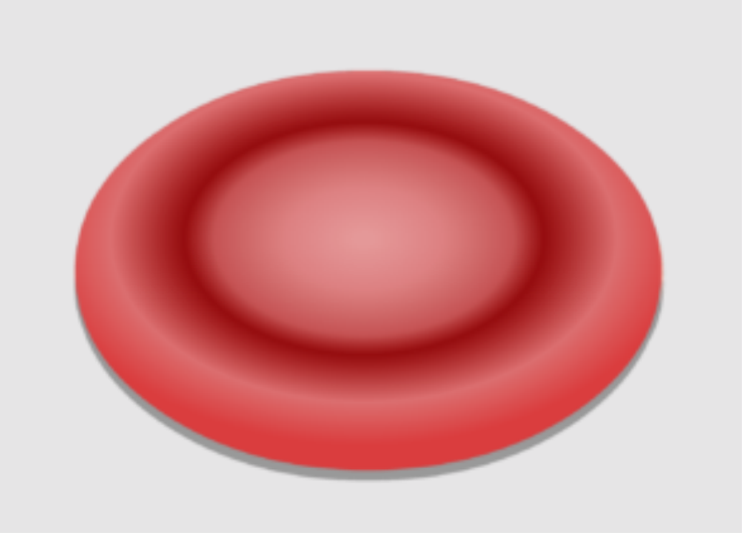
Flat discoid red blood cell
They would be a flat discoid shape as above and not be able to transport many triglycerides.
And finally…
The page is a graphic that is a great summary of this chapter! Great for lipid or cardiology board exams!
More Lipid Metabolism Visual Aids
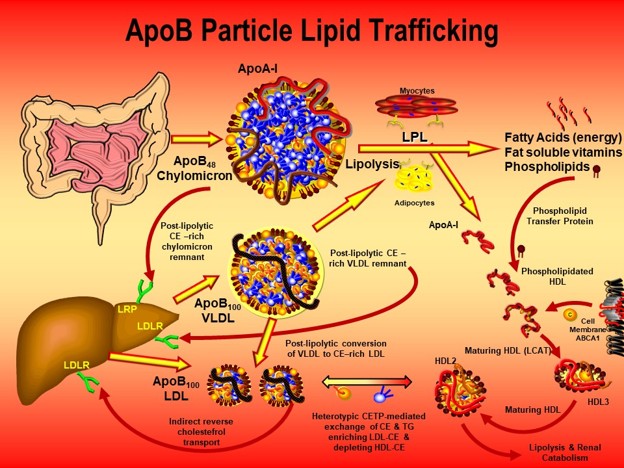
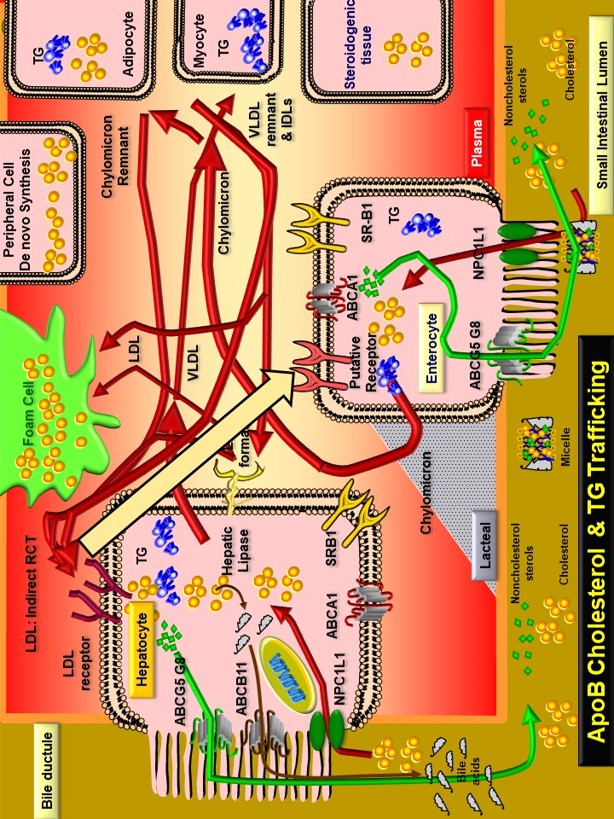
The proximal small intestine produces and secretes into lymphatics large triglyceride (TG)-rich and absorbed cholesterol-rich apoB48-chylomicrons which also carry on its surface several apoA-I copies. Once in plasma due to its multiple copies of apoC-II, chylomicrons undergo rapid lipolysis by lipoprotein lipase (LPL) which is expressed at myocyte and adipocyte endothelia. LPL converts (hydrolyzes) core TG to fatty acids (FA) which results in particle shrinkage and release of other lipids, surface phospholipids (PL) and apoA-I. The smaller, more dense chylomicron remnant is then rapidly cleared by its surface apoE and apoB48 binding to hepatic LDL-receptor related protein (LRP). Chylomicrons deliver their absorbed cholesterol to the liver – not to other tissues. Once PLs are released from chylomicron surfaces, they rapidly attach to phospholipid transfer protein (PLTP) and are transferred to circulating unlipidated apoA-I which was released from the chylomicron surface or secreted by the liver. Once phospholipidated, HDLs can further mature by accepting free (unesterified) cholesterol (C) from cellular ABCA1 sterol efflux transporters.
ApoB100 TG-rich VLDLs are secreted by the liver and also undergo lipolysis at muscle and adipocyte endothelia. VLDL lipolysis is slower than that of chylomicrons as VLDLs have fewer copies of LPL-ligand apoC-II than do the larger chylomicrons. During lipolysis VLDLs lose TG (hydrolyzed to fatty acids) and surface PL, but they do not carry or release apoA-I. The PL are picked up by PLTP and transferred to apoA-I or peripheral cells. As VLDLs shrink their surface apoE changes its shape and becomes receptor compliant to LRP or LDLR and thus VLDLs are also rapidly cleared. During their plasma residence time (significantly longer than chylomicrons) VLDLs acquire additional cholesterol in exchange for TG from HDL via heterotypic CETP activity. VLDLs return their cholesterol (and that acquired from HDLs) to the liver where they are cleared by apoE binding to LRP or apoE & apoB100 to LDL receptors (LDLR). VLDLs do not deliver cholesterol to other tissues. At the liver surface VLDLs can undergo additional lipolysis via hepatic lipase which releases additional surface PL and by reducing their size and increasing their density create IDLs (not shown in the graphic). IDLs because of their apoE and apoB100 content are also rapidly cleared by binding to LDLR. But some of the IDLs undergo further HL-induced lipolysis and increase their density and reduce their size as they are converted to LDLs. Because LDLs have no apoE they have much slower LDLR-mediated clearance and they significantly longer plasma residence times (days) than chylomicrons (hour or two), VLDLs (4-6 hours) and IDLs (hour or two).
The liver can also directly secrete LDLs into plasma (normally ~40% of all LDLs during normal lipemia but slightly less when TG increase). Important to realize that not all LDLs are the by-products of VLDL lipolysis. During their 2-3 days of plasma residence LDLs acquire cholesterol from mature HDLs vis heterotypic exchange of TG for CE with HDLs. As much as 40 % f the core CE core of LDLs is derived from HDLs. The HDLs acquire LDL-TG and undergo rapid lipolysis by HL and endothelial lipase (EL) shedding apoA-I which undergoes catabolism by the cubilin-megalin receptor in renal tubules. The now CE-enriched LDLs return to the liver and are cleared by LDLR. The main function of LDLs is not to deliver cholesterol to peripheral tissues but return it to the liver in the indirect reverse cholesterol transport pathway.
In summary – Chylomicrons and VLDLs deliver energy (TG) to muscles and fat cells. Chylomicrons release apo-AI and to generate HDLs and both chylomicrons and VLDLs shed PL and fat-soluble vitamins. Chylomicrons are rapidly cleared at LRP and VLDLs at LRP and LDLR. Both particles deliver their cholesterol to the liver. LDLs derive from VLDL lipolysis and direct hepatic production and secretion. HDLs form from apoA-I phospholipidation, free cholesterol lipidation from ABCA1, LCAT induced formation of CE, formation of larger CE-enriched HDLs and then CETP mediated heterotypic transfer of HDL core CE to apoB-100 particles (both VLDLs and LDLs).
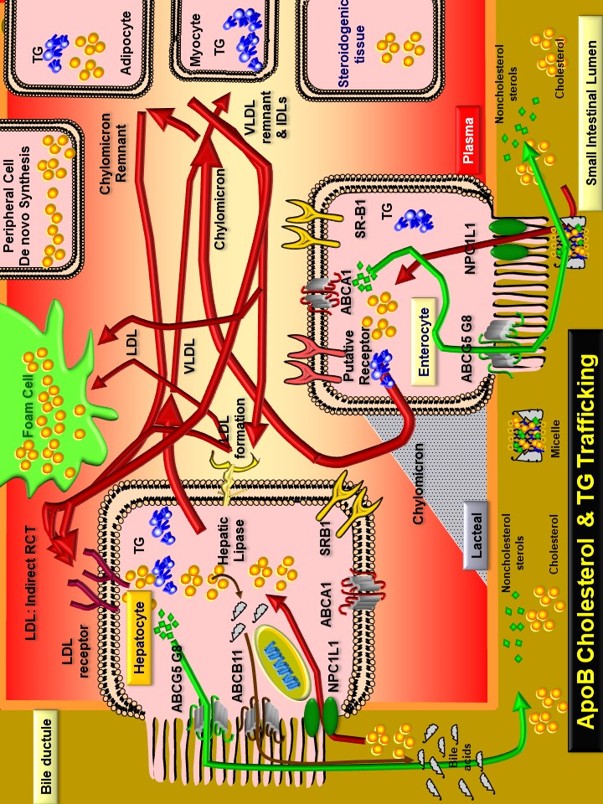
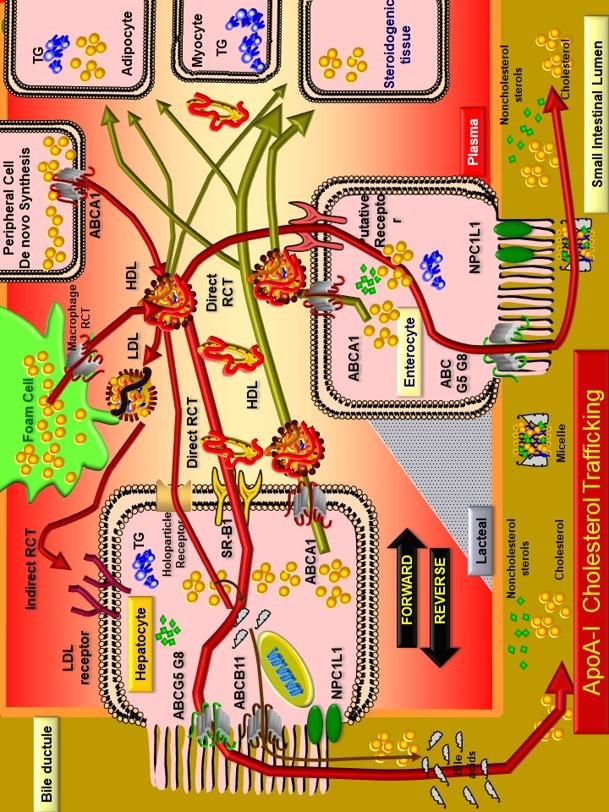
HDL particles have options to traffic cholesterol in many directions. “Reverse cholesterol transport” is a phrase used classically to refer to the HDL function of returning cholesterol to the liver, either indirectly by transferring their cholesterol loads to apoB particles, or directly. Some important direct RCT pathways include HDL delipidation by scavenger receptors B1 (SRB1) in enterocytes or hepatocytes, or endocytosis by either hepatic LDL receptors (by way of apoE binding) or apoA-I beta chain ATP synthase (also called the holoparticle receptor). HDLs also deliver cholesterol to other tissues in a “forward transport” process. HDL trafficking of cholesterol is therefore multidimensional and very complex. “HDL-mediated trafficking of cholesterol” is perhaps a better phrase to use since it actually encompasses both forward and reverse cholesterol transport.
Peripheral Transport of Cholesterol by apoA-I: ApoA-I is synthesized and secreted by hepatocytes and enterocytes. After a small amount of phospholipidation, nascent or prebeta HDLs particles are formed. These are further lipidated by attaching to ABCA1 transporters in hepatocytes and enterocytes or any other cell with an excess of cholesterol (peripheral cell or foam cell). As the unesterified cholesterol is esterified by LCAT, the HDL particle matures into a small and than large (HDL2) particle. Large HDLs can be further lipidated by foams cells via ABCG1, ABCG4, SR-B1 receptors or passive diffusion. Mature HDL particles are delipidated by SR-B1 in steroidogenic tissues, enterocytes or hepatocytes. HDLs can also be delipidated by exchanging for TG in apoB particles using CETP. Additional HDL delipidation occurs by adipocytes using adipocyte-produced CETP. Hepatocytes excrete free cholesterol via ABCG5, ABCG8 transporters into the biliary system from where it is taken to the small intestinal lumen. As much as 50% of that cholesterol is taken up by Niemann-Pick C1 like 1 proteins in enterocyte microvilli. The enterocyte can also excrete cholesterol into the gut lumen via ABCG5 and ABCG8 transporters. Very small apoA-I particles can be excreted by the kidneys using cubilin pathway. This complex cholesterol transport system is an ongoing, dynamic flux process controlled by dozens of genes. There is no correlation between plasma HDL-C levels and HDL-mediated trafficking of cholesterol.
ABC = ATP Binding Cassette Transporter
LCAT = Lecithin acylcholesterol transferase
ACAT = Acyl cholesterol-acyl transferase
Still Have Questions? Stop Googling and Ask Dr. Alo.
You’ve read the science, but applying it to your own life can be confusing. I created the Dr. Alo VIP Private Community to be a sanctuary away from social media noise.
Inside, you get:
-
Direct Access: I answer member questions personally 24/7/365.
-
Weekly Live Streams: Deep dives into your specific health challenges.
-
Vetted Science: No fads, just evidence-based cardiology and weight loss.
Don't leave your heart health to chance. Get the guidance you deserve. All this for less than 0.01% the cost of health insurance! You can cancel at anytime!
[👉 Join the Dr. Alo VIP Community Today]
Cardiology & Obesity Medicine