Cardiology Lost A Legend: Dr. Eugene Braunwald
Apr 26, 2026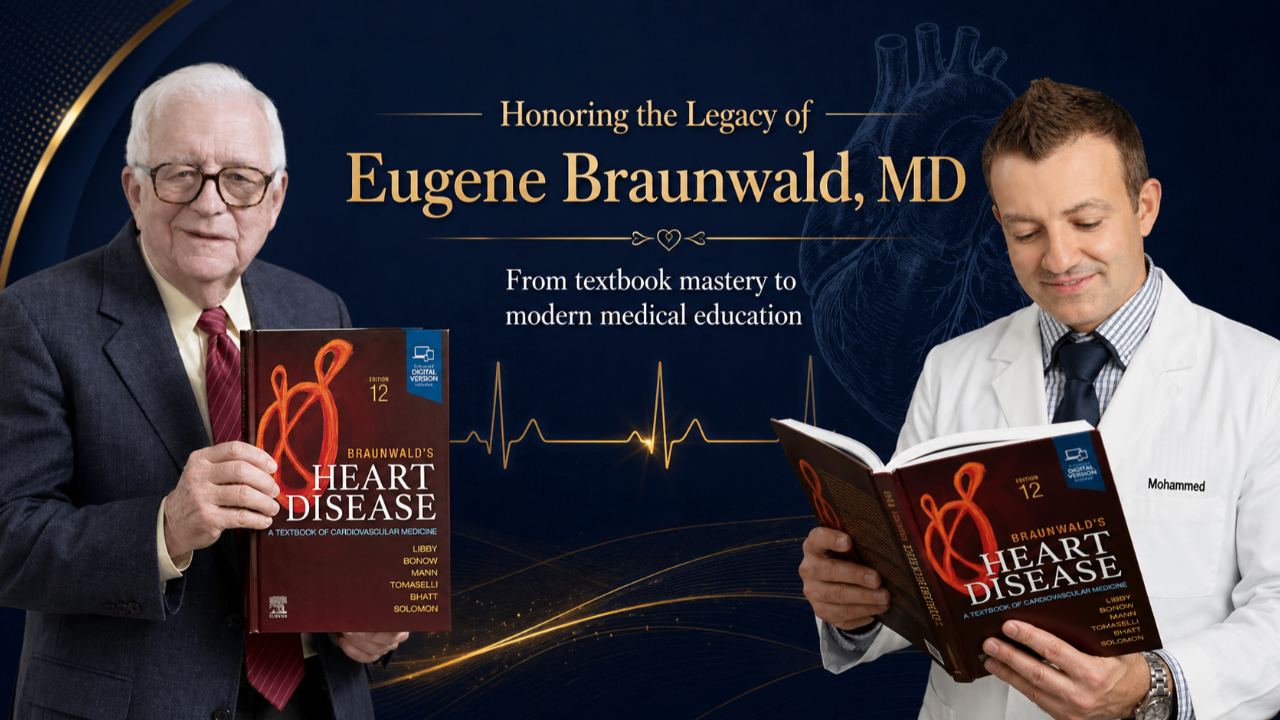
The Father of Modern Cardiology: A Tribute to Dr. Eugene Braunwald
August 15, 1929 – April 22, 2026
His Life, His Textbook, and the Legacy That Will Define Cardiology for Generations
"All cardiologists today have been touched by Dr. Braunwald through the training they received and the classical textbooks and review articles they continue to use." — Dr. Elliott Antman, Harvard Medical School
On April 22, 2026, the world of medicine lost one of its most towering figures. Dr. Eugene Braunwald, widely regarded as the father of modern cardiology, passed away at the age of 96 at Brigham and Women's Hospital in Boston. He was not merely a cardiologist. He was a refugee who fled genocide, a scientist who rewrote the rules of heart medicine, a mentor who shaped generations of physicians, and an author whose textbook became the bible of cardiovascular medicine. He was, in every sense of the phrase, a once-in-a-generation intellect.
This tribute is deeply personal for me. As a cardiologist and the founder of Alo Academy, I have spent my entire medical career standing on the shoulders of the knowledge that Dr. Braunwald built. His textbook, Braunwald's Heart Disease: A Textbook of Cardiovascular Medicine, is something I consider required reading not just for cardiology fellows, but for every practicing cardiologist in the world, to be read cover to cover, multiple times, throughout one's career. It is not simply a reference book. It is a living, breathing philosophy of how to think about the cardiovascular system and the patients who depend on us to understand it.
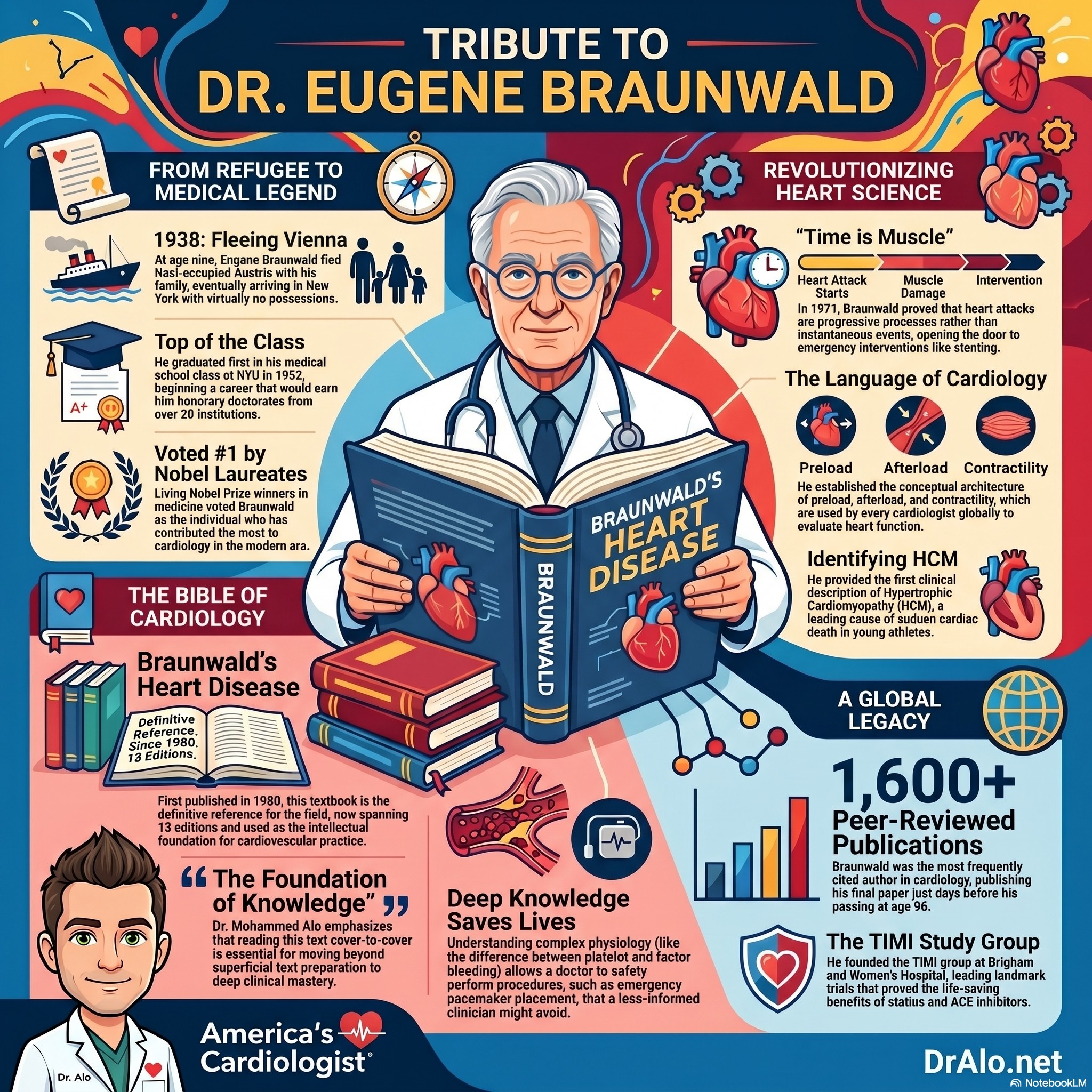
Dr. Eugene Braunwald Infographic Summary:
Every morning on hospital rounds, I tell my students, residents, and fellows (cardiologists in training) that they must read textbooks. If you become and internist, you must read Harrison’s. If you go into cardiology, you must read Braunwald’s. Why? Because you need foundational knowledge.
Learning from me on rounds, or reading papers, attending medical conferences, watching a presentation are all great forms of additional information, but they are not the foundation of knowledge. You need the foundation first to fully understand the stuff we discuss on rounds every morning or what we discuss at the American College of Cardiology conference every year.
You need to know how to frame that knowledge and where it falls.
Sure, on rounds we can talk about the two type of bleeding; platelet bleeding (superficial), or factor bleeding (deep). But is very surface level and not very deep. If you read the chapter on bleeding in Harrison’s then you truly understand bleeding. You can make decisions based on a deeper level of knowledge and understanding.
Imagine you have a patient the needs an emergency pacemaker. But their INR is too high (this means their blood is too thin due to being on too high of a dose of a blood thinner called coumadin). Based on guidelines, or your limited superficial knowledge, you may be unwilling to do the surgery because you are afraid of the risk of bleeding to death. The patient dies.
Now imagine, you read the chapter on bleeding in Harrison’s, now you know there is a very simple fix for this. First of all, placing a pacer does not put the patient at risk for factor bleeding, it is more of a platelet bleeding, superficial type of bleed. You can also start a transfusion of fresh frozen plasma, which replaces the factors as you do the procedure. The INR while the fresh frozen plasma is infusing is 1.0. Hence, no increased risk of bleeding. You just saved the patient’s life.
Why? Simply because you know more and you read the textbook. You know how each medication works and you know what kind of bleeding you need to be able to stop.
This is the kind fo very deep knowledge that I want my cardiology fellows and future cardiologists to have. But you have to want it. Sure, you can complete your residency and pass your board by just read test preparation books, or doing tons of sample questions, but you will have a very superficial understanding.
Sadly, we see this too often. It’s human nature to take short cuts. We should aspire to be the best of the best and I want my fellows to be the best future cardiologists, because they will go out into the world and represent me.
This is also what Dr. Eugene Braunwald taught.
I was inspired by Dr. Braunwald's teachings before I ever met a cardiology patient. His framework for understanding cardiac physiology, coronary artery disease, heart failure, valvular disease, and risk modification shaped the clinician I became. And it is that same spirit of translating the complexity of cardiovascular science into something meaningful and actionable that drives the work I do today through my social media profiles and teaching, bringing the science that Dr. Braunwald spent a lifetime building directly to patients and physicians alike.
I. From Vienna to the World: The Making of a Legend
A Childhood Interrupted
Eugene Braunwald was born on August 15, 1929 in Vienna, Austria, the son of Wilhelm Braunwald and Clara Wallach. His earliest years were spent in one of Europe's great cultural capitals, a city of opera, intellectual life, and the deep Jewish heritage from which his family drew its identity. But Vienna in the 1930s was becoming something terrifying. The rise of National Socialism cast a shadow over Jewish life across Austria, and when Germany annexed the country in March of 1938, the Braunwald family understood that their time was running out.
In 1938, nine-year-old Eugene Braunwald and his family fled Austria with, as he later recalled, nothing but the clothes on their backs. They were refugees in the truest and most desperate sense of the word. Eugene and his younger brother Jack briefly lived on a farm in northern England before the family made its way across the Atlantic to New York in 1939. The young boy who would one day become the most cited cardiologist in the history of scientific publishing arrived in America with virtually nothing.
It is impossible to fully appreciate Dr. Braunwald's achievements without understanding this origin. The discipline, the relentless work ethic, the intensity of purpose that defined his scientific career were not abstractions. They were forged in the crucible of displacement and survival. He understood at a visceral level that nothing could be taken for granted, that the privileges of education and intellectual life were to be seized and guarded with every ounce of effort one possessed.
"Most heart attack survivors have never heard of Dr. Eugene Braunwald, but chances are his research helped save their lives." — The Boston Globe, 2002
Education and the Discovery of a Calling
Eugene Braunwald pursued his undergraduate and medical education at New York University, where he graduated first in his medical school class in 1952. The NYU Medical School was then, as now, one of America's premier training grounds for physicians, and Braunwald distinguished himself immediately as a mind of exceptional clarity and drive. It was during his medical school years, through a clinical rotation he initially accepted with some reluctance, that Braunwald discovered the cardiac catheterization laboratory at Bellevue Hospital.
That laboratory, which was a genuine rarity in American medicine at the time, ignited something in him. Under the mentorship of Dr. Ludwig Eichna at the Bellevue Cardiology Clinic, Braunwald encountered a field that married his passion for physiology with the precision of engineering. Here was a discipline that demanded rigorous thinking, technical skill, and a relentless curiosity about how the body's most essential organ actually worked. He was, from that moment forward, a cardiologist in the making.
He completed his residency in internal medicine at Johns Hopkins Hospital in Baltimore, one of the great training programs in American medicine, and then undertook postdoctoral fellowship training in the laboratory of Dr. Andre Cournand at Columbia University. Cournand was a Nobel Prize laureate whose foundational work in cardiac catheterization had already transformed the understanding of cardiac physiology.
For the young Braunwald, training under a Nobel laureate was not a passive experience. It was a forge. He also traveled to Mexico City for training at the National Institute of Cardiology, where he was deeply impressed by the clinical acumen of the Mexican school of cardiology and its philosophy that the best textbook of cardiology is the patient themselves.
In 1952, the same year he graduated from medical school, Eugene Braunwald married Nina Starr, a fellow NYU medical student who would go on to become the first woman ever board-certified in cardiothoracic surgery in the United States. The two were intellectual equals and life partners in every sense, and Nina's own career as a pioneering cardiac surgeon reflected the same fearless ambition that characterized Eugene's. She passed away in 1992. Eugene later married Elaine Smith, former Chief Operating Officer of Brigham and Women's Hospital, and found in her a devoted partner for the final chapter of his remarkable life.
II. Building a Career That Redefined a Field
The National Heart, Lung, and Blood Institute
After completing his training, Braunwald joined the National Heart Institute (later the National Heart, Lung, and Blood Institute) as the first Chief of the Cardiology Branch and Clinical Director. These were the years in which modern cardiovascular medicine was truly being born. The heart was still largely a mystery. The tools to study it were primitive. The therapies available to patients with heart disease were few. Braunwald and his colleagues were building the field from the ground up.
During his tenure at the NIH, Braunwald undertook foundational research that would reverberate through cardiology for the next seven decades. Working with Edmund Sonnenblick and John Ross Jr., he co-authored a landmark series of papers in the early 1960s that established the clinical framework of preload, afterload, and contractility. These are not merely academic terms. They are the conceptual architecture that every cardiologist in the world uses, consciously or unconsciously, every time they evaluate a patient with heart disease. Braunwald did not just contribute to this framework. He created it.
It was also at the NIH that Braunwald first encountered what would become one of his greatest contributions: the identification of hypertrophic cardiomyopathy as a distinct clinical entity. In what has become one of the most celebrated examples of scientific resilience, Braunwald was summoned to the operating room after misreading catheterization data on a patient he believed had congenital obstruction. When a second similar case appeared two months later, he and his NIH colleague Dr. Andrew Morrow did not dismiss the anomaly. They investigated it. The result was the first clinical description of hypertrophic obstructive cardiomyopathy, a condition that remains among the most important causes of sudden cardiac death in young athletes to this day.
The Revolutionary Discovery: Heart Attacks Are Not Instant
Of all Dr. Braunwald's contributions, the one that most directly transformed the daily practice of cardiology and the lived experience of millions of heart attack survivors is this: in 1971, he demonstrated conclusively that a heart attack is not an instantaneous event but a progressive process that can be interrupted by timely intervention.
At the time, the conventional wisdom in cardiology was that when heart muscle was deprived of blood flow during an acute myocardial infarction, it died immediately and irreversibly. There was nothing to be done. The damage was done the moment the artery closed. Braunwald challenged this assumption with scientific rigor and proved it wrong. His research showed that heart muscle death during a heart attack was gradual, that there was a window of time, measurable in hours, during which the progression of damage could be slowed or stopped if blood flow was restored.
This insight did not merely add a footnote to cardiology. It opened the entire door to modern acute MI treatment. The principle that time is muscle, the logic underlying thrombolytic therapy, angioplasty, stenting, the entire infrastructure of the modern cardiac catheterization laboratory as an emergency service, all of it flows directly from Braunwald's demonstration that heart attacks are events in time, not instantaneous catastrophes. The Boston Globe captured it accurately: his research helped save the lives of millions of heart attack survivors who have never heard his name.
Academic Leadership and Institution Building
In 1968, Braunwald was recruited to the University of California, San Diego, where he served as the founding Chair of the Department of Medicine, bringing John Ross Jr. with him as the founding Chief of Cardiology. From 1972 onward, he moved to the Brigham and Women's Hospital in Boston, where he served as Chair of the Department of Medicine and eventually as Chief Academic Officer. At Harvard Medical School, he held the Distinguished Hersey Professorship of Medicine.
At Brigham and Women's, Braunwald founded the TIMI (Thrombolysis in Myocardial Infarction) Study Group, one of the most influential clinical trials organizations in the history of cardiovascular medicine. The TIMI group's work over decades developed the foundational scientific understanding of thrombosis superimposed on atherosclerosis as the mechanism underlying acute myocardial infarction, and produced landmark trials including PROVE-IT TIMI 22, which demonstrated the dramatic benefits of intensive LDL reduction with statin therapy. The TIMI group's contributions to our understanding of acute coronary syndromes, anticoagulation, lipid management, and cardiac biomarkers cannot be overstated.
Braunwald was also among the earliest investigators to demonstrate that lower LDL cholesterol is causally linked to reduced risk of myocardial infarction and stroke, a principle that now stands as one of the most robustly proven facts in all of preventive cardiology and one that drives every conversation I have with patients about their lipid management. He was the first to describe how to measure ejection fraction and showed definitively that ACE inhibitors prolong life in post-MI patients with reduced ejection fraction, two contributions that shaped the pharmacological management of heart failure as we know it today.
III. Braunwald's Heart Disease: The Bible of Cardiovascular Medicine
The Birth of a Textbook
In 1980, Eugene Braunwald published the first edition of Heart Disease: A Textbook of Cardiovascular Medicine. It was, from its very first pages, unlike anything that had existed before in cardiology education. Most medical textbooks of the era were either encyclopedic reference works that sacrificed readability for comprehensiveness, or slim clinical guides that sacrificed depth for accessibility. Braunwald's vision was different. He wanted a text that was simultaneously rigorous and readable, comprehensive and conceptually coherent, clinically grounded and scientifically precise.
The book was an instant landmark. It quickly became the definitive reference in cardiovascular medicine for practitioners and trainees around the world. With each successive edition, it grew more expansive, more authoritative, and more essential. Over the decades, the textbook went through thirteen editions, incorporating new authors, new chapters, new discoveries, and new technologies while preserving the foundational intellectual framework that Braunwald had established from the very beginning.
Braunwald himself wrote the opening chapter of the textbook, titled Cardiovascular Disease: Past, Present, and Future, for the 12th edition, offering what could only be described as his unique and visionary perspective on the entire arc of the field he had helped create. This was not a perfunctory introduction. It was a master class in how to think about cardiovascular medicine at the highest level.
What Makes the Textbook Extraordinary
To understand why Braunwald's Heart Disease occupies the singular place it does in medical education, one must understand what the book actually does. It does not merely compile facts about cardiovascular disease. It builds a framework for reasoning about it. Every chapter, whether on coronary physiology, valvular heart disease, arrhythmias, heart failure, imaging, pharmacology, or prevention, teaches the reader how to think like a cardiologist at the highest level.
The textbook covers the full breadth of cardiovascular medicine with a depth that is unmatched anywhere in the literature. From the cellular biology of myocardial contraction to the population epidemiology of coronary artery disease. From the hemodynamics of mitral stenosis to the pharmacokinetics of novel anticoagulants. From the imaging modalities that reveal pathology to the clinical trial evidence that guides treatment. No other single resource brings this extraordinary range of knowledge together with such precision and coherence.
The contributing authors for each edition are not simply experts in their fields. They are the world's foremost authorities, selected personally by Braunwald, working within the intellectual structure that he established. The result is a text that reads with a consistency of vision and a unity of purpose that is extraordinary given the diversity of its authorship.
In later editions, Braunwald created what he called a living textbook, with regular online updates that included his curated Hot Off the Press section linking to the most important new clinical trial results and practice-changing publications. This was a concept decades ahead of its time: the recognition that a textbook in a rapidly evolving field must be a dynamic document, not a static one. Even in his final years, Braunwald was contributing actively to Braunwald's Corner in the European Heart Journal, publishing more than twenty review articles in the last six years of his life that represented the full distillation of his cardiovascular vision.
"Braunwald's Heart Disease is not just a textbook. It is a philosophy of how to approach the cardiovascular system. Every cardiologist, every cardiology fellow, should read it cover to cover, multiple times. It is the foundation on which serious cardiovascular practice is built." — Dr. Mohammed Alo, America's Cardiologist
Why Every Cardiologist Must Read It Cover to Cover
I want to be direct and unequivocal about this, because it is something I feel strongly enough to say without qualification: every cardiologist and every cardiology fellow should read Braunwald's Heart Disease from cover to cover, multiple times, across their career.
I am not speaking about using it as a reference to look up specific facts when a clinical question arises. I am talking about reading it systematically, from beginning to end, with the seriousness and commitment that one would bring to mastering any complex and consequential body of knowledge. The cardiologist who has read Braunwald's cover to cover possesses not just individual facts but a complete and integrated understanding of the cardiovascular system. They understand not just what to do but why to do it, not just what is known but how it came to be known, not just the current guidelines but the scientific reasoning and clinical trial evidence on which those guidelines rest.
This matters because cardiology is not a discipline that rewards rote memorization. It is a discipline that demands the ability to reason at the bedside, to synthesize information from multiple domains, and to make probabilistic judgments in the face of uncertainty. The physician who has truly internalized Braunwald's conceptual framework is a fundamentally different and more capable clinician than one who has not.
The textbook should not be read once and shelved. It should be returned to at different stages of one's career, because what one is capable of understanding and absorbing from its pages changes dramatically as clinical experience deepens. The cardiologist who reads Braunwald's as a fellow will find things they missed entirely when they return to it as an attending. The attending who returns to it after a decade of practice will find that chapters they once understood only intellectually now resonate with the depth of hard-won clinical wisdom.
As someone who has read Braunwald's cover to cover multiple times throughout my career, I can tell you that the experience is not merely educational. It is transformative. It changes the way you see patients, the way you reason about mechanisms, and the way you engage with new evidence as it emerges.
IV. The Scientific Legacy: Discoveries That Changed Medicine
Cardiac Physiology: The Framework That Endures
The conceptual framework of preload, afterload, and contractility that Braunwald established in the early 1960s remains the fundamental language of clinical cardiology. It is the framework within which we evaluate every patient with heart failure, every critically ill patient in a cardiac care unit, and every patient in whom we consider the hemodynamic effects of a drug. It is so thoroughly integrated into the practice of cardiology that many who use it daily have no awareness that it was created by a specific person at a specific time. That is the hallmark of a truly foundational contribution: it becomes invisible because it becomes everything.
Hypertrophic Cardiomyopathy
Braunwald's identification of hypertrophic cardiomyopathy as a distinct clinical entity in the late 1950s and early 1960s, growing out of what could have been a career-ending mistake, is one of the great stories in the history of clinical investigation. The condition he and Dr. Andrew Morrow first described and characterized, initially called idiopathic hypertrophic subaortic stenosis, is now recognized as the most common inherited cardiac condition and a major cause of sudden cardiac death in young athletes. The diagnostic and therapeutic framework that Braunwald's early work established remains at the foundation of how we approach this condition today.
Acute Coronary Syndromes and the TIMI Legacy
Through the TIMI Study Group, Braunwald oversaw some of the most consequential clinical trials in cardiovascular medicine over a period of decades. The TIMI risk score, which stratifies patients with acute coronary syndromes by their likelihood of adverse outcomes, is used daily in emergency departments and cardiac care units around the world. The trials conducted under TIMI's banner established fundamental principles of antithrombotic therapy, coronary intervention timing, and lipid management that guide practice to this day. PROVE-IT TIMI 22 was among the first trials to show that more aggressive LDL reduction with high-intensity statin therapy produced better outcomes than moderate reduction, a finding that prefigured the entire modern approach to LDL-targeted therapy and the pursuit of very low LDL targets in high-risk patients.
Heart Failure and Neurohormonal Blockade
Braunwald's contributions to the understanding and treatment of heart failure are equally extraordinary. His work on ejection fraction as a measurable and clinically meaningful parameter, and his demonstration that ACE inhibitor therapy could substantially prolong life in patients with reduced ejection fraction following myocardial infarction, were pivotal steps in the evolution of heart failure management. These contributions helped establish the neurohormonal model of heart failure progression that underlies the entire pharmacological foundation of modern heart failure treatment.
Lipid Management and Cardiovascular Prevention
Braunwald was involved in the earliest clinical investigations establishing that lower LDL cholesterol was causally associated with reduced cardiovascular events, work that contributed to the intellectual foundation for the modern era of lipid-lowering therapy. In a career that spanned the era before any effective lipid-lowering drugs existed through the development of statins, ezetimibe, PCSK9 inhibitors, and inclisiran, he watched and contributed to a transformation in preventive cardiology that has arguably saved more lives than any other advance in the field. His understanding of lipid biology and its relationship to atherosclerosis informed the LDL causality framework that now underpins our most aggressive targets for high-risk patients.
V. The Mentor: Building the Field One Physician at a Time
A Legacy of Mentorship
Among Dr. Braunwald's contributions, the one that is most difficult to quantify but perhaps most important in the long sweep of history is his extraordinary role as a mentor. The American Heart Association recognized this in 1999 by establishing the annual Eugene Braunwald Academic Mentorship Award, given each year to a faculty member who exemplifies excellence in teaching and the development of the next generation of cardiovascular scientists and clinicians.
The physicians who trained under Braunwald or worked alongside him at the NIH, UCSD, and Brigham and Women's over his career constitute a remarkable lineage that includes some of the most distinguished names in contemporary cardiology. Dr. Elliott Antman, former president of the AHA and one of Braunwald's closest colleagues, described him as possessing a unique capacity to see through all the clouds of confusion and actually identify the path forward. Antman recalled that Braunwald had an extraordinary ability to sense when a trainee or colleague was struggling and to proactively reach out, to listen with full attention, and to give concrete, actionable advice tailored to the specific situation of the individual in front of him.
Dr. Valentin Fuster, former editor-in-chief of JACC and one of cardiology's greatest intellects, described Braunwald as among the most talented people he had ever known: pragmatic, an observer of everything evolving in medicine, capable of predicting the future and being right most of the time. Dr. Marc Sabatine, current chair of the TIMI Study Group, called him a treasured mentor and good friend, noting that working with and learning from Braunwald over decades was a gift beyond measure.
Beyond the formal academic lineage, Braunwald's mentorship extended through his writings. Every cardiologist who has read Braunwald's Heart Disease carefully has been shaped by his thinking, even if they never met him. The way the textbook approaches evidence, integrates pathophysiology with clinical reasoning, and models intellectual humility in the face of evolving knowledge is itself a form of mentorship at scale. He mentored not just the physicians in his department but, through the written word, an entire global profession.
The Living Nobel Prize Laureates' Verdict
Perhaps the most extraordinary recognition of Dr. Braunwald's stature came from a source that carries a unique kind of authority: living Nobel Prize laureates in medicine voted Braunwald as the person who had contributed most to cardiology in recent years. This was not a popularity contest or an institutional honor. It was the judgment of the scientists who occupy the very summit of biomedical achievement about which cardiologist had done the most to advance their field. Their answer was unambiguous.
VI. The Man Behind the Science
Opera, Index Cards, and Ink-Stained Pockets
For all his towering professional achievements, those who knew Eugene Braunwald personally speak of a human being of remarkable warmth, humor, and depth. His daughter Jill Braunwald Porter offered a portrait of a father who was, around the house, always wearing khakis with ink-stained pockets because he always had a pen, who carried 3 by 5 index cards in his shirt pocket for jotting down ideas at any moment, who after dinner would go into his study and crank up opera music as he worked for several more hours into the evening.
The opera was not incidental to his identity. It was central to it. His parents had met at the opera in Vienna, and Braunwald began attending performances there at the age of six. As a college student in New York, he appeared as an extra at the Metropolitan Opera in a production of Aida. He was, in the deepest sense, a child of European high culture who never lost that inheritance despite everything that had been taken from his family. The precision and passion of opera, its combination of rigorous craft and profound emotional expression, perhaps mirrored something essential in how Braunwald approached his science.
In 2022, in one of his later interviews, Braunwald expressed optimism that heart disease would not remain the leading cause of death in the United States fifty years into the future, and viewed with genuine excitement the advances in artificial intelligence, precision medicine, and molecular cardiology that were transforming the field. At 93 years old, he was still looking forward. He was still steering the field. He published his last scientific paper in the journal Heart Rhythm in April 2026, just days before he died.
Returning to Vienna
One of the most powerful and symbolic moments in Dr. Braunwald's extraordinary life came in the summer of 1995, when he returned to Vienna to receive an honorary Medical Doctorate from the University of Vienna, fifty-seven years after his family had been forced to flee the city with nothing. The boy who had left as a refugee, with no possessions and an uncertain future, returned as the most cited cardiologist in the history of scientific publishing, as the man who had perhaps done more than any other individual to reduce the suffering caused by heart disease. The circle of his life closed in the city where it had begun.
VII. Standing on Giant Shoulders: How Dr. Braunwald's Legacy Inspired America's Cardiologist
A Personal Tribute from Dr. Mohammed Alo
I want to speak personally here, because this tribute is not merely an academic exercise for me. Dr. Eugene Braunwald shaped the cardiologist I became before I ever fully understood what cardiology was. When I was a medical student, resident, and a fellow, reading Harrison’s Internal Medicine and Braunwald's Heart Disease was not homework. It was my passion. I loved every chapter, every word. It was a revelation. It was the experience of encountering a mind that had thought about the cardiovascular system with a depth and coherence that was unlike anything else I had encountered in medical education.
What struck me most, reading Braunwald's, was not just the information. It was the intellectual framework. The way every clinical question was grounded in physiology. The way every therapeutic decision was traced back to a biological mechanism and then forward to a clinical trial. The way the text never settled for the superficial answer when the deeper one was available. This was not just a way of practicing cardiology. It was a way of thinking about medicine, about science, about the responsibility that physicians bear to their patients.
Dr. Braunwald believed that understanding the science of heart disease was not optional for the cardiologist. It was the foundation of everything. And that belief has driven everything I have built through Alo Academy. I am passionate about teaching future cardiologists, as well as the general public, about heart disease.
My mission is grounded in the conviction that the extraordinary science of cardiovascular medicine, built over decades by physicians like Dr. Braunwald, should not remain locked in academic journals and medical textbooks accessible only to specialists. It should be translated, with fidelity and rigor, into a format that every patient, every concerned family member, and every physician who wants to go deeper can actually access and use.
This is why I choose to put my knowledge out there for free on social media. Trying to reach every last person.
Translating Braunwald's Vision to the Public
The knowledge in Braunwald's Heart Disease is not esoteric knowledge. It is knowledge about one of the most common causes of death and disability in the world. It is knowledge about how cholesterol drives atherosclerosis, how inflammation destabilizes plaque, how the heart remodels under pressure, how drugs that block the renin-angiotensin system extend life, how aggressive LDL lowering reverses coronary artery disease. This is knowledge that has direct and immediate implications for the health of hundreds of millions of people who will never read a cardiology textbook but who are, every day, making decisions about their diet, their exercise habits, their medications, and their relationship with their cardiovascular risk.
The ApoB-centric approach to lipid management that I advocate through every platform at my disposal, the evidence-based skepticism toward wellness products that lack rigorous clinical trial support, the emphasis on understanding mechanism rather than memorizing guidelines, the commitment to contextualizing new research within the broader framework of cardiovascular science: all of this traces directly back to the intellectual tradition that Dr. Braunwald built. I am translating his vision, not departing from it.
When I explain to a patient why their LDL target should be lower than they thought, or why their ApoB level matters more than their LDL-C in isolation, or why a supplement with no clinical trial evidence cannot be considered an equivalent alternative to a proven medication, I am drawing on a framework of reasoning that Braunwald spent seventy years building and refining. His textbook is not just the book I read in fellowship. It is, in a very real sense, the intellectual foundation of every educational piece I write, every webinar I deliver, and every conversation I have with patients about their cardiovascular health.
"Dr. Braunwald built the cathedral. Alo Academy opens the doors so everyone can walk in." — Dr. Mohammed Alo
Bringing Cardiology to the Masses
One of the most persistent frustrations in cardiovascular medicine is the gap between what the science tells us and what reaches patients. The randomized controlled trial data showing that intensive lipid lowering prevents heart attacks was published years before it became routine practice. The evidence that ApoB is a superior predictor of residual cardiovascular risk over LDL-C has been in the literature for decades, but the majority of patients and even many physicians have never heard of ApoB. The clinical trial evidence on inflammation as an independent driver of cardiovascular events is robust, but most patients receive no guidance about managing their hs-CRP.
Closing this gap is not a marketing exercise. It is a moral imperative. And it is one that Dr. Braunwald himself understood. He spent the last years of his life writing Braunwald's Corner for the European Heart Journal precisely because he understood that the synthesis and communication of scientific knowledge was as important as its generation. A discovery that does not reach the clinician is only half a discovery. A clinical principle that does not reach the patient is incomplete medicine.
Through dralo.net, through the Alo Academy, through webinars, blog posts, educational tools, and social media, my “America's Cardiologist” brand brings the science of cardiovascular medicine to audiences that traditional academic medicine does not reach. The patients who are managing their own risk factors. The family members trying to understand a loved one's diagnosis. The primary care physicians who want to go deeper than the guidelines allow. The cardiologists and fellows who want to push their own thinking further. All of them deserve access to the best cardiovascular science, presented with the rigor and clarity that Dr. Braunwald modeled across his entire career.
VIII. A Life Honored by the World It Changed
The recognitions Dr. Braunwald received across his career read as a comprehensive survey of the highest honors that medicine and science can bestow. He was elected to the U.S. National Academy of Sciences, the only cardiologist to hold that distinction. Harvard Medical School created the Eugene Braunwald Professorship in Medicine as a permanently endowed chair in 1996. The American Heart Association established the annual Eugene Braunwald Academic Mentorship Award in 1999. Brigham and Women's Hospital dedicated a sixteen-story tower in his honor in 2019.
He received the Distinguished Scientist Award from the American College of Cardiology in 1986, the Warren Alpert Foundation Prize in 2001, the King Faisal Prize for Medicine in 2002, and the ACC's Lifetime Achievement Award. He received honorary doctorates from more than twenty institutions, including the University of Oxford and the University of Vienna. Science Watch identified him as the most frequently cited author in the field of cardiology. He authored more than 1,600 peer-reviewed publications across a career spanning more than seventy years, with his final paper appearing in Heart Rhythm in April 2026, just days before his death.
Living Nobel Prize laureates in medicine voted him the person who had contributed most to cardiology in recent years. Former JACC editor-in-chief Harlan Krumholz captured the feeling of countless cardiologists when he wrote: 'You always wanted to hear what he had to say. He did what he loved, and he did it his entire life, and we are all the better for it.'
IX. The Legacy Continues: What We Owe Dr. Braunwald
Dr. Eugene Braunwald died on April 22, 2026, at the age of 96. He died at Brigham and Women's Hospital, the institution where he had spent the most productive decades of his extraordinary career and which bore his imprint in almost every corner of its academic and clinical life. He died as he had lived: still publishing, still contributing, still looking forward.
The tributes that poured in from every corner of cardiology in the days after his death spoke with a unanimity that is rare in any field. He was the father of modern cardiology. He was a legend of all legends. He was proof that curiosity, discipline, and kindness can coexist at the highest level. He was a treasured mentor and good friend. He made his entire life about answering questions that were important to improving the health of people with cardiovascular disease.
For those of us who practice cardiology today, who were trained in a world that Braunwald's discoveries had already transformed, who use his conceptual frameworks and his textbook's teachings every single day at the bedside, the question is not how to honor his memory in a ceremonial sense. The question is how to carry forward what he built with the seriousness and fidelity that it deserves.
The answer, I believe, lies in exactly the commitment that drove Dr. Braunwald throughout his career: the commitment to understanding the science as deeply as it can be understood, to never settling for superficial answers when the deeper ones are available, and to ensuring that the knowledge generated at the frontier of cardiovascular medicine reaches every patient who needs it. That commitment is the living legacy of Eugene Braunwald, and it is the mission that America's Cardiologist will pursue in his honor, every single day.
"He was proof that curiosity, discipline and kindness can coexist at the highest level. We will honour his legacy by investing in the next generation and by pursuing research that is both bold and clinically meaningful." — Professor Cecilia Linde, ESC President-elect
Braunwald's Heart Disease sits on the shelf behind my desk. It has never gathered dust. I recommend you buy a copy, open it to the first page, and begin reading. Read it slowly. Read it carefully. Return to it often. Read it for the rest of your career. Because the man who wrote it spent his entire life trying to understand the heart well enough to keep it beating in the chests of the people who need us. The least we can do is honor that work by taking it seriously.
Rest in peace, Dr. Braunwald. The hearts you saved will beat on.
About the Author
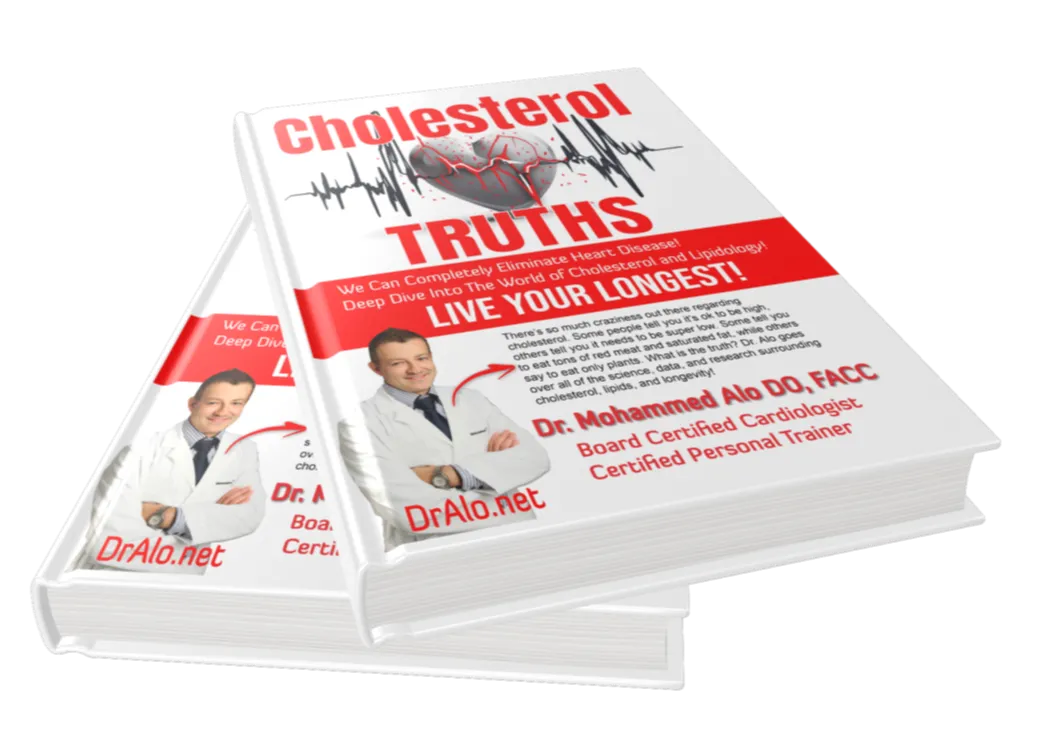
Dr. Mohammed Alo DO, FACC a board-certified cardiologist, internist, obesity medicine specialist, advanced lipidologist, and certified personal trainer. He is a professor of medicine at Ohio University and Midwestern University in Chicago, and the founder of America's Cardiologist (dralo.net). His mission is to translate the highest-level cardiovascular science into accessible, rigorously accurate education for patients and physicians alike.
Still Have Questions? Stop Googling and Ask Dr. Alo.
You’ve read the science, but applying it to your own life can be confusing. I created the Dr. Alo VIP Private Community to be a sanctuary away from social media noise.
Inside, you get:
-
Direct Access: I answer member questions personally 24/7/365.
-
Weekly Live Streams: Deep dives into your specific health challenges.
-
Vetted Science: No fads, just evidence-based cardiology and weight loss.
Don't leave your heart health to chance. Get the guidance you deserve. All this for less than 0.01% the cost of health insurance! You can cancel at anytime!
[👉 Join the Dr. Alo VIP Community Today]
Cardiology & Obesity Medicine