
Can We Actually Eliminate Heart Disease? New Evidence Says Yes.
Mar 29, 2026
Treat Cholesterol, Earlier, Sooner, More Aggressively
For decades, we've accepted heart disease as an inevitable part of aging. Your grandfather had a heart attack at 60. Your father needed a stent at 55. Now you're wondering if you're next. But what if I told you that heart disease isn't actually inevitable? What if we could eliminate it entirely, not just reduce it, but make it so rare that future doctors might never see a case?
That's not wishful thinking. It's the conclusion of leading cardiologists who've spent years studying why our current approach is failing. The problem isn't that we lack effective treatments. We have them. The problem is that we're using them too late, too cautiously, and on too few people. By the time most patients see a cardiologist, the damage is already done. Plaque has been building in their arteries for 30 or 40 years. We're treating the fire instead of preventing the spark. We can actually completely eliminate heart disease now!
The Uncomfortable Truth: We're Treating Heart Disease Backwards
Here's what most people don't understand: atherosclerosis (the plaque buildup that causes heart attacks and strokes) doesn't start when you're 50. It starts in childhood. Studies have found fatty streaks, the earliest signs of plaque, in arteries of children as young as 10 years old. By the time you're having chest pain or shortness of breath, you don't have early heart disease. You have late-stage heart disease that's been progressing silently for decades. Once you have an abnormal calcium score (CAC), it's decades too late. This could have been prevented decades ago. We don't want to wait until we have plque.
This means our entire approach is backwards. We wait for symptoms. We wait for calcium in your arteries. We wait for high cholesterol readings that finally alarm your doctor. We wait until you're "sick enough" to justify treatment. Meanwhile, plaque is accumulating, arteries are stiffening, and your cardiovascular system is deteriorating. We're essentially watching a slow-motion train wreck and calling it "monitoring." This is unacceptable!
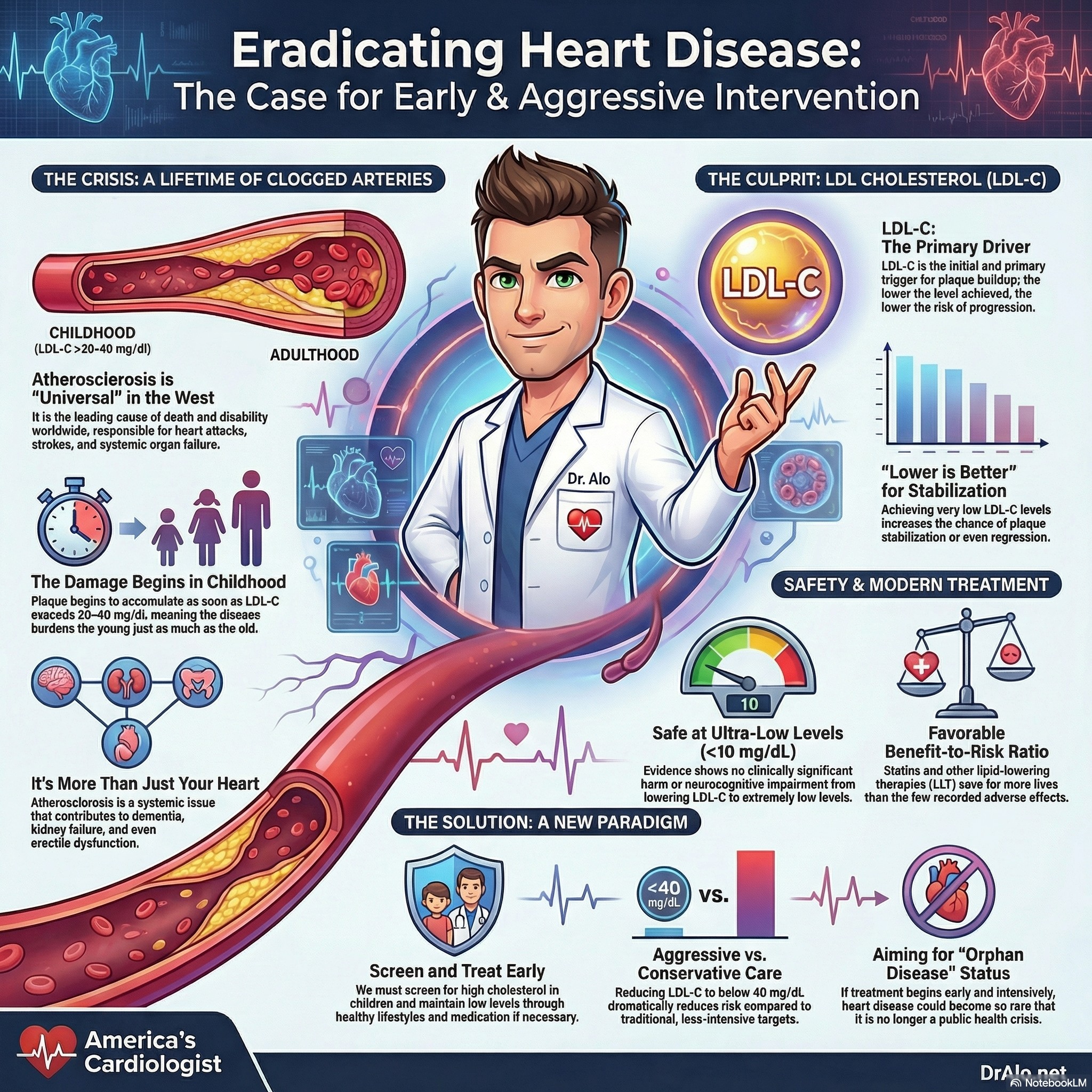
Infographic Summary:
A Revolutionary Approach: Treat Earlier, Harder, Smarter
Three leading experts, Drs. Peter Toth, Michael Shapiro, and Michael Makover, recently published a landmark paper arguing for a radically different approach. Their conclusion is both simple and profound: if we treated cholesterol earlier, more aggressively, and in more people, we could virtually eliminate atherosclerotic heart disease. Not reduce it by 20%. Not make it slightly less common. Eliminate it.
The evidence supporting this isn't new, but the willingness to say it out loud is. We've known for years that lower LDL cholesterol is better. We've known that starting treatment earlier prevents more disease. We've known that our current guidelines leave millions of high-risk people untreated. What's new is cardiologists finally arguing that we should act on what we know, rather than waiting for the perfect randomized controlled trial that will never come.
Let's walk through their arguments and see why this matters for your heart health, and why you probably can't afford to wait for your doctor's office to catch up.
Eliminate Heart Disease With Science!
Drs. Peter Toth, Michael Shapiro, and Michael Makeover wrote a very in depth article arguing that we could completely eliminate heart disease if we were aggressive enough and if the guidelines were more aggressive.
They state the following:
Atherosclerosis begins early in childhood as LDL-C exceeds 20–40 mg/dl, and then progresses unless therapeutic intervention is instituted.
Atherosclerosis is essentially universal in the United States and developed countries.
Powerful evidence shows that the earlier treatment is begun, the more successful it will be.
Atherosclerosis burdens the young, middle-aged and old.
LDL-C is the initial and primary driver of atherosclerosis. The lower the LDL-C that is achieved, and the earlier, the lower the likelihood of atherosclerosis progression and the greater the chance of stabilization or regression.
There is no apparent clinically significant harm (no signal for neurocognitive impairment/dementia, hemorrhagic stroke, increase in neoplasms, risk for demyelination, etc.) from lowering LDL to even the very lowest levels (< 10 mg/dL).
Statins and other LLT (lipid lowering therapy) are remarkably safe and the few adverse effects that occur affect far fewer people than the many lives saved, an extremely favorable benefit/risk ratio.
Other manifestations of atherosclerosis are as dangerous as coronary artery disease and stroke but are mostly unaddressed in prevention. They are not reflected in current risk assessments. The new paradigm would incorporate preserving all vital functions that atherosclerosis can degrade, which early, intensive treatment would likely accomplish.
Detailed individualization of treatment is preferable to generic tools.
As valuable as randomized controlled trials are, they are not the only form of valid evidence and they have important limitations, as discussed above. When RCTs are not feasible or adequate to answer important needs, such as diseases that take very long times to develop, that should not prevent establishing important goals and approaches when there is ample other evidence demonstrating their value.
Considering the considerable ‘residual risk’ and the high potential of reducing it with precise, early, intensive treatment, it seems urgent that new approaches as described herein be adopted to reduce that toll. As numerous references noted above have said, if treatment were to begin early and intensively, atherosclerosis could become so rare as to be an ‘orphan disease’ in all who followed the advice.
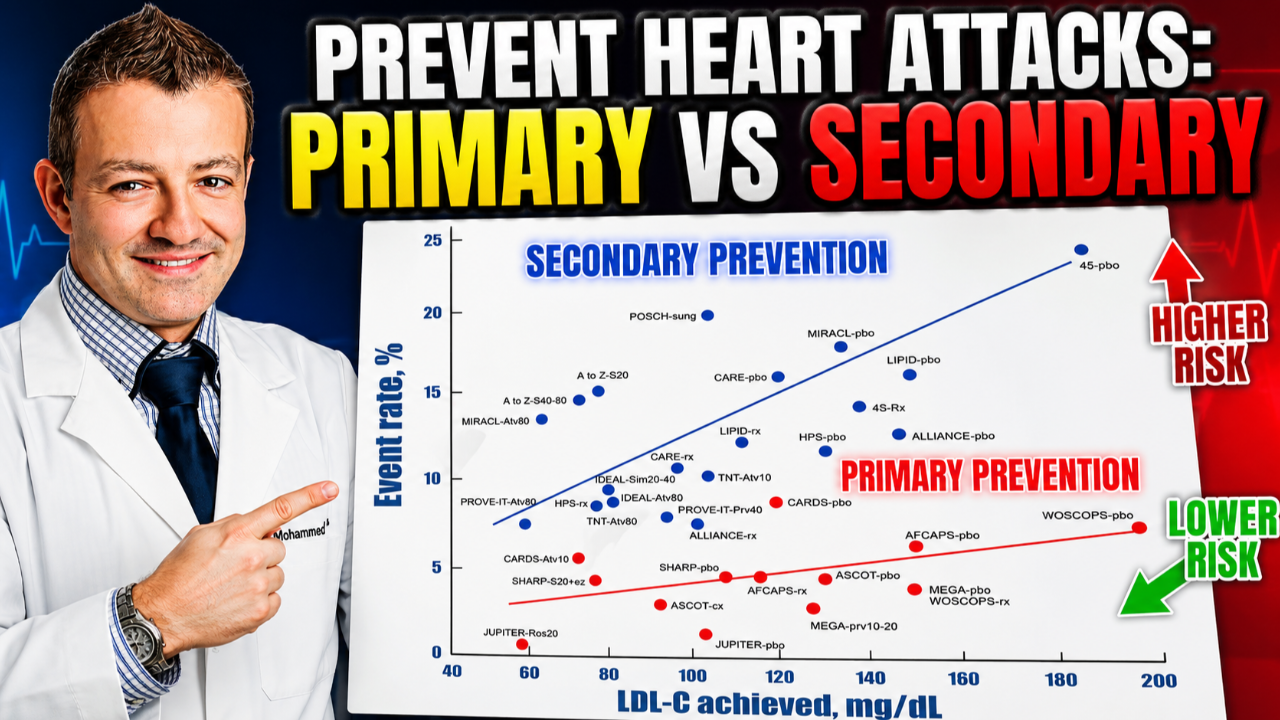
Graphic from their paper:
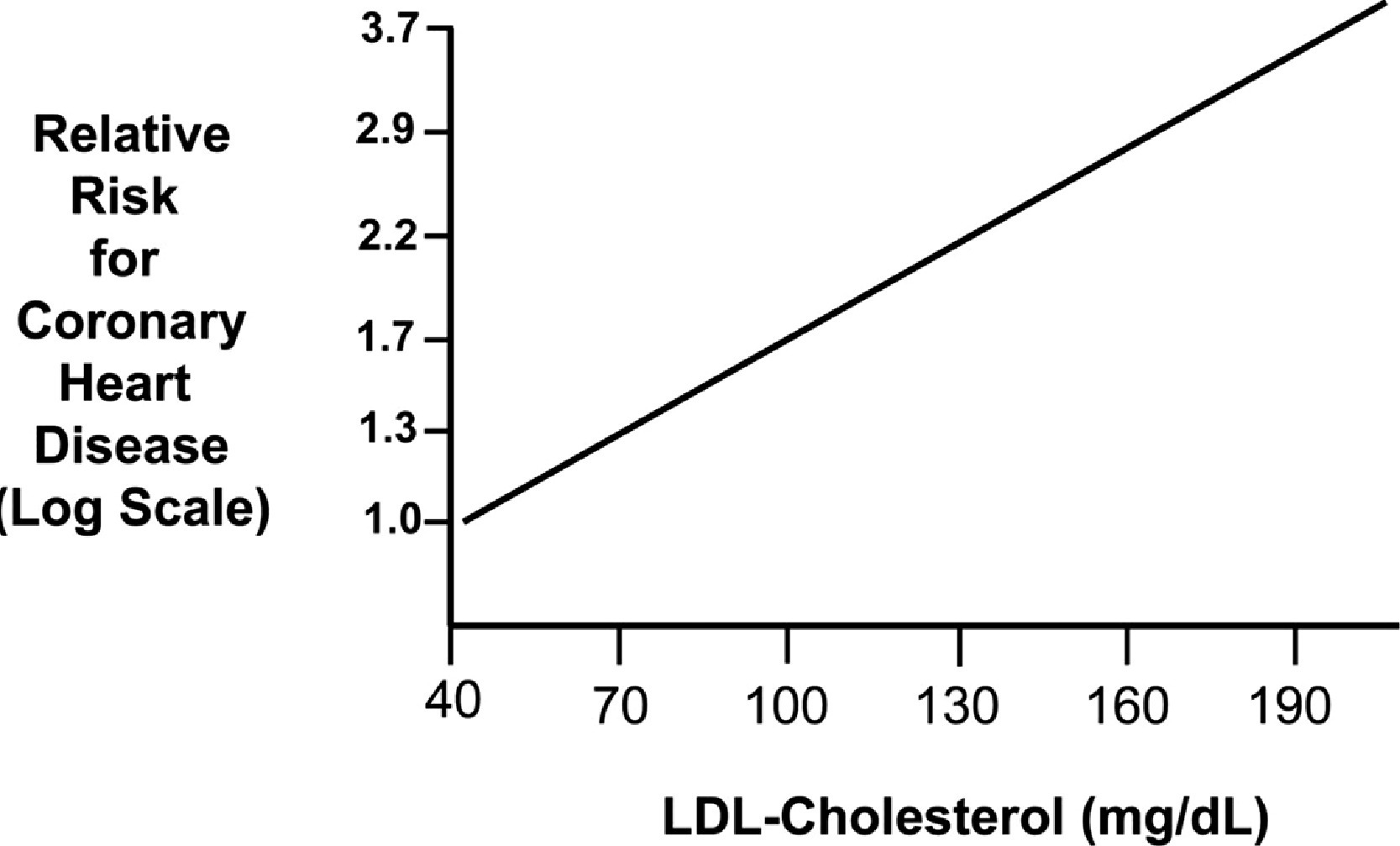
As you can see, as LDL cholesterol decreases, your risk of heart disease declines. At around 40 mg/dL, it's nearly unheard of to have heart disease.
Study:
https://www.sciencedirect.com/science/article/pii/S2666667722000551
Completely Eliminate Heart Disease
If you do not want to read the entire paper, here is a summary of the major points.
1. Atherosclerosis: A Global Problem
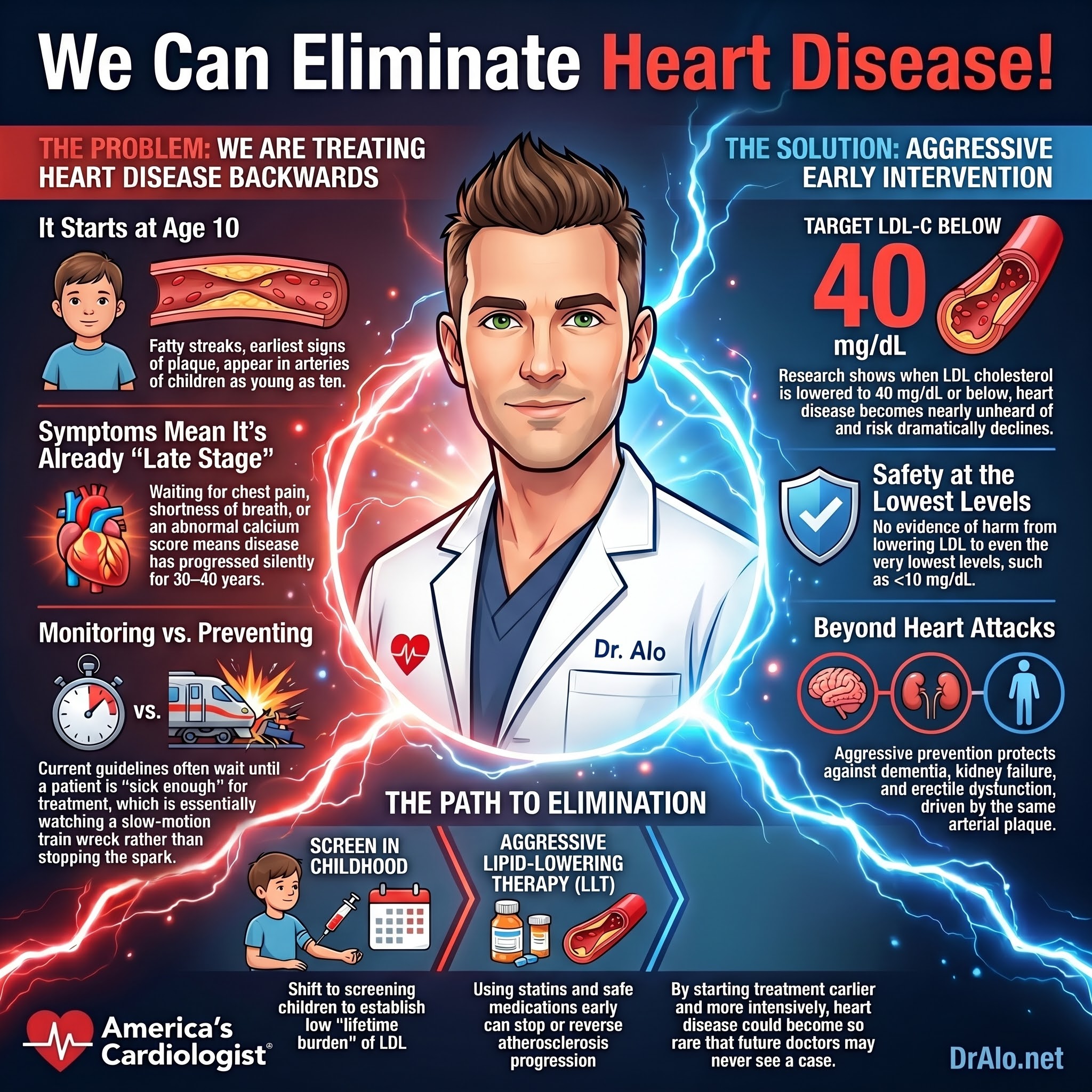
Atherosclerosis is the leading cause of death and disability worldwide, responsible for heart attacks, strokes, and other serious health issues. Despite current treatments, it remains a major problem. To combat it effectively, we need to focus on prevention early in life, as it starts developing in childhood.
2. Beyond Heart Disease
Atherosclerosis affects more than just the heart and brain. It contributes to many conditions, including dementia, kidney failure, peripheral artery disease, and even erectile dysfunction. Efforts should target all these problems, not just heart attacks and strokes.
3. The Role of LDL Cholesterol (LDL-C)
LDL-C, or "bad cholesterol," plays a central role in atherosclerosis. Keeping LDL-C levels very low from an early age can prevent the disease. New treatments, like statins and PCSK9 inhibitors, are highly effective and safe for reducing LDL-C.
4. Current Challenges
- Slow Adoption of Better Practices: Many doctors hesitate to adopt aggressive prevention strategies.
- Under-Treatment: Many patients with high cholesterol are not treated enough, and half stop their medications within six months.
- Guideline Limitations: Current guidelines often miss high-risk individuals who later suffer from heart attacks or strokes.
5. Early Prevention is Key
Atherosclerosis starts early, sometimes before birth. Preventing it requires:
- Screening for high cholesterol in children.
- Maintaining low cholesterol levels from a young age through a healthy lifestyle and, if necessary, medications.
6. Treating Aggressively and Early
Lowering LDL-C levels early and aggressively can stop or even reverse the disease. Studies show that reducing LDL-C to very low levels (below 40 mg/dL) dramatically reduces risks.
7. Lifestyle and Medication
A healthy lifestyle, including a balanced diet and regular exercise, is critical. However, medications are often necessary to reach safe LDL-C levels.
8. Cost and Benefits
Early treatment is cost-effective. It prevents expensive complications like heart attacks, strokes, and long-term disabilities, saving both lives and money.
9. Recommendations
- Screen for atherosclerosis early, ideally starting in childhood.
- Focus on lowering LDL-C levels as much as possible, especially in those at high risk.
- Treat aggressively if signs of atherosclerosis, like plaque buildup, are detected.
10. Final Message
Atherosclerosis is a preventable disease. By starting early, using precise methods, and applying intensive treatments, it can become a rare condition rather than the leading cause of death. The tools are available, what’s needed is the commitment to use them effectively.
Infographic Summary:
References:
https://www.sciencedirect.com/science/article/pii/S0025619619304215
https://doi.org/10.1136/pgmj.2004.027532
https://doi.org/10.1097/hco.0000000000000781
https://doi.org/10.1056/NEJMoa1701131
https://doi.org/10.1161/circulationaha.119.043826
https://www.sciencedirect.com/science/article/pii/S1933287414001597
https://link.springer.com/article/10.1007/s12170-015-0444-7
https://doi.org/10.1080/14740338.2019.1620730
https://doi.org/10.1056/nejmc2031173
Still Have Questions? Stop Googling and Ask Dr. Alo.
You’ve read the science, but applying it to your own life can be confusing. I created the Dr. Alo VIP Private Community to be a sanctuary away from social media noise.
Inside, you get:
-
Direct Access: I answer member questions personally 24/7/365.
-
Weekly Live Streams: Deep dives into your specific health challenges.
-
Vetted Science: No fads, just evidence-based cardiology and weight loss.
Don't leave your heart health to chance. Get the guidance you deserve. All this for less than 0.01% the cost of health insurance! You can cancel at anytime!
[👉 Join the Dr. Alo VIP Community Today]
Cardiology & Obesity Medicine